

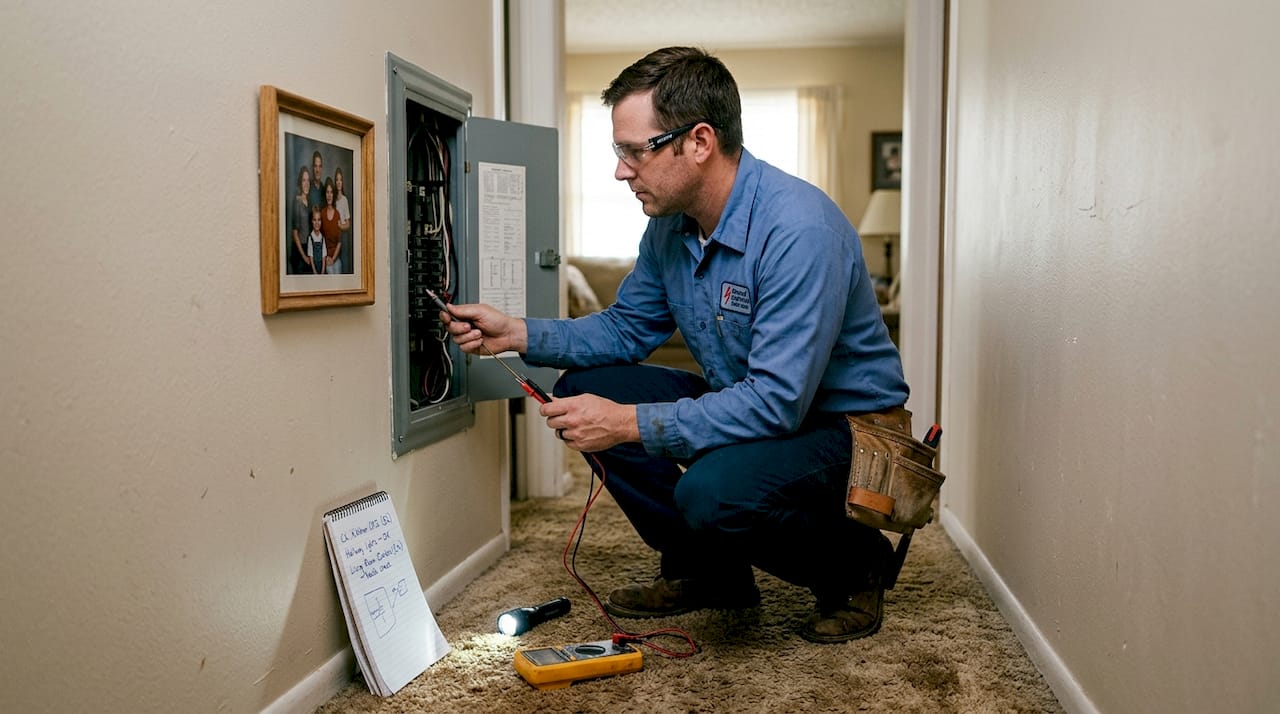
Electrical work looks deceptively simple from the outside. Flip a breaker, swap an outlet, done. But most homeowners in Edmond and Oklahoma City discover the hard way that residential electrical systems are layered with hidden hazards, local code requirements, and failure points that only a trained eye can spot. A loose neutral wire, an overloaded panel, or a backstab connection can sit quietly for years before causing a fire or shock. This guide walks you through what licensed electricians actually do, how they diagnose problems, what compliance looks like in Oklahoma, and what you should budget for common jobs and emergencies.
Table of Contents
- What residential electricians actually do
- Troubleshooting and safety methodologies
- Local licensing, permits, and code compliance in Edmond & OKC
- Cost benchmarks and emergency scenarios
- What most homeowners overlook about electrician selection
- Get reliable electrical services in Edmond & OKC
- Frequently asked questions
Key Takeaways
| Point | Details |
|---|---|
| Licensed expertise matters | Always hire electricians licensed by ODOL to ensure legal compliance and safety. |
| Permits safeguard your home | Never skip necessary permits for upgrades—insurers and inspectors require them. |
| Transparent pricing helps budgeting | Expect $75–200 for service calls and $150–300/hr for emergencies in Edmond/OKC. |
| Ask about panel upgrades | Older homes often need updated panels or GFCI/AFCI installations for code compliance. |
| Documentation avoids repeat issues | Keep clear records of repairs and upgrades to streamline future troubleshooting. |
What residential electricians actually do
Most people think of electricians as the people who show up when something stops working. The reality is much broader. Residential electricians install, maintain, repair, and upgrade electrical systems in homes, including wiring, panels, outlets, lighting, and smart home tech, while ensuring compliance with NEC and local Oklahoma codes. That covers a wide range of work that goes far beyond swapping a light fixture.
In Edmond and OKC, a typical week for a residential electrician might include:
- Running new circuits for kitchen remodels or home additions
- Installing EV charging stations in garages
- Upgrading 100-amp panels to 200-amp service for modern loads
- Adding electrical upgrades in Edmond like whole-home surge protection
- Integrating smart home systems including automated lighting and thermostats
- Replacing Federal Pacific or Zinsco panels that are known fire hazards
Troubleshooting is where the real skill shows. A professional uses a multimeter, clamp meter, and circuit tracer to systematically isolate faults. They do not just guess and replace parts. They follow the circuit from source to load, testing at each point until the fault is found. This approach saves time and prevents the frustration of replacing a perfectly good outlet when the real problem is a bad connection at the panel.
Compliance is non-negotiable. Oklahoma follows the National Electrical Code (NEC) with local amendments that affect things like GFCI placement, AFCI requirements, and minimum wire gauge for certain circuits. Skipping these requirements does not just mean a failed inspection. It can void your homeowner’s insurance and create liability if a fire or injury occurs.
Here is a quick look at common residential projects and their typical scope:
| Project | Scope | Code requirement |
|---|---|---|
| Panel upgrade | Replace breaker box, update grounding | NEC 200.4, local permit |
| EV charger install | Dedicated 240V circuit, GFCI protection | NEC 625.54 |
| Surge protection | Whole-home device at panel | NEC 230.67 (2020+) |
| Outlet addition | New circuit or branch extension | GFCI/AFCI per location |
| Smart home wiring | Low-voltage, data, and control circuits | NEC Article 725 |
For a full breakdown of available services, the comprehensive electrical services page covers what a licensed contractor handles across residential and commercial properties. Understanding the basics of how electricity is distributed in your home, similar to how electric boiler basics explain heat distribution, helps you have smarter conversations with your electrician.
Troubleshooting and safety methodologies
Understanding the tasks is only half the story. The safety and troubleshooting methods that separate professionals from amateurs are where real expertise lives.
Professional electricians follow a structured process when diagnosing faults. Here is the six-step approach used on most residential calls:
- Gather information from the homeowner about symptoms, timing, and recent changes
- Identify the affected circuit using the panel directory and a circuit tracer
- Perform live-dead-live voltage testing to confirm the circuit is de-energized before touching anything
- Apply the half-split method to divide the circuit and isolate the fault zone quickly
- Test components with a multimeter, checking continuity, voltage, and resistance
- Document findings and repairs so the next technician has a clear history
Key methodologies include systematic troubleshooting using hopscotch and half-split methods, live-dead-live voltage testing, circuit tracing from source to load, and using tools like multimeters for accurate diagnosis.
Live-dead-live testing deserves special attention. Before working on any circuit, a pro tests for voltage, confirms the circuit reads zero (dead), then tests the meter on a known live source to confirm the meter itself is working. This three-step check prevents the single most dangerous assumption in electrical work: that a circuit is off when it is not.
Pro Tip: If your breaker trips repeatedly, do not just reset it. A breaker that trips is doing its job. Repeated tripping usually signals an overloaded circuit, a short, or a failing breaker. Call a licensed electrician before the next reset.
Two fault types catch homeowners and even some electricians off guard. Backstab connections are outlets wired by pushing the wire into a spring-loaded hole instead of wrapping it around a screw terminal. They loosen over time and cause intermittent failures or arcing. Loose neutrals are trickier. A loose neutral can cause voltage fluctuations that damage appliances and are hard to reproduce during a service call.
“The most dangerous electrical faults are the ones you cannot see. Intermittent arcing inside a wall can smolder for hours before igniting insulation.”
For guidance on choosing an electrician who uses these methods, look for someone who documents their work and explains their process before starting. A professional who cannot describe their troubleshooting approach is one worth questioning. More detailed fault-finding strategies are covered in this troubleshooting electrical faults resource.
Local licensing, permits, and code compliance in Edmond & OKC
Once issues are diagnosed, proper licensing and compliance become the foundation for safe, legal repairs.
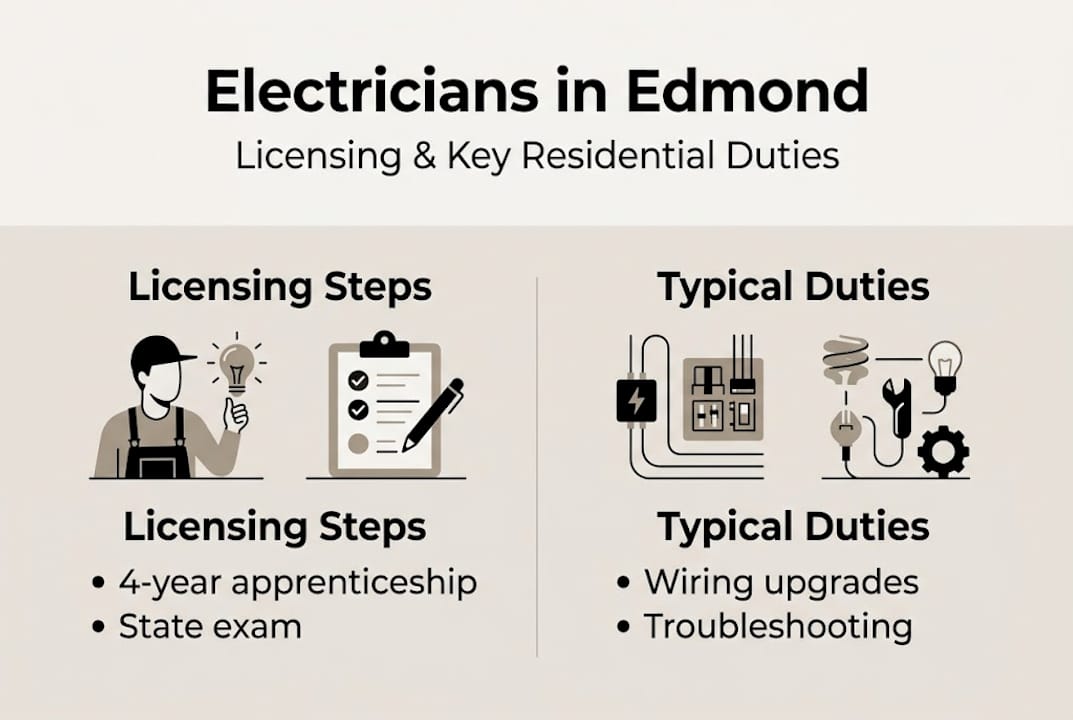
Oklahoma requires licensing via ODOL, which involves a four-year apprenticeship, licensing exams, and more than 8,000 hours of supervised field experience. Permits are required for panel upgrades, new circuit installations, and major changes to existing systems. Local amendments to the NEC add requirements like GFCI protection in wet areas, AFCI breakers in bedrooms, and specific restrictions in garages and outdoor spaces.
Here is how licensed and unlicensed work compare:
| Factor | Licensed electrician | Unlicensed worker |
|---|---|---|
| Permit pulled | Yes, required | Rarely |
| Inspection passed | Yes | No |
| Insurance coverage | Maintained | Likely voided |
| Code compliance | Verified | Unknown |
| Liability on fault | Contractor’s | Homeowner’s |
The risks of skipping permits are real and expensive. If unpermitted electrical work causes a fire, your homeowner’s insurance company can deny the claim. If you sell your home, an inspector will flag unpermitted work and you may be required to bring it up to code at your own expense before closing.
Key local compliance points for Edmond and OKC homeowners:
- GFCI outlets required in bathrooms, kitchens, garages, and outdoor locations
- AFCI breakers required in all sleeping areas and most living spaces under current NEC
- Dedicated circuits required for appliances like refrigerators, dishwashers, and HVAC units
- Outdoor wiring must use weatherproof conduit and rated connectors
For more on code compliance in Oklahoma, the Oklahoma Contractor Authority provides guidance on what triggers a permit requirement. Scheduling work through online booking for electricians with a licensed contractor ensures permits are handled as part of the job, not as an afterthought.
Did you know? Electrical fires account for roughly 51,000 home fires per year in the United States, many of which are linked to outdated wiring, overloaded panels, and code violations that a licensed inspection would catch.
Cost benchmarks and emergency scenarios
Budgeting and emergency preparedness matter as much as legal compliance. Here is what to expect for service calls and urgent fixes.
Hourly rates for electricians in the Edmond and OKC area range from $50 to $150, with journeyman rates typically falling between $60 and $90. OKC and Edmond emergency rates run $150 to $300 per hour, with panel upgrades ranging from $1,200 to $3,500 depending on amperage and complexity.
| Service | Typical cost range |
|---|---|
| Service call / diagnostic | $75 to $200 |
| Outlet installation | $150 to $350 per outlet |
| Panel upgrade (200-amp) | $1,200 to $3,500 |
| EV charger installation | $400 to $900 |
| Emergency repair (after hours) | $150 to $300 per hour |
| Whole-home surge protection | $200 to $500 installed |
Older Edmond homes built before 1980 carry specific risks. Knob-and-tube wiring, overloaded panels, backstab connection failures, and FPE panels are common triggers for both emergencies and insurance issues. Federal Pacific Electric (FPE) Stab-Lok panels are particularly problematic because their breakers can fail to trip during an overload.
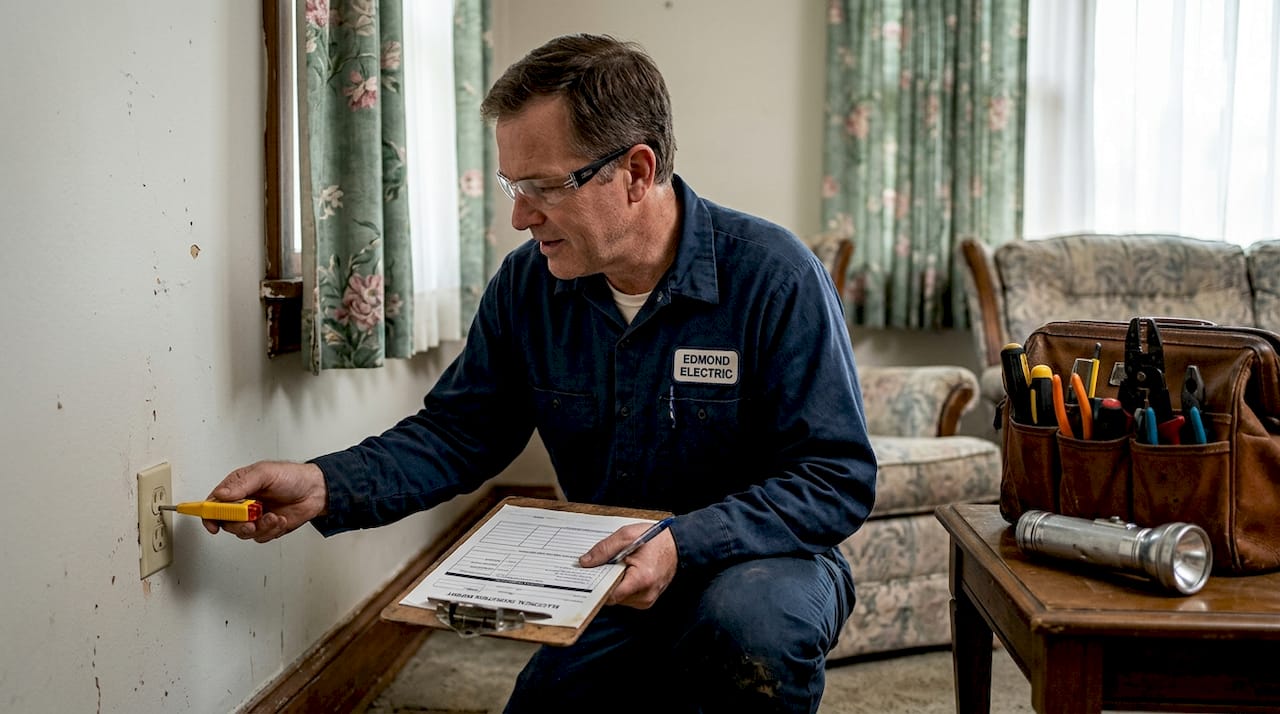
Pro Tip: Bundle multiple smaller jobs into one service call. If you need a new outlet, a ceiling fan installed, and a GFCI replaced, scheduling them together saves you the service call fee on each individual job and often reduces total labor time.
For true emergencies like sparking outlets, burning smells, or flooding near electrical panels, the priority is always to de-energize the affected circuit at the breaker, then call a licensed electrician immediately. Do not use water near any electrical component. For guidance on residential electrical emergencies and what qualifies as urgent, knowing the difference between a nuisance trip and a genuine hazard can prevent both panic and dangerous delays. More detail on specific panel hazards in Edmond homes is worth reviewing before a problem occurs.
What most homeowners overlook about electrician selection
Here is an honest take that goes beyond the standard checklist advice.
Most homeowners focus on price when selecting an electrician. That is understandable, but the real cost of hiring an unlicensed or underqualified contractor shows up later. Voided insurance, failed inspections, and repeated service calls to fix the same problem add up fast. Reliable local firms offer free inspections, 24/7 emergency service, and warranties, and those offerings are worth more than a lower hourly rate from someone who cannot pull a permit.
Ask your electrician for a load calculation before any panel upgrade. This is a written analysis of your home’s total electrical demand. Without it, you might upgrade to a 200-amp panel that is still undersized for your actual needs, especially if you are adding an EV charger and a hot tub in the same year.
Verify GFCI and AFCI installations after any new work. These devices are inexpensive to install but are frequently skipped by contractors cutting corners. A quick test with the built-in test button tells you immediately if the device is functional.
For older Edmond homes, ask specifically about backstab connections and whether the electrician will replace them with screw terminals during any outlet work. It takes an extra three minutes per outlet and dramatically reduces the chance of future arcing faults. Working with reputable residential electricians who understand the specific quirks of older Oklahoma homes is the single biggest factor in getting work done right the first time.
Get reliable electrical services in Edmond & OKC
When you’re ready for safer, smarter electrical work, here’s how Shepherd Electrical can help you in Edmond and Oklahoma City.
Shepherd Electrical provides licensed, insured electrical services for homeowners and small business owners across the OKC metro. Whether you need a panel inspection, a full upgrade, or an after-hours emergency repair, the team is available 24/7 with clear, upfront pricing and no surprise fees.

From routine outlet installs to complex smart home integrations, the electrical services overview covers every residential need. If you have concerns about your panel, the panel safety facts page is a great starting point. Ready to book or ask a question? Visit Shepherd Electrical to schedule your service today.
Frequently asked questions
How can I verify if an electrician is licensed in Oklahoma?
Use the ODOL licensing database to search by name or license number, and always request proof of license and insurance before any work begins.
What electrical upgrades are most important in older Edmond homes?
Panel upgrades, GFCI and AFCI installations, and replacing overloaded circuits in older homes are the top priorities, especially in homes built before 1980 with original wiring.
How much does an electrician charge for emergency repairs in OKC?
Emergency electrical repairs in the OKC and Edmond area typically cost $150 to $300 per hour, plus a service call fee that usually ranges from $75 to $200.
Why are GFCI/AFCI outlets required in certain areas?
GFCI and AFCI outlets are required by Oklahoma local code amendments in wet and hazard-prone areas to interrupt dangerous current flow and prevent both shocks and electrical fires.
What should I do in a residential electrical emergency?
Immediately de-energize affected circuits at the breaker panel, keep everyone away from water or exposed wiring, and call a licensed electrician before attempting any inspection yourself.
Recommended
- Top Residential Electrical Upgrades for Edmond Homeowners
- Residential Electrician – Shepherd Electrical
- Electrician Near Me at Shepherd Electrical
- How to hire an electrician in Oklahoma City: 5 steps
Need help with this at your home?
Shepherd Electrical helps Edmond and OKC metro homeowners with residential electrical service, repairs, upgrades, panels, EV chargers, solar, and backup power. Free estimates are available, and workmanship is backed by a lifetime guarantee.