

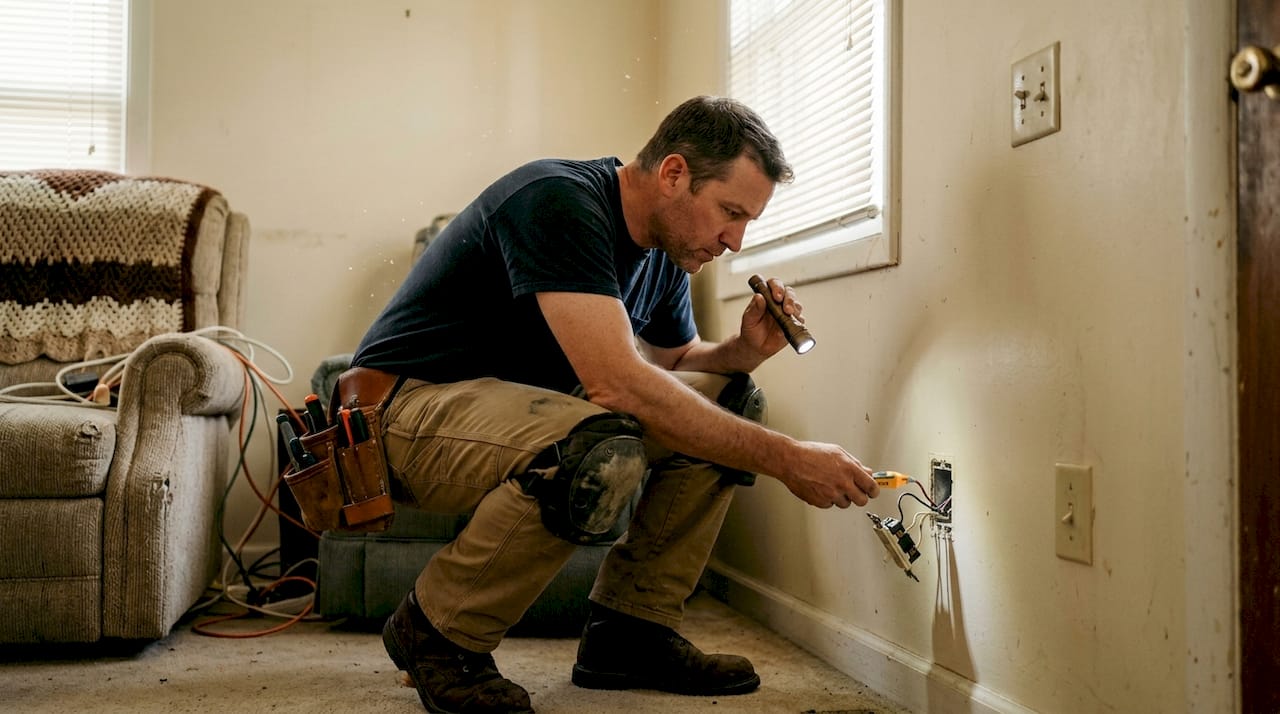
If your lights flicker every time the microwave runs, or your breakers trip more than they should, your home is telling you something important. Older homes in Edmond and Oklahoma City were built for a fraction of today’s electrical demands. Knob-and-tube wiring from the 1950s or aluminum wiring from the 1970s simply wasn’t designed for smart TVs, EV chargers, or high-efficiency HVAC systems. A proper wiring upgrade protects your family, lowers your energy bills, and sets your home up for the next 30 years of technology. This guide walks you through every stage, from recognizing the warning signs to passing final inspection.
Table of Contents
- Why upgrade your home wiring?
- What to consider before starting your wiring upgrade
- Step-by-step: How to upgrade home wiring
- After the upgrade: Verification and long-term safety
- What most homeowners miss about wiring upgrades
- Get professional help for your home wiring upgrade
- Frequently asked questions
Key Takeaways
| Point | Details |
|---|---|
| Upgrade boosts safety | Replacing outdated wiring protects your family from fire risks and electrical hazards. |
| Plan before you start | Always check code requirements, get permits, and consult a pro before tackling wiring work. |
| Professional help matters | Hiring licensed electricians ensures the job is done safely and up to code, protecting your investment. |
| Future-proof your home | Consider your long-term energy and tech needs for a wiring upgrade that stands the test of time. |
Why upgrade your home wiring?
Most homeowners don’t think about their wiring until something goes wrong. But by the time a breaker trips or an outlet sparks, the risk is already real. Outdated wiring is a primary cause of house fires in the United States, and homes with aging systems are especially vulnerable.
Knob-and-tube wiring, common in homes built before 1950, uses no ground wire and can’t safely handle today’s loads. Aluminum wiring, popular in the 1960s and 1970s, expands and contracts with heat more than copper does, which loosens connections over time. Both types create real danger that you can’t always see from the outside.
Here are the most common warning signs that your home needs a wiring upgrade:
- Lights that flicker or dim when appliances cycle on
- Breakers that trip repeatedly under normal household use
- Outlets or switch plates that feel warm to the touch
- A burning smell near outlets or in walls
- Two-prong ungrounded outlets throughout the home
- A fuse box instead of a circuit breaker panel
Beyond safety, there’s a real financial reason to act. Many insurance companies charge higher premiums or outright refuse to cover homes with knob-and-tube or aluminum wiring. An upgrade not only removes the hazard but can also lower your annual insurance costs.
“Electrical fires cause an estimated 51,000 fires each year in U.S. homes, resulting in nearly 500 deaths and $1.3 billion in property damage.” — Electrical Safety Foundation International
From an efficiency standpoint, modern copper wiring with proper grounding supports energy-saving appliances and smart home systems that older wiring simply cannot. Upgrading also increases your home’s resale value, since buyers and inspectors will flag outdated electrical systems. Learning more about boosting home safety through a wiring upgrade is one of the smartest investments an Edmond or OKC homeowner can make. If you’re unsure whether your panel is part of the problem, reviewing panel hazards in older homes is a good first step.
What to consider before starting your wiring upgrade
Planning a wiring upgrade isn’t as simple as buying wire at a hardware store. There are permits, professionals, timelines, and family logistics to think through before a single wire is touched.
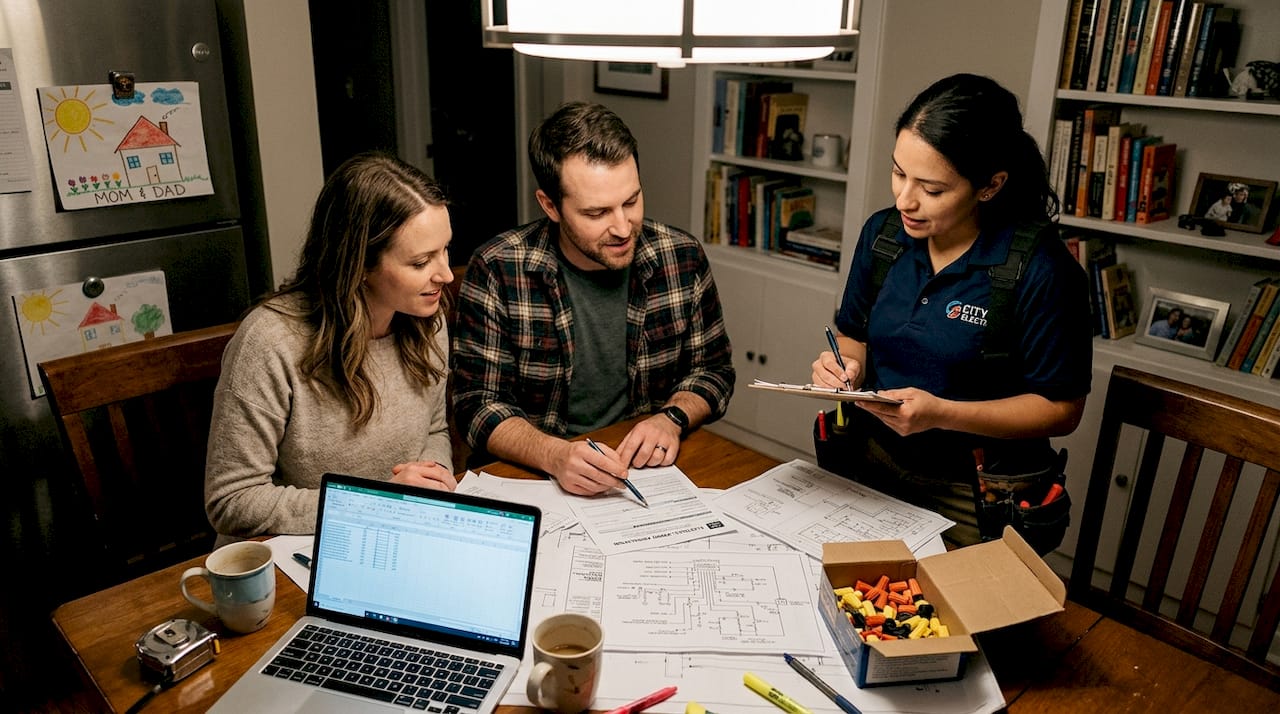
First, permits. Electrical work almost always requires a permit and must comply with the National Electrical Code (NEC) as adopted locally. In Edmond and Oklahoma City, inspections are mandatory, not optional. Skipping this step puts your family at risk and can cause serious problems when you sell your home.
Second, know when to call a licensed electrician. Minor tasks like replacing a light fixture can be DIY-friendly. Replacing wiring inside walls, upgrading panels, or running new circuits is not. Licensed electricians carry the insurance and the knowledge to do the job safely and get it signed off.
What to have ready before the project starts:
- A copy of your home’s existing electrical plan, if available
- A clear list of every room and circuit you want upgraded
- Temporary arrangements for pets and children during active work
- A plan for turning off refrigerators and other critical appliances
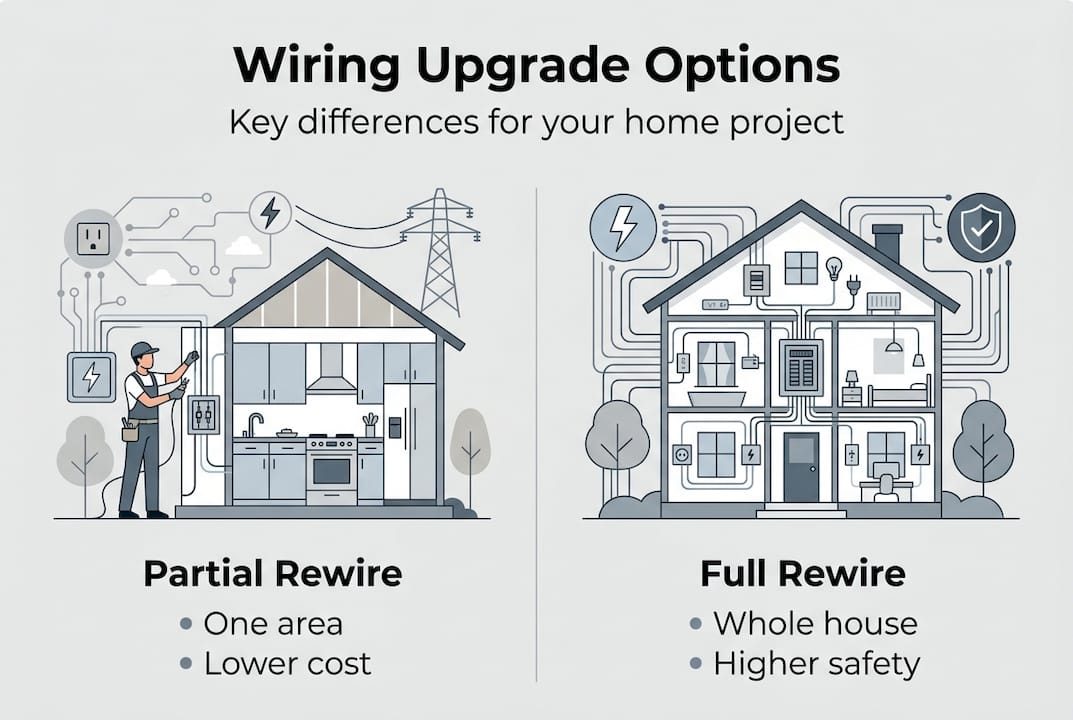
Pro Tip: Ask your electrician whether a partial rewire or a whole-home rewire makes more sense for your budget and goals. Partial rewires target specific problem areas and cost less upfront. Whole-home rewires cost more but eliminate every outdated section at once.
| Approach | Best for | Estimated cost | Disruption level |
|---|---|---|---|
| Partial rewire | One or two problem areas | $1,500 to $4,000 | Low to moderate |
| Whole-home rewire | Homes with pervasive old wiring | $8,000 to $15,000+ | High |
| Panel upgrade only | Modern wiring, outdated panel | $1,500 to $3,500 | Low |
Exploring your options for electrical upgrades for Edmond homes can help you identify the most cost-effective path. Before any work begins, an electrical inspection gives you a clear baseline of what actually needs to be replaced.
Step-by-step: How to upgrade home wiring
With your plan in place and a licensed electrician on board, here’s how a typical wiring upgrade unfolds from start to finish.
- Electrical assessment — Your electrician inspects the entire system, identifies every hazard, and creates a detailed scope of work. This is not the place to cut corners. A thorough electrical assessment sets the foundation for everything that follows.
- Permit application — Your electrician or contractor pulls the required permits from the city before any physical work starts.
- Materials procurement — Copper wire, outlet boxes, breakers, grounding hardware, and conduit are sourced to match your home’s specific needs.
- Safe removal of old wiring — Circuits are de-energized and confirmed dead with a voltage tester before anyone touches a wire. Old wiring is carefully pulled or cut out.
- New wiring installation — Fresh copper wiring is run through walls, attic, or crawlspace. This often means opening some walls, which a skilled electrician minimizes wherever possible.
- Panel and breaker upgrade — If your panel is outdated, this is the right time to replace it. Modern panels support arc-fault circuit interrupters (AFCIs) and ground-fault circuit interrupters (GFCIs), which add a second layer of protection. Reviewing circuit breaker upgrades explains why this matters.
- Inspection and sign-off — A city inspector verifies that all work meets code before power is restored.
Pro Tip: Oklahoma homes with pier-and-beam foundations often have accessible crawlspaces that make running new wire much easier and less expensive than slab-foundation homes. Mention this to your electrician during the assessment.
| Step | Who performs it | Estimated time |
|---|---|---|
| Assessment | Licensed electrician | 1 to 3 hours |
| Permit application | Electrician or homeowner | 1 to 5 business days |
| Old wiring removal | Licensed electrician | 1 to 3 days |
| New wiring installation | Licensed electrician | 2 to 7 days |
| Inspection and sign-off | City inspector | Half day |
Professional installation ensures safety and long-term reliability. Trying to save money by skipping steps here almost always costs more in the long run.
After the upgrade: Verification and long-term safety
Installation is finished. Now the real test begins. A wiring upgrade is only as good as the verification process that follows it.
Start with a post-installation walkthrough with your electrician. Test every outlet using a simple outlet tester, available at any hardware store for under $15. Check that all breakers are labeled correctly and that every GFCI outlet trips and resets as expected.
Your post-upgrade checklist:
- Every outlet tested for proper wiring (hot, neutral, ground)
- All GFCI outlets verified in bathrooms, kitchen, and garage
- Panel directory updated and labeled clearly
- Inspection certificate or permit sign-off in hand
- No warm outlets, burning smells, or flickering after power is restored
Inspections aren’t just a formality. Code compliance after an electrical upgrade protects your investment and keeps your homeowner’s insurance valid. If the work was done without a permit and later discovered during a sale or claim, the consequences can be severe.
For ongoing maintenance, plan a professional electrical check every five to ten years, or any time you add a major appliance or home addition. Keeping your panel area clear and never overloading circuits are simple habits that extend the life of your new system. Revisiting panel safety hazards periodically keeps you informed as your home evolves.
Studies from ESFI show that properly maintained electrical systems dramatically reduce the risk of fire compared to neglected or aging ones. That statistic alone is worth the investment.
What most homeowners miss about wiring upgrades
Here’s something we see constantly in Edmond and OKC: a homeowner upgrades their wiring to meet today’s code, then calls us back two years later because they added an EV charger or solar panels and their system can’t handle it. The upgrade was done correctly. The planning wasn’t.
Most wiring projects are scoped for the present, not the future. That’s a mistake. When we sit down with homeowners, we always ask about five-year plans. Are you thinking about an EV? A home addition? A whole-home generator? Solar panels? Each one adds significant electrical demand that a minimum-code upgrade may not support.
The uncomfortable truth is that building to minimum code is building to the past. Codes are updated every few years, but they reflect what was necessary when written, not what you’ll need in 2030. Professional wiring insights from a contractor who thinks ahead will save you from tearing into fresh walls again in three years. Ask your electrician to size your new panel and circuits for where your life is headed, not just where it is today.
Get professional help for your home wiring upgrade
A wiring upgrade is one of the most impactful improvements you can make to your home’s safety, value, and efficiency. But it’s also one where cutting corners creates real, lasting risks.

At Shepherd Electrical, we serve homeowners across Edmond and the Oklahoma City Metro with licensed, code-compliant wiring upgrade services backed by real expertise. Our team handles everything from the initial assessment through final inspection, so you never have to guess what comes next. As trusted Edmond and OKC contractors, we understand the local codes, older construction styles, and the specific challenges Oklahoma homes present. Ready to get started? Visit Shepherd Electrical to schedule your assessment or request a quote today.
Frequently asked questions
How much does it cost to upgrade home wiring?
Wiring upgrade costs vary widely by house size and complexity, but most homeowners spend between $3,000 and $10,000 or more for a full rewire.
How long does a whole-house wiring upgrade take?
Full rewiring typically requires several days to two weeks, depending on home size, access, and the scope of work involved.
Is it safe to DIY a home wiring upgrade?
Licensed professionals are recommended for virtually all wiring upgrades, since improper work creates fire hazards and will not pass required inspections.
Will rewiring require opening up my walls?
Yes, most wiring upgrades require some wall access, but skilled electricians plan carefully to minimize damage and make repairs straightforward.
Does new wiring improve home energy efficiency?
Modern wiring supports efficient appliances and smart home systems, reducing energy waste and lowering your monthly utility bills.
Recommended
- Professional electrical services: boost home safety and value
- Electrical system assessment for safer homes: 2026 guide
- Why upgrade circuit breakers? Safety, savings, peace of mind
- Residential Electrical Panel Hazards – Shepherd Electrical
Need help with this at your home?
Shepherd Electrical helps Edmond and OKC metro homeowners with residential installs, wiring upgrades, fans, lighting, and electrical improvements. Free estimates are available, and workmanship is backed by a lifetime guarantee.