

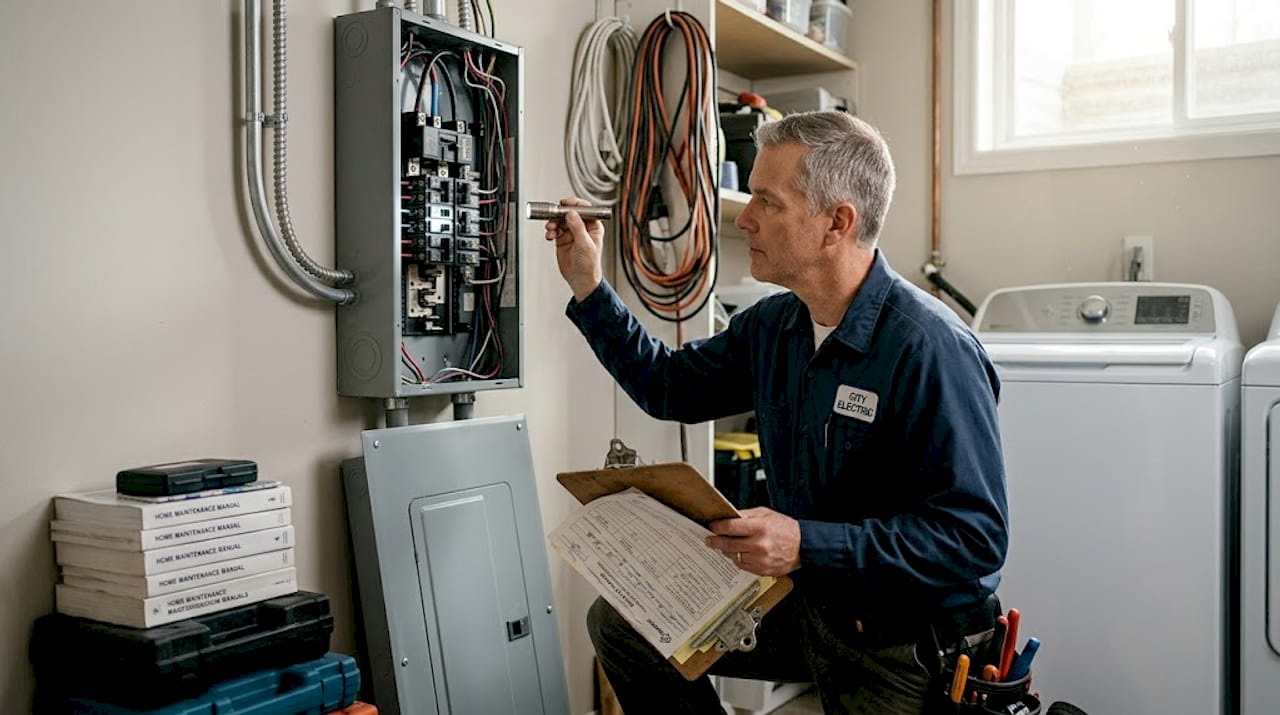
Your lights are flickering again. The breaker just tripped for the third time this week. If this sounds familiar, your electrical panel may be telling you something urgent. Residential electrical panel hazards are a real concern for homeowners and small business owners across the Oklahoma City Metro area. An outdated panel is not just inconvenient — it can be a fire waiting to happen. This guide walks you through everything you need to know about electrical panel upgrades: the warning signs, the preparation, the step-by-step process, and what to do after the job is done.
Table of Contents
- Why panel upgrades matter for safety and efficiency
- What you need before starting your panel upgrade
- Step-by-step: How to upgrade your electrical panel
- After the upgrade: Inspection, testing, and next steps
- What most people miss about panel upgrades
- Work with trusted professionals in Oklahoma City
- Frequently asked questions
Key Takeaways
| Point | Details |
|---|---|
| Safety first | Upgrading your panel prevents fire risks and keeps your property safe. |
| Local codes matter | Permits and inspections in Oklahoma City are essential for legal and safe upgrades. |
| Professional help | Hiring licensed electricians ensures correct installation and long-term peace of mind. |
| Boosted efficiency | A new panel supports more devices and improves overall energy efficiency. |
Why panel upgrades matter for safety and efficiency
Your electrical panel is the heart of your home or business’s electrical system. It controls every circuit, every outlet, and every appliance running in your building. When that panel is old or overloaded, the consequences can go far beyond a tripped breaker.
Older panels, especially those made before the 1990s, were not designed to handle modern electrical loads. Think about how many devices you plug in today compared to 30 years ago. Smart TVs, electric vehicle chargers, high-efficiency HVAC systems, and home offices have pushed electrical demand to levels older panels simply cannot safely manage. Modern electrical panels reduce the risk of electrical fires by managing load distribution more effectively and providing proper overcurrent protection.
Here are the most common warning signs that your panel needs attention:
- Lights flickering or dimming when large appliances run
- Breakers tripping frequently, especially on the same circuits
- Warm or discolored wall surfaces near the panel
- Burning smell or scorch marks on or around the panel box
- Panel is over 25 years old or still uses fuses instead of breakers
- No room for new circuits when you want to add outlets or appliances
Upgrading your panel also brings real efficiency and financial benefits. A new panel sized correctly for your property handles electrical loads without strain, which can reduce energy waste. Many Oklahoma City Metro homeowners also find that a modern panel upgrade improves their standing with insurance providers and increases property resale value.
The benefits of upgrading circuit breakers go beyond just safety. Properly rated breakers protect appliances and electronics from power surges and irregular voltage. And if you’ve been considering adding a generator, EV charger, or solar system, a panel upgrade is often the first necessary step.
“A panel upgrade is not a luxury. For many Oklahoma City Metro homes built before 2000, it’s a safety necessity.”
Pro Tip: If your panel still has a brand name like Federal Pacific or Zinsco, call a licensed electrician immediately. These brands have documented failure histories and are considered safety hazards by professional electrical safety services professionals. Before you do anything else, get an electrical safety assessment to understand exactly what your system needs.
Now that you know why electrical panel safety is crucial, let’s look at what you need to get started.
What you need before starting your panel upgrade
Rushing into a panel upgrade without proper preparation is one of the most common mistakes property owners make. Before any work begins, there are permits, sizing decisions, and safety steps that must come first.
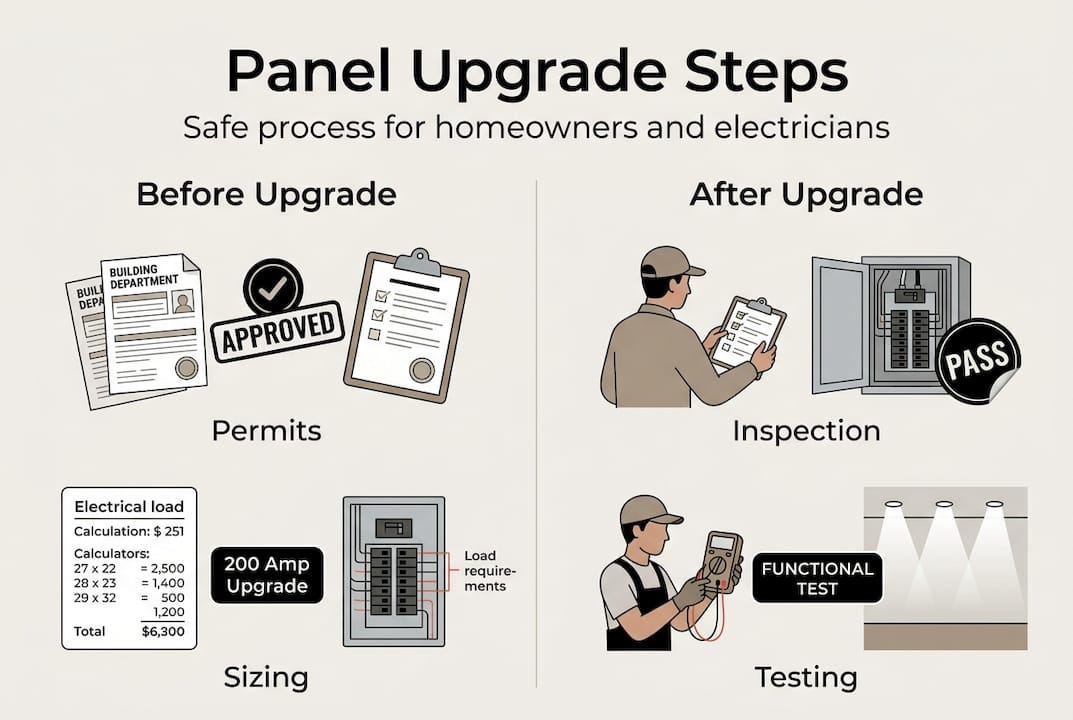
Permits and code compliance are not optional in the Oklahoma City Metro area. The city and surrounding municipalities require a permit for any panel replacement or major electrical upgrade. Inspectors from your local authority will need to sign off on the work before you restore power. Upgrades often require permits and a professional assessment to confirm the scope and safety of the project.
Panel sizing is the next critical decision. Panels are rated in amperes (amps), which measures how much electrical current they can safely handle at once.
| Panel size | Best suited for |
|---|---|
| 100A | Older homes with basic appliances |
| 150A | Mid-size homes with modern appliances |
| 200A | Larger homes, EV chargers, home additions |
| 400A | Small commercial or large residential properties |
Most Oklahoma City Metro homes built before 1990 have 100A service. If you are adding an EV charger, central air, or expanding your home, you almost certainly need a 200A panel. Your electrician will calculate your exact load requirements based on current and planned usage.
Here is what should be ready before the job begins:
- Approved permit from your local building department
- Load calculation confirming the correct panel size
- Clear access to the existing panel location
- Utility company notification (they may need to disconnect the meter)
- A licensed electrician for all wiring work
Pro Tip: Do not attempt to remove or replace a panel yourself. Even with the main breaker off, the service wires entering your panel from the utility are still live. Only licensed electricians and utility crews can safely handle that part of the work. For a full breakdown of what a pre-upgrade inspection covers, review the panel hazard checklist before calling your contractor.
For residential electrical upgrades in Edmond and the broader OKC Metro, local electricians familiar with Oklahoma codes will make sure your project passes inspection the first time.
With all requirements and preparations ready, you can move on to the upgrade process itself.
Step-by-step: How to upgrade your electrical panel
Understanding each phase of the upgrade helps you have informed conversations with your electrician and know what to expect throughout the project.
Step 1: Plan the shutdown. Your electrician will coordinate with your utility provider to disconnect power at the meter. This is the only way to safely access the service entrance wires. Do not skip this step. The main breaker alone does not make those incoming wires safe to touch.
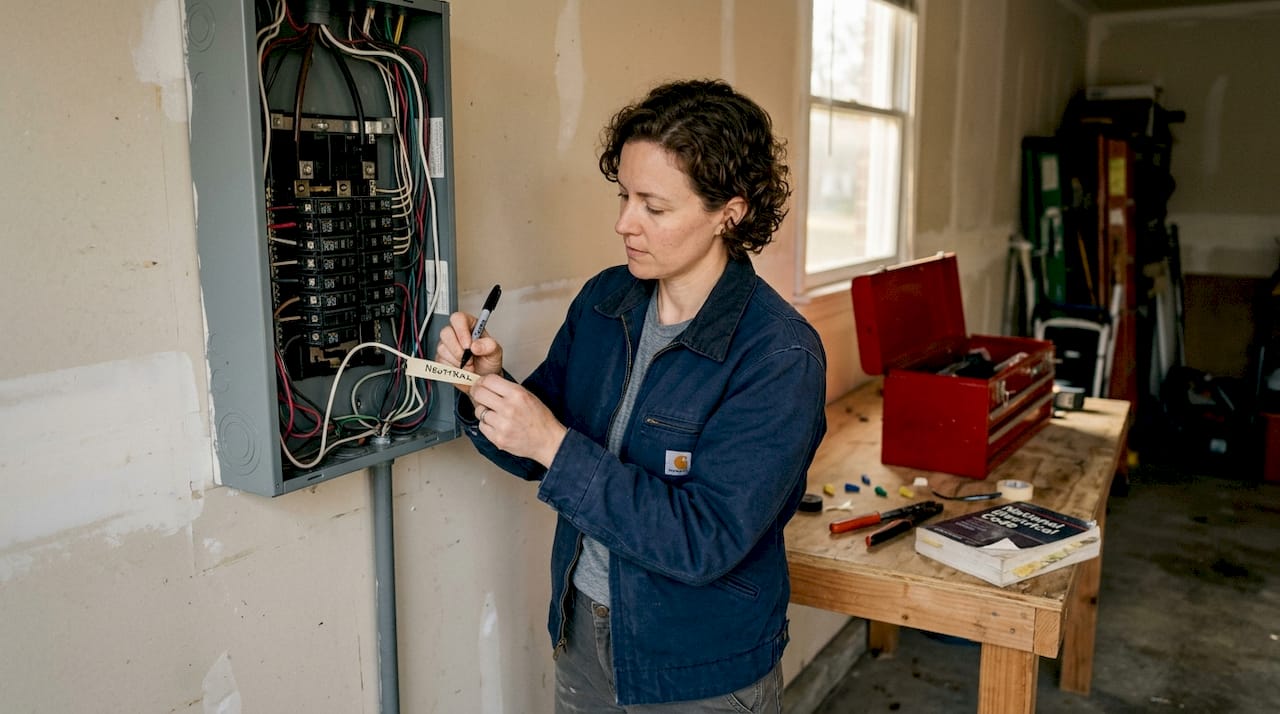
Step 2: Label and document existing circuits. Before removing anything, your electrician will label every circuit in your current panel. This is critical for a smooth transfer to the new panel. Photograph the existing wiring layout for reference.
Step 3: Remove the old panel. With power confirmed off at the meter, the old panel is disconnected and removed. The mounting surface is inspected for any signs of heat damage, moisture, or pest intrusion.
Step 4: Install the new panel and circuits. The new panel is mounted, grounded, and the circuits are reconnected one by one. This step includes installing new breakers rated for each circuit.
Step 5: Restore power and test. The utility reconnects power at the meter. Your electrician then tests each circuit to confirm proper function and checks for any fault indicators.
“Incorrectly installed panels create safety hazards and code violations that can void your homeowner’s insurance and put your family at risk.”
| Task | Owner role | Licensed electrician required |
|---|---|---|
| Applying for permit | Yes, often | Sometimes assists |
| Utility disconnection | No | Yes |
| Panel removal and installation | No | Yes |
| Circuit reconnection | No | Yes |
| Final inspection coordination | Yes | Yes |
Pro Tip: Ask your electrician about adding a whole-home surge protector during the panel installation. It’s a low-cost addition at this stage that protects every device in your home from voltage spikes. Explore professional electrical support options that bundle surge protection with panel upgrades for better overall value.
Once you understand the steps, it’s important to know how to confirm everything was done safely and correctly.
After the upgrade: Inspection, testing, and next steps
A completed panel installation is not finished until it passes inspection and you’ve verified that every circuit operates correctly. Skipping this phase is where many property owners make a costly mistake.
Code inspection is required after any permitted electrical work in Oklahoma. An inspector from your city or county will visit the property to review the installation. They will check grounding, wire gauge, breaker ratings, labeling, and clearance around the panel. Proper inspection ensures the upgraded system operates safely and meets current National Electrical Code (NEC) standards.
What to expect during the inspection visit:
- Inspector reviews the permit paperwork on site
- Panel cover is removed for visual inspection of wiring
- Grounding and bonding connections are verified
- AFCI and GFCI breaker placement is confirmed per code
- Inspector issues approval or a list of corrections needed
After the inspection passes, test each circuit yourself by systematically plugging in a simple lamp or device and flipping breakers on and off. This confirms your panel labeling is accurate and that no circuits were swapped during installation.
| Maintenance task | Recommended interval |
|---|---|
| Visual panel inspection | Every 12 months |
| Breaker test (manual trip and reset) | Every 12 months |
| GFCI outlet testing | Every 6 months |
| Full professional inspection | Every 3 to 5 years |
| Thermal imaging scan | Every 5 years |
Common post-upgrade issues include mislabeled circuits, a breaker that won’t reset, or outlets on a circuit that aren’t responding. Most of these are minor corrections your electrician can address quickly. For ongoing protection, follow a consistent schedule using this electrical maintenance guide to track inspection dates and keep your system running safely year after year.
With your panel successfully upgraded and verified, here’s our perspective for local Oklahoma City and Edmond homeowners and business owners.
What most people miss about panel upgrades
Here’s something we see constantly in the OKC Metro: property owners wait until something fails before calling us. A breaker burns out, an appliance stops working, or worse, there’s a small fire. Then the conversation shifts from a planned upgrade to emergency repairs, which cost more and create far more disruption.
What most guides won’t tell you is that piecemeal fixes rarely solve the root problem. Swapping one bad breaker while leaving an undersized or aging panel in place is like replacing one bad tire on a car with worn-out axles. The underlying risk remains.
Code and insurance requirements have also tightened significantly in recent years. Some Oklahoma City Metro insurers now require proof of a modern panel before renewing policies on older homes. A full upgrade, done once and done correctly, satisfies these requirements cleanly.
Working with local professionals who know Oklahoma codes and utility requirements means fewer surprises. The value of professional electrical services is not just the labor. It’s the peace of mind that comes from knowing your property meets every current safety standard without shortcuts.
Work with trusted professionals in Oklahoma City
If this guide has shown you anything, it’s that a panel upgrade is one of the highest-impact investments you can make in your home or business’s safety and long-term value.

Shepherd Electrical serves homeowners and small business owners across the Oklahoma City Metro area with expert panel upgrades, code compliance support, and thorough safety assessments. Our team knows local permit requirements and utility coordination inside and out. Explore our full electrical services overview or use our easy online booking to schedule an assessment today. Whether you’re ready to upgrade now or just exploring your options, our find nearby electrical contractors page makes it simple to connect with the right local expert. Visit Shepherd Electrical to get started.
Frequently asked questions
How do I know if my electrical panel needs upgrading?
Outdated panels are more likely to fail and cause safety issues, so if yours is over 25 years old, trips frequently, or struggles with new appliances, it’s time to have it evaluated by a licensed electrician.
Can I upgrade my own electrical panel in Oklahoma City?
Local codes typically require permits, inspections, and licensed electrician involvement for panel work, so DIY panel replacement is not a safe or legal option for most homeowners. A professional assessment ensures the work meets all code requirements.
What does an electrical panel upgrade usually cost?
Costs vary based on panel size, labor, and any additional code upgrades needed, but most standard home panel replacements in the Oklahoma City area range from $1,500 to $3,500.
Will upgrading my electrical panel improve my home’s value?
Yes, modern upgrades can boost home value by improving safety, meeting buyer expectations, and satisfying insurance requirements that older panels may not fulfill.