

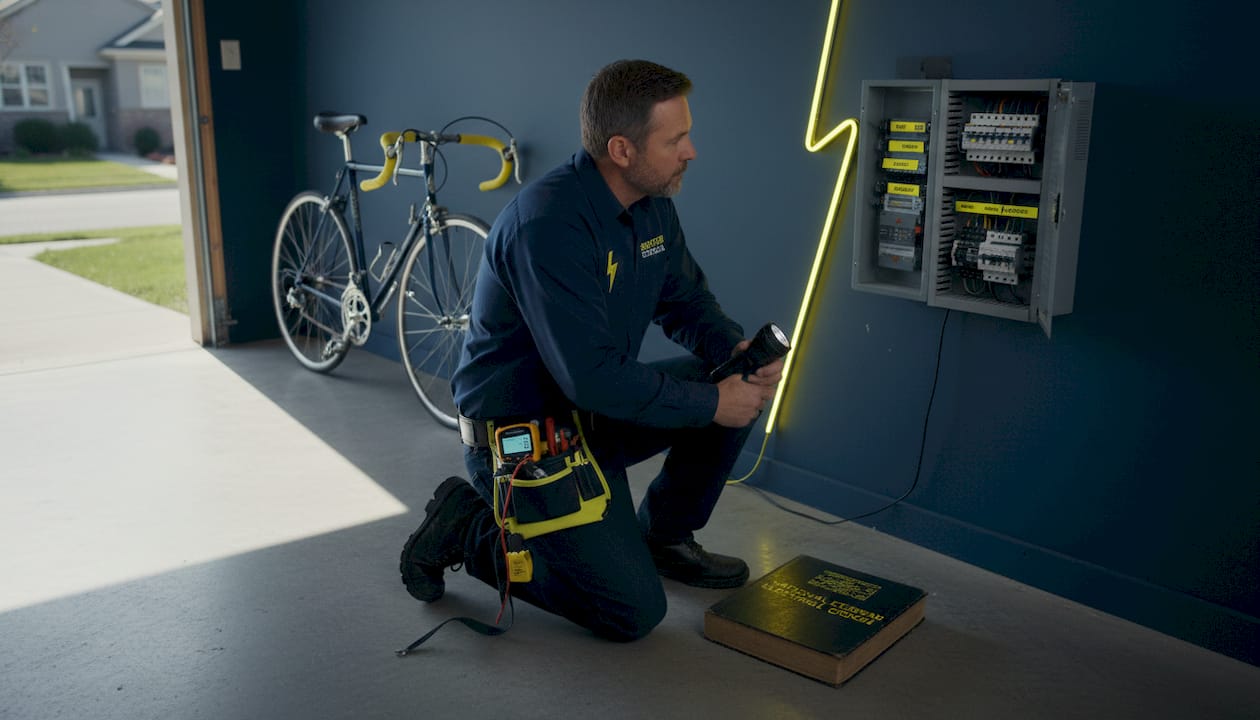
Electrical code compliance gets dismissed as bureaucratic red tape more often than it deserves. The truth is, it’s the difference between a home that protects your family and one that quietly puts them at risk. Oklahoma homeowners and small business owners face a layer of complexity that most other states don’t: your city’s adopted code version may be years behind the current national standard, and that gap can affect everything from project safety to insurance coverage. This guide breaks down what code compliance actually means for your property, your wallet, and your peace of mind.
Table of Contents
- Why electrical code compliance matters for safety and efficiency
- Navigating Oklahoma’s electrical codes and regional differences
- Key elements of code-compliant electrical systems
- Maintenance and upgrades: Reducing downtime and boosting efficiency
- A local expert’s take: Practical wisdom on code compliance in Oklahoma
- Next steps: Find certified electrical services in Oklahoma
- Frequently asked questions
Key Takeaways
| Point | Details |
|---|---|
| Safety first | Electrical code compliance prevents fires, shock hazards, and protects homes and businesses. |
| Efficiency gains | Proper compliance with load analysis and maintenance reduces energy waste and downtime. |
| Regional differences matter | Oklahoma often uses older codes, so verify your local requirements before starting projects. |
| Upgrades pay off | Investing in code-compliant upgrades and maintenance ensures long-term reliability and savings. |
Why electrical code compliance matters for safety and efficiency
Electrical codes aren’t bureaucratic checklists. They’re the result of decades of incident reports, engineering research, and hard lessons learned after fires, electrocutions, and expensive equipment failures. Every requirement in the National Electrical Code (NEC) exists because someone identified a real-world hazard and figured out how to prevent it.
When your electrical system follows current code, you’re getting more than a permit sign-off. You’re getting a system designed to protect against the most common and most dangerous failure points. Improperly wired circuits are one of the leading causes of residential fires in the U.S., and many of those fires happen in homes where shortcuts were taken during installation, often because no one verified what the code actually required.
For small businesses, the stakes are even higher. A power interruption caused by an overloaded or poorly maintained system can mean lost inventory, failed equipment, and unhappy customers. Code compliance improves efficiency through proper load analysis, grounding, and equipment maintenance, reducing downtime and energy waste. That means fewer outages and lower utility bills over time.
Here’s what code-compliant electrical work actually delivers for your property:
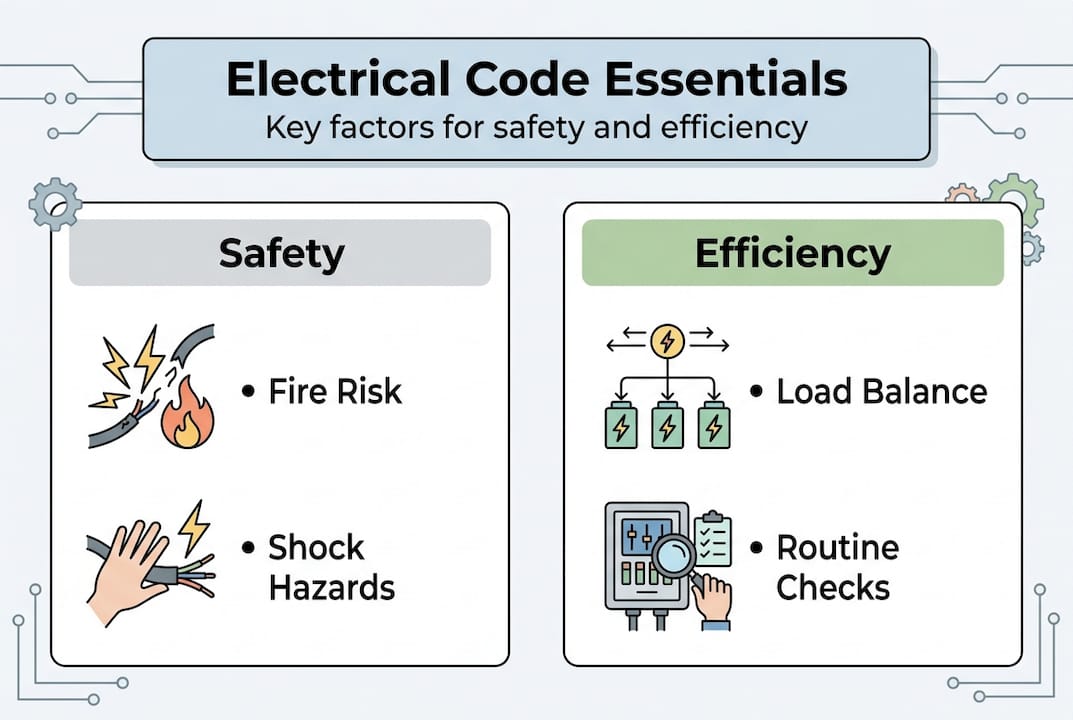
- Fire prevention: Correct wire sizing, circuit breaker ratings, and panel configurations reduce the risk of thermal overloads and arcing faults
- Safer installations: Proper device placement and protection requirements, including GFCI and AFCI breakers, guard against electrocution in high-risk areas like kitchens and bathrooms
- Reduced interruptions: Systems built to handle actual load demands don’t trip breakers or overheat under normal use
- Lower operating costs: Optimized circuits and well-maintained equipment draw less power and require fewer emergency repairs
“Code compliance isn’t the ceiling. It’s the floor. The best electrical systems are built to exceed minimum standards, not just meet them.”
If you’re considering improvements, learning more about how to upgrade home wiring for safety and efficiency is a strong first step. And whether you own a home or a business, professional electrical services can ensure that every part of your system is built and maintained to the right standard. For commercial property owners, understanding commercial wiring efficiency is especially valuable when planning renovations or expansions.
Navigating Oklahoma’s electrical codes and regional differences
Here’s where many Oklahoma property owners get caught off guard. The NEC is updated every three years, but states and cities are not required to adopt each new version immediately. Oklahoma municipalities each decide when, or whether, to adopt the latest edition. As a result, you could be planning a project in Oklahoma City under a code version that’s almost a decade old.
Oklahoma City currently operates under the 2017 NEC as of 2025, while the national standard has already moved to the 2023 NEC. That’s a meaningful gap. Several safety requirements introduced in the 2020 and 2023 editions, including expanded AFCI protection zones and updated EV charging circuit requirements, are simply not enforced in OKC under the older code.
Here’s a quick comparison of NEC adoption across some major Oklahoma cities:
| City | NEC version adopted | Notes |
|---|---|---|
| Oklahoma City | 2017 NEC | Confirmed by local AHJ as of 2025 |
| Tulsa | 2020 NEC | Adopted more recently than OKC |
| Norman | 2017 NEC | Check local building department for updates |
| Edmond | 2020 NEC | More current than OKC proper |
| Broken Arrow | 2020 NEC | Follows Tulsa area adoption pattern |
This table is a general reference. Code versions change, and local amendments are common. Always verify the exact requirements before starting work.
Pro Tip: Never assume your city has adopted the latest code. Call your local Authority Having Jurisdiction (AHJ), which is your city’s building department, before planning any electrical upgrade or new installation. A five-minute call can save you from a failed inspection or a costly redo.
Some of the most common problems caused by working under outdated code assumptions include:
- Installing AFCI breakers only where required by an older code version, leaving newer high-risk areas unprotected
- Overlooking updated clearance requirements for electrical panels and service equipment
- Missing revised grounding and bonding requirements for specific appliances or outbuildings
- Installing EV charging circuits without meeting newer load calculation standards
Getting a home electrical inspection before you begin any project helps identify what your current system actually looks like versus what the local code requires. Understanding residential electrician duties also helps you ask better questions when you hire a contractor. For permit-specific guidance, reviewing what’s involved in electrical permit compliance in Oklahoma will prepare you for the approval process.
Key elements of code-compliant electrical systems
Now that you know how regional codes affect your project, let’s break down the most critical elements of compliant electrical systems. These aren’t abstract concepts. Each one has a direct effect on how safe, reliable, and efficient your system is day to day.
1. Load analysis
Load analysis means calculating how much electrical demand your circuits and panels need to support. An undersized circuit running near capacity generates heat constantly, shortens equipment life, and significantly increases fire risk. A proper load calculation done before any installation or upgrade tells you exactly what your system can handle and where you need more capacity.
2. Grounding and bonding
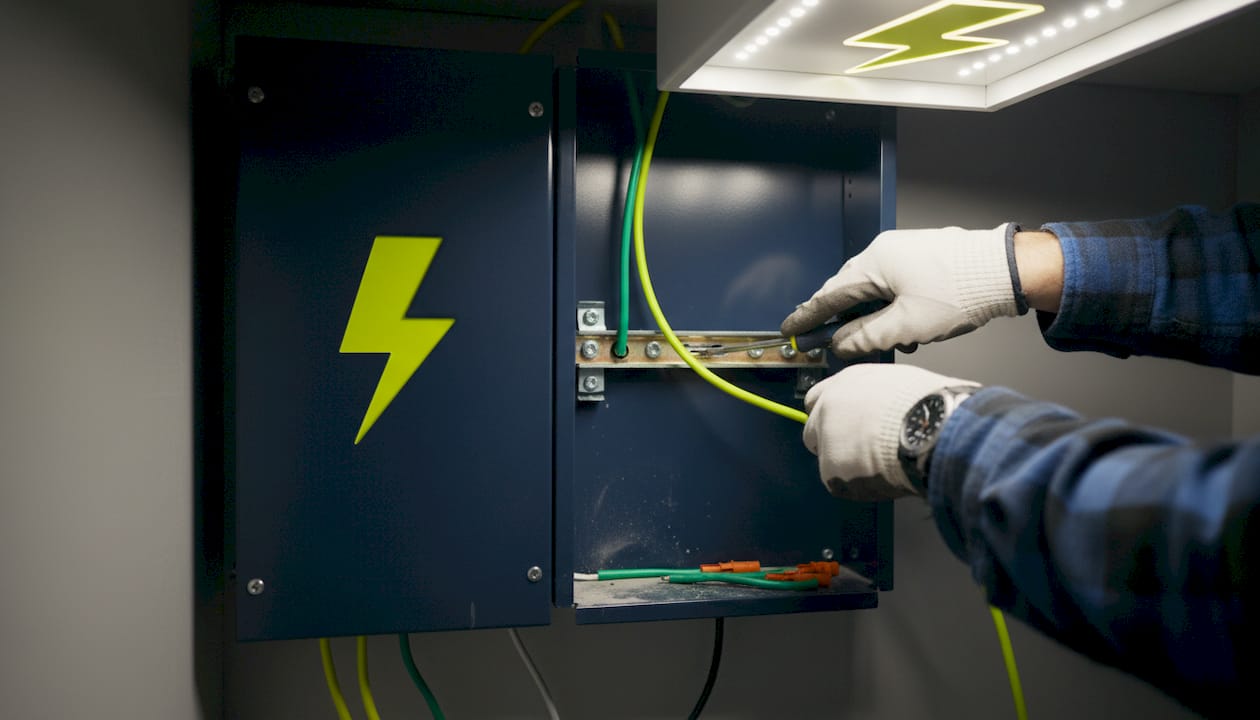
Grounding provides a safe path for fault current to travel if something goes wrong. Without proper grounding, a fault in an appliance or wiring can energize metal surfaces in your home, creating a serious electrocution hazard. Bonding ensures that all metal parts of your electrical system are connected and at the same voltage potential, preventing dangerous voltage differences. Both are required by NEC and directly tied to occupant safety.
3. GFCI and AFCI protection
Ground Fault Circuit Interrupters (GFCIs) protect against shock in wet areas. Arc Fault Circuit Interrupters (AFCIs) detect dangerous arcing in wiring before it can ignite a fire. Both are required in specific locations by the NEC, and both are widely credited with preventing deaths and property losses every year.
4. Panel condition and capacity
Outdated panels, especially those with known defect histories like certain Federal Pacific and Zinsco brands, are a compliance and safety liability. Panels need to be properly rated, have working breakers, and include sufficient space for the loads they serve.
5. Routine maintenance
Code compliance reduces downtime and energy waste through equipment maintenance, not just correct installation. Loose connections, corroded terminals, and worn insulation all cause resistance and heat, which waste energy and create hazards.
Here’s a practical comparison of what compliant versus non-compliant systems look like in real outcomes:
| Factor | Code-compliant system | Non-compliant system |
|---|---|---|
| Fire risk | Significantly reduced through proper wiring and protection | Elevated due to overloads, arcing, and improper grounding |
| Energy efficiency | Optimized through correct load distribution | Reduced by resistance from poor connections and overloaded circuits |
| Insurance coverage | Generally supported and easier to claim | May be denied for fire or damage caused by known violations |
| Resale value | Adds confidence for buyers and inspectors | Can cause delays, required repairs, or price reductions at sale |
| Downtime risk | Minimal with proper circuit design and maintenance | Higher risk of trips, failures, and emergency service calls |
Pro Tip: Schedule an electrical system assessment before any significant renovation. Knowing the condition and capacity of your existing system prevents expensive surprises mid-project. For properties with older equipment, exploring electrical panel upgrades may be the single highest-impact investment you can make.
Maintenance and upgrades: Reducing downtime and boosting efficiency
Once you’ve installed a code-compliant system, the work isn’t done. Electrical systems degrade over time. Connections loosen, insulation ages, and load demands change as you add appliances, electronics, or equipment. Ongoing maintenance and well-planned upgrades are what keep your system performing safely and efficiently for the long term.
The NFPA’s maintenance framework makes clear that proper load analysis and maintenance improve efficiency and reduce energy waste. That means treating your electrical system the same way you’d treat your HVAC or plumbing: with scheduled attention, not just emergency fixes.
Here are practical steps that both homeowners and business owners should build into their maintenance routine:
- Schedule annual or biannual inspections to check for loose connections, worn insulation, and panel condition
- Update your panel if it’s more than 25 years old or showing signs of corrosion, tripped breakers, or heat damage
- Add surge protection at the panel level to shield sensitive electronics and appliances from voltage spikes caused by storms or utility switching events (common in Oklahoma)
- Monitor circuit loads when adding new appliances or equipment, especially high-draw items like EV chargers, air conditioners, or commercial kitchen equipment
- Replace outdated wiring in older homes, particularly aluminum branch circuit wiring from the 1960s and 1970s, which carries specific fire risks
- Test GFCI and AFCI devices monthly to confirm they’re tripping correctly
Pro Tip: Investing in a modern electrical panel and whole-home surge protection can pay for itself quickly by preventing even a single instance of appliance damage or emergency service call. In Oklahoma, where severe storms and lightning strikes are seasonal realities, surge protection isn’t optional for serious homeowners.
For a complete breakdown of what regular care looks like, the electrical maintenance guide for residential systems covers the essentials in plain language. If you’re unsure about your panel’s condition, the panel hazards guide for Edmond and OKC homeowners is a valuable resource for spotting warning signs early.
A local expert’s take: Practical wisdom on code compliance in Oklahoma
Here’s something we see regularly in the field: homeowners and business owners who did their homework but still ran into problems because they treated code compliance as a one-time task rather than an ongoing responsibility. They got their permit, passed inspection, and moved on. Years later, they’re dealing with a panel that can’t handle new demand, or a circuit that was code-legal in 2012 but creates real hazards today.
The “minimum standard” mindset is the biggest trap in electrical compliance. Meeting the minimum keeps you legal for a moment in time. It doesn’t account for how your property’s electrical needs will evolve, how your city’s code might change, or how a system installed just to pass inspection performs under real-world use.
What we’ve learned after years of working with Oklahoma homeowners and businesses is this: the properties with the fewest problems are the ones where the owners treat electrical compliance as an investment with a long runway, not a box to check. They verify current code with the AHJ before every project, not just for permits. They ask for documentation. They schedule regular maintenance instead of waiting for something to fail. And they don’t assume that work done years ago still meets current standards.
Oklahoma’s code environment makes this especially important. Because OKC operates under the 2017 NEC rather than the current edition, you could easily hire a contractor who meets the letter of the local law but leaves you without protections that have been standard elsewhere for years. That’s not necessarily the contractor’s fault. It’s just how our state’s adoption landscape works. The solution is to work with electricians who know the local code and can also explain what the newer editions recommend, so you can make an informed choice about exceeding the minimum.
If you’re planning any project, start with a clear picture of your current system. Learning how to upgrade home wiring for both safety and efficiency gives you a solid baseline for those conversations.
Treat the code as your starting point, then ask how you can do better. That’s the approach that protects your family, your business, and your property value over the long term.
Next steps: Find certified electrical services in Oklahoma
Navigating Oklahoma’s patchwork of code adoption is much easier when you have a licensed contractor who already knows the local landscape.

At Shepherd Electrical, we serve homeowners and business owners throughout Edmond and the Oklahoma City Metro with code-compliant installations, system assessments, panel upgrades, and ongoing maintenance. We verify local AHJ requirements before every project so you’re never caught off guard by a failed inspection or a gap in your system’s protection. Our team handles everything from routine inspections to advanced solutions like EV charging stations, surge protection, and backup power systems. Explore our full electrical services overview to find the right solution for your property. Ready to get started? Find experienced electrical contractors near me in the OKC area, or learn more about choosing electrical contractor Edmond homeowners rely on for safety and efficiency.
Frequently asked questions
How do I verify which electrical code applies to my Oklahoma project?
Contact your local Authority Having Jurisdiction, typically your city’s building department, to confirm the current NEC version before starting any work. OKC currently uses the 2017 NEC, but other municipalities may be on a different version.
What benefits does electrical code compliance offer for small businesses?
Compliance minimizes fire risk and operational downtime, supports insurance eligibility, and ensures your system runs efficiently. Proper load analysis and maintenance are key components that directly reduce energy waste and equipment failures.
Can code-compliant upgrades reduce my home’s energy costs?
Yes. Code-based improvements like correct load distribution, proper grounding, and maintained connections reduce the resistance and heat that waste energy. Load analysis and equipment maintenance translate directly into lower utility bills over time.
What’s the risk of doing electrical work without checking for code updates?
You risk installing equipment that doesn’t meet current local requirements, which can result in failed inspections, voided insurance claims, and genuine safety hazards. Because Oklahoma lags national NEC adoption, even experienced contractors can make mistakes if they don’t verify the specific version your city uses.
Recommended
- Commercial wiring: safety and energy efficiency guide
- Electrical panels: Safety, upgrades, and compliance
- Electrical system assessment for safer homes: 2026 guide
- Electrician Near Me at Shepherd Electrical
Need help with this at your home?
Shepherd Electrical helps Edmond and OKC metro homeowners with residential electrical service, repairs, upgrades, panels, EV chargers, solar, and backup power. Free estimates are available, and workmanship is backed by a lifetime guarantee.