

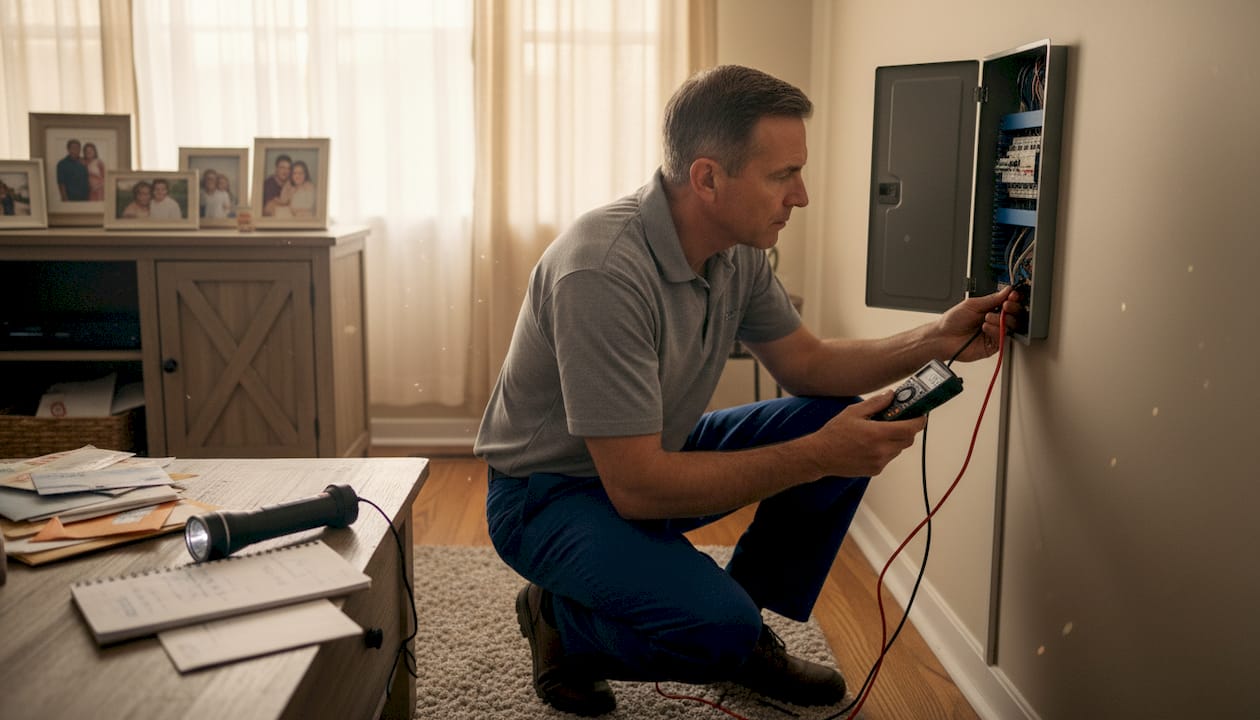
Electrical problems cause thousands of home fires every year, yet most homeowners treat their electrical systems like a set-it-and-forget-it appliance. The truth is, 6% of annual home structure fires trace back to electrical distribution and lighting issues. For Edmond and Oklahoma City homeowners, that number represents real risk hiding behind walls, inside panels, and underneath floors. This guide breaks down what residential electrical maintenance actually means, why it matters specifically for homes in this region, and what practical steps you can take right now to protect your family and your investment.
Table of Contents
- What is residential electrical maintenance?
- Why is electrical maintenance essential for Edmond and OKC homes?
- Core components of a residential electrical maintenance plan
- How to spot warning signs and avoid costly mistakes
- Our take: Why maintenance beats emergency repairs every time
- Get expert help: Reliable residential electricians in Edmond and OKC
- Frequently asked questions
Key Takeaways
| Point | Details |
|---|---|
| Electrical fires are preventable | Routine maintenance can cut your risk of electrical fires by 50 percent. |
| Older homes need extra vigilance | Homes built before 1965 should have their wiring inspected more frequently due to higher risk. |
| Warning signs matter | Pay attention to flickering lights, burning odors, or warm outlets as early signs of trouble. |
| Upgrade safety devices | Adding AFCI and GFCI devices is proven to significantly reduce hazard rates. |
| Professional help is safest | Licensed electricians are essential for repairs, upgrades, and major maintenance. |
What is residential electrical maintenance?
Residential electrical maintenance is the scheduled process of inspecting, testing, repairing, and upgrading the electrical systems inside and around your home. It is not just calling an electrician when the lights go out. Think of it the way you think about changing your car’s oil: you do it on a schedule to prevent a breakdown, not after the engine has already seized.
A proper maintenance plan covers every major component of your home’s electrical system. That includes your main service panel, circuit breakers, wiring, outlets, switches, and safety devices like smoke detectors and ground fault circuit interrupters (GFCIs). Each of these components ages, wears, and can develop faults that are invisible to the naked eye without the right tools and training.
Here is what a standard residential electrical maintenance visit typically covers:
- Panel inspection: Checking for corrosion, loose connections, and signs of overheating
- Wiring review: Identifying damaged insulation, improper splices, or outdated materials
- Outlet and switch testing: Verifying correct grounding and detecting loose connections
- Safety device checks: Testing GFCIs, AFCIs (arc fault circuit interrupters), and smoke alarms
- Load assessment: Confirming your system handles your current energy demands safely
- Code compliance review: Ensuring everything meets current National Electrical Code (NEC) standards
For Edmond and OKC homeowners, local codes align with NEC requirements, and licensed electricians are required for most panel and wiring work. Skipping professional electrical services overview in favor of guesswork is how small issues become expensive disasters. According to a detailed electrical inspection guide, a thorough inspection catches faults before they escalate into safety hazards.
Routine maintenance reduces fire risk by up to 50%, which makes it one of the highest-return safety investments a homeowner can make. That figure alone should shift how you think about scheduling your next inspection.
Why is electrical maintenance essential for Edmond and OKC homes?
Edmond and Oklahoma City have a mix of housing stock that ranges from brand-new builds to homes constructed in the 1950s and 1960s. That older inventory carries serious electrical risk. Pre-1965 homes with aluminum or cloth wiring carry a fire risk up to 55 times higher than homes with modern copper wiring. If your home was built before 1970 and has never had a full electrical upgrade, that is not a minor concern.
Beyond aging wiring, Edmond and OKC homeowners face a few region-specific hazards worth knowing:
- Federal Pacific and Zinsco panels: These older panel brands, common in mid-century Oklahoma homes, are known to fail silently and have been linked to fires
- Rodent damage: Oklahoma’s climate creates ideal conditions for rodents, which chew through wire insulation inside walls and attics
- Water intrusion: Severe storms, including the hail and flooding events common to central Oklahoma, force water into outlets, panels, and junction boxes
- Winter overloads: Cold snaps push homeowners to run space heaters, electric blankets, and other high-draw appliances simultaneously, stressing older circuits
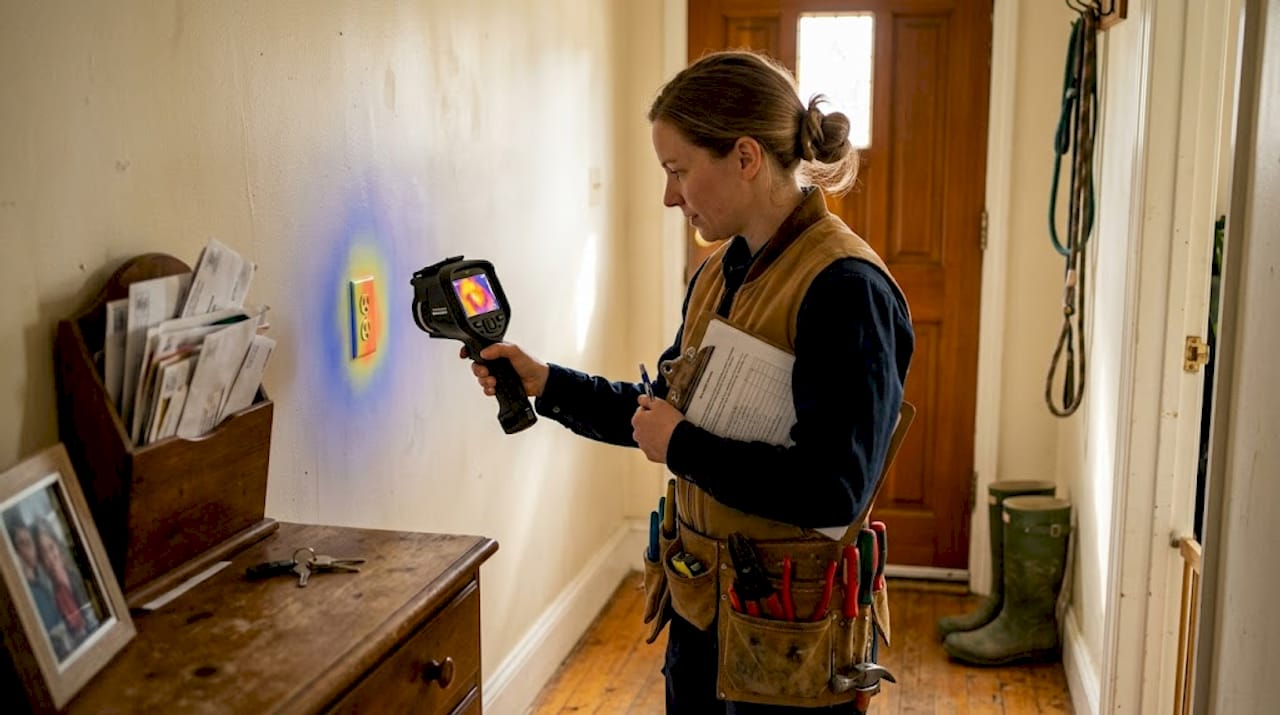
Silent arcing is one of the most dangerous electrical hazards in older homes. It produces no visible sparks and no tripped breakers, but it generates enough heat to ignite insulation inside walls. Thermal imaging during a professional inspection can detect these hot spots before they become fires.
This is why a professional electrical system assessment is so valuable. Thermal cameras reveal heat signatures that no visual check can catch. The thermal imaging insights available from modern inspection tools have transformed how electricians find problems early.
For a deeper look at specific panel risks common in this area, the panel hazards guide covers what to watch for in older Oklahoma homes.
Pro Tip: If a circuit breaker trips, reset it once. If it trips again immediately, stop. Do not keep resetting it. A breaker that keeps tripping is telling you something is wrong, and forcing it back on can cause a fire.
Core components of a residential electrical maintenance plan
A real maintenance plan is not a single visit. It is a structured, repeatable process that keeps your system performing safely year after year. Here is how to build one that works:
- Schedule a baseline inspection. Start with a full professional inspection to document the current condition of your system. This gives you a clear picture of what needs attention now versus what can wait.
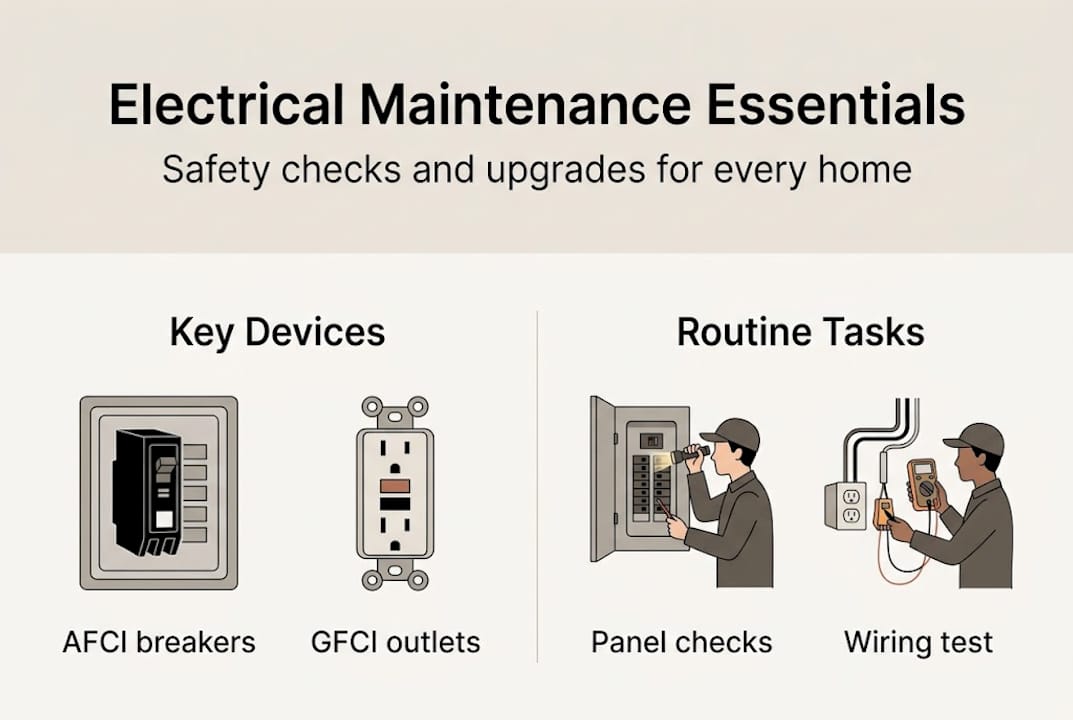
- Test all safety devices. GFCIs should be tested monthly. AFCIs should be tested annually. Both should be replaced if they fail to respond.
- Inspect the panel twice a year. Look for signs of rust, burning smells, or discoloration around breakers. These are red flags that need immediate professional attention.
- Check outlets and switches. Loose outlets, outlets that spark when you plug something in, or switches that feel warm are warning signs worth investigating.
- Review your energy load. If you have added major appliances, an EV charger, or a home office setup since your last inspection, your circuits may need upgrading.
| Safety device | What it prevents | Effectiveness |
|---|---|---|
| AFCI breaker | Wiring arc fires | Prevents 50% of wiring fires |
| GFCI outlet | Electrocution near water | Reduces electrocutions by 81% |
| Surge protector | Equipment damage from surges | Protects devices from voltage spikes |
| Smoke detector | Fire detection | Cuts fire fatality risk significantly |
The home maintenance tips from professional inspectors consistently rank electrical checks among the top priorities for homeowners. Understanding the full scope of electrician duties and costs helps you budget realistically for these visits.
For a full breakdown of what residential electrician services include, it is worth reviewing before your first scheduled maintenance appointment.
Pro Tip: Schedule electrical maintenance twice a year: once before winter heating season and once after a major storm. Oklahoma’s weather is hard on electrical systems, and those two windows catch the most common seasonal damage.
How to spot warning signs and avoid costly mistakes
Knowing the essentials is not enough. Spotting trouble early and acting on it is what actually keeps your home safe. Most electrical fires do not start suddenly. They build quietly over weeks or months through ignored warning signs.
Loose connections cause 10% of home ignitions, and most of those connections could have been caught and fixed during a routine inspection. Here is what to watch for:
- Flickering or dimming lights when appliances kick on (suggests a weak connection or overloaded circuit)
- Burning or fishy smell near outlets, panels, or switches (burning plastic insulation has a distinct odor)
- Warm or discolored outlet covers (heat buildup behind the wall is a serious red flag)
- Frequent breaker trips on the same circuit (the circuit is overloaded or there is a fault)
- Buzzing or crackling sounds from outlets or the panel (arcing is happening right now)
| Warning sign | Likely cause | Action required |
|---|---|---|
| Flickering lights | Loose wiring or overload | Schedule inspection within 30 days |
| Burning smell | Melting insulation or arcing | Call an electrician immediately |
| Warm outlet | Overloaded circuit or fault | Stop using outlet, call electrician |
| Repeated breaker trips | Overload or short circuit | Do not reset again, call for service |
| Buzzing from panel | Loose breaker or arcing | Emergency service needed |
The biggest mistake homeowners make is attempting DIY fixes on critical electrical components. Replacing a light fixture is one thing. Rewiring an outlet, swapping a breaker, or opening a panel without proper training is genuinely dangerous and often violates local code. If something goes wrong, your homeowner’s insurance may not cover damage from unlicensed electrical work.
Use the electrical services overview to understand which tasks require a licensed pro. When you are ready to act, find local electricians who are licensed, insured, and familiar with Edmond and OKC code requirements. A quick home inspection checklist can also help you document concerns before your electrician arrives.
Our take: Why maintenance beats emergency repairs every time
After years of working on electrical systems across Edmond and Oklahoma City, one pattern stands out clearly. Homeowners who call us for emergencies almost always had warning signs they ignored for months. A breaker that kept tripping. An outlet that felt warm. A panel that hummed a little louder than usual.
Emergency electrical repairs cost significantly more than scheduled maintenance, and that is before you factor in potential property damage or personal injury. More importantly, some emergencies cannot be undone. A fire that starts inside a wall at 2 a.m. does not give you a second chance.
The conventional wisdom says call an electrician when something breaks. We think that is exactly backwards. Treating electrical maintenance as a routine investment, the same way you treat your HVAC tune-up or roof inspection, changes your risk profile entirely. The electrician duties in Edmond page outlines what proactive service actually looks like and what it costs compared to reactive repairs.
Pro Tip: Reframe maintenance as insurance with a guaranteed payout. Every inspection either confirms your system is safe or catches a problem before it costs you far more to fix.
Get expert help: Reliable residential electricians in Edmond and OKC
Your home’s electrical system works hard every single day, and it deserves the same attention you give to any other critical system in your house. At Shepherd Electrical, we specialize in residential electrical maintenance for homeowners and property managers across Edmond and the Oklahoma City Metro area.

From panel inspections and GFCI upgrades to thermal imaging and full system assessments, our licensed electricians bring the expertise your home needs. We follow NFPA, NEC, and OSHA standards on every job. Explore our full electrical services overview or go straight to our residential electrician services page to book your maintenance visit. Do not wait for a warning sign to become an emergency.
Frequently asked questions
How often should residential electrical maintenance be performed?
Annual maintenance is the standard recommendation from safety authorities, but homes with known issues or older wiring should be inspected more frequently. Routine maintenance cuts fire risk by up to 50%, making it one of the most cost-effective safety steps you can take.
What are the signs my home’s electrical system needs urgent attention?
Frequent breaker trips, burning smells, flickering lights, and warm outlets all signal that something is wrong and require immediate professional evaluation. Loose connections alone account for 10% of home ignitions, so these signs should never be dismissed.
Are DIY solutions safe for electrical maintenance?
Changing a light bulb is fine, but system inspections, panel work, and wiring repairs must be handled by a licensed electrician. Homes with older wiring carry up to 55 times the fire risk, and unlicensed work can void your insurance coverage.
Can modern safety devices really prevent electrical hazards?
Absolutely. AFCIs prevent 50% of wiring fires and GFCIs reduce electrocutions by 81%, making both devices essential upgrades for any home that does not already have them installed.
Recommended
- Electrical system assessment for safer homes: 2026 guide
- Residential Electrical Panel Hazards – Shepherd Electrical
- Residential electricians: duties, costs & safety in Edmond
- Electrician Near Me at Shepherd Electrical
- HVAC DIY Maintenance How-To Guide
- Electrical Safety Guide Antwerp Expats: Step-by-Step Compliance
Need help with this at your home?
Shepherd Electrical helps Edmond and OKC metro homeowners with troubleshooting, repairs, GFCIs, outlets, and safety inspections. Free estimates are available, and workmanship is backed by a lifetime guarantee.