

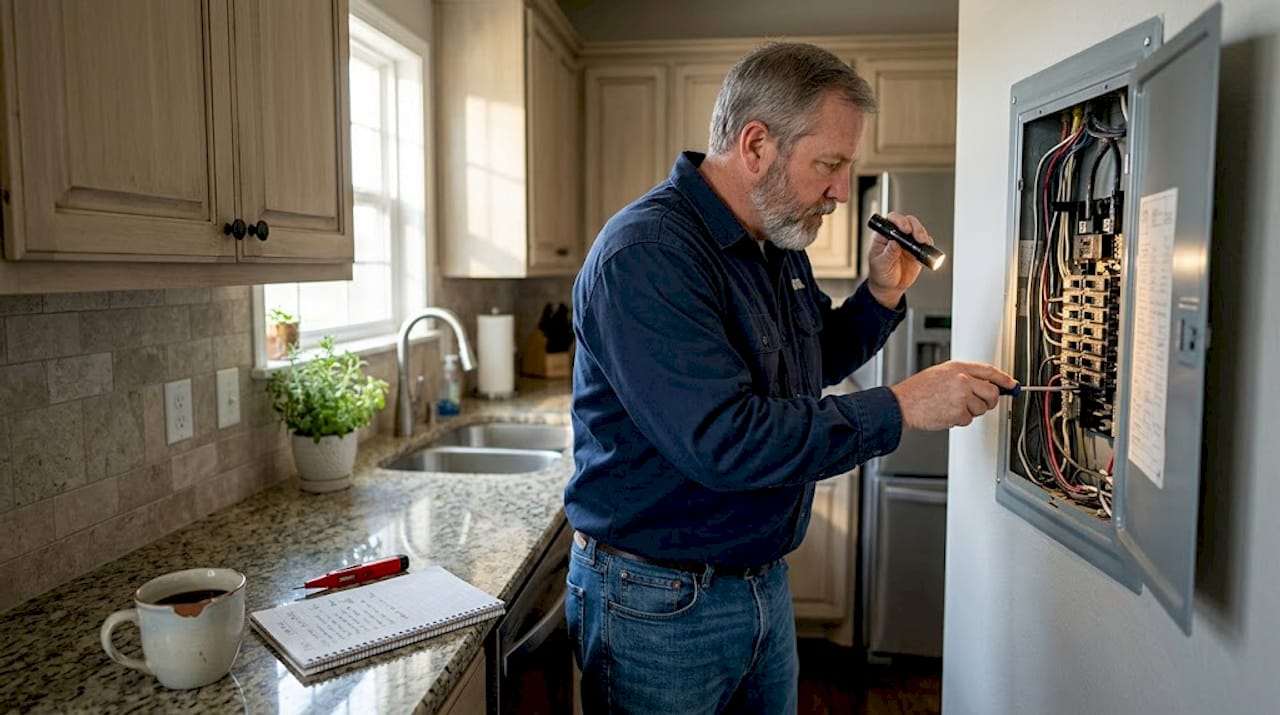
Electrical problems don’t announce themselves before causing damage. One overloaded outlet, one ignored breaker trip, or one missed inspection can mean a fire, a costly repair bill, or a business shutdown at the worst possible time. Edmond and Oklahoma City homeowners face unique challenges: aging infrastructure in older neighborhoods, severe storm seasons that stress electrical systems, and the ever-growing demand of modern appliances and home offices. This guide walks you through practical, safety-focused maintenance habits that genuinely protect your property, your family, and your bottom line.
Table of Contents
- Essential safety rules for electrical maintenance
- Preventing surges and extending appliance life
- Routine inspection checklist for homeowners & businesses
- When to call a licensed electrician
- Our take: The overlooked value of proactive maintenance
- How Shepherd Electrical keeps Edmond & OKC powered safely
- Frequently asked questions
Key Takeaways
| Point | Details |
|---|---|
| Prioritize safety | Always follow essential safety rules to minimize risks of fire or shock at home or work. |
| Protect against surges | Use both plug-in and whole-home surge protection to extend the life of appliances and electronics. |
| Use inspection checklists | Regularly follow a thorough checklist to spot hazards before they become emergencies. |
| Know when to call professionals | Distinguish between DIY fixes and situations needing expert intervention to safeguard your property. |
| Proactivity saves money | Proactive electrical maintenance prevents costly damage and brings peace of mind year-round. |
Essential safety rules for electrical maintenance
With the risks framed, let’s lock in the safety basics every responsible owner should follow before touching anything electrical in your home or business.
The most important rule is surprisingly simple: don’t ask one outlet to do too much. Using one high-wattage appliance per outlet is the safest approach, and daisy-chaining power strips or extension cords creates dangerous heat buildup that can ignite inside walls where you’ll never see it coming. That space heater, that coffee maker, that air fryer — each one deserves its own dedicated outlet, not a shared strip already powering three other devices.
Here are the non-negotiable safety basics every owner should know:
- Never plug high-wattage appliances into power strips. Microwaves, space heaters, and window AC units all draw significant current and need a direct wall outlet.
- Inspect cords regularly. Frayed, cracked, or pinched cords are a fire hazard. Replace them rather than tape them.
- Don’t run cords under rugs. Heat can’t escape, and damage goes unnoticed until it’s serious.
- Teach everyone in the house or business how to cut power at the panel in an emergency.
- Check GFCI outlets monthly. Press the test and reset buttons to confirm they’re working. A dead GFCI in a bathroom or kitchen is an unseen hazard.
“Electrical fires are preventable. Most start from avoidable habits — overloaded outlets, damaged cords, and bypassed safety devices.”
When it comes to fire response, knowing the difference between types of fires saves lives. Never use water on electrical fires, keep a Class C fire extinguisher on hand, and always unplug devices by grasping the plug itself rather than yanking the cord. Pulling a cord at an angle weakens the connection inside the plug, creating resistance that generates heat over time.
Pro Tip: A Class C extinguisher is rated specifically for electrical fires. Check the label on your kitchen or garage extinguisher right now. If it’s only rated for A or B fires, replace it.
Before doing any visual inspection work around panels or outlets, a solid home electrical inspection guide can help you understand what you’re looking at and what to leave to a licensed professional.
Preventing surges and extending appliance life
Once the basics are mastered, the next priority is safeguarding your power-hungry investments. A single power surge lasting less than a millisecond can destroy a refrigerator, a flat-screen TV, or an HVAC control board. In Oklahoma, where summer thunderstorms roll through fast and hard, surge damage is a real and recurring expense for homeowners and businesses alike.
Here’s how to protect your equipment step by step:
- Plug in point-of-use surge protectors for entertainment centers, home offices, and kitchen appliances. Look for units rated in joules with a clamping voltage of 400V or lower.
- Ask about whole-home surge protection during your next electrician visit. These devices mount at the main panel and intercept large surges before they reach your devices.
- After any power outage, wait a few minutes before plugging appliances back in. Power restoration sometimes brings transient surges that can damage sensitive electronics.
- Replace aging surge protectors. Most strip-style units have a finite joule capacity. Once absorbed, they no longer protect anything, even if the power light is still on.
- Inspect your main panel for signs of scorching, buzzing, or frequently tripped breakers after storms. These may signal that a surge reached your system.
Whole-home surge protection is strongly recommended after outages or severe storms, particularly in storm-prone regions. For Oklahoma homeowners, this isn’t a luxury add-on. It’s practical insurance for everything plugged into your home.
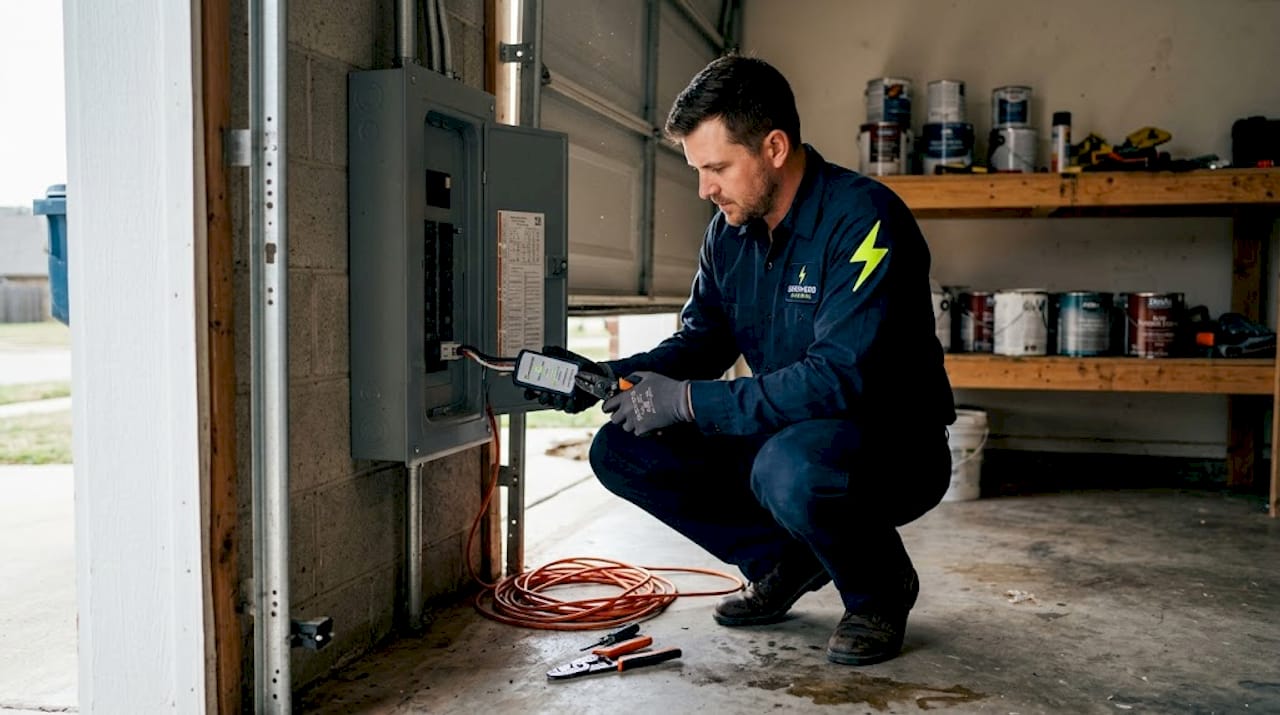
Stat to know: A single lightning-induced power surge can carry tens of thousands of volts. Even a utility switching event during restoration can spike voltage enough to damage unprotected appliances.
If your home is more than 20 years old or you’ve never addressed upgrading home wiring, outdated wiring may actually make surge damage worse by lacking the grounding capacity to handle transient events. Similarly, older panels with known issues can amplify risks. Reviewing panel hazards and upgrades is a smart step for any property that predates the 2000s.
Pro Tip: Point-of-use surge protectors and whole-home protection work best together, not as alternatives. Think of them as layered protection, like a seatbelt and an airbag.
Routine inspection checklist for homeowners & businesses
Now, let’s break down what home and business owners should check and how often. Consistency is what makes maintenance actually work. A once-a-year look around isn’t enough. Small problems compound quietly between visits, and the ones that become expensive emergencies almost always showed early signs that got missed.
The following checklist covers the most common failure points in residential and commercial electrical systems:
Warning signs to watch for:
- Outlets or switch plates that feel warm or hot to the touch
- A burning smell anywhere near electrical panels, outlets, or appliances
- Lights that flicker or dim when large appliances start up
- Breakers that trip repeatedly for the same circuit
- Discoloration or scorch marks around outlets or panel covers
- Outlets that spark when you plug something in
| Task | Frequency | What to look for |
|---|---|---|
| Test GFCI outlets | Monthly | Confirm test/reset cycle works |
| Inspect visible cords and plugs | Monthly | Fraying, cracking, discoloration |
| Check for warm outlets or switches | Monthly | Heat indicates resistance or overload |
| Test smoke and CO detectors | Monthly | Battery status and alarm response |
| Inspect panel for tripped breakers | Monthly | Recurring trips signal circuit overload |
| Clear area around panel | Quarterly | No storage within 3 feet of panel |
| Check outdoor outlets and fixtures | Seasonal | Weather damage, moisture intrusion |
| Inspect extension cord usage | Quarterly | Ensure none are used as permanent wiring |
| Schedule professional assessment | Every 1-2 years | Comprehensive licensed inspection |
One rule that bears repeating: use one high-wattage appliance per outlet and never treat extension cords as permanent wiring. In small business environments especially, this habit tends to slip as equipment grows and outlets don’t.
Document recurring issues. If a breaker trips every time you run the microwave and the dishwasher at the same time, that’s not a quirk. That’s a circuit telling you it’s undersized for the load. Write it down, note when it happens, and bring that information to your electrician.
Your electrical maintenance guide can help you develop a schedule tailored to your property’s specific needs, and a full electrical assessment gives you a professional baseline to work from.
When to call a licensed electrician
Some issues can be addressed by owners, but others require immediate expert intervention. Knowing the line between the two protects you legally, financially, and physically.
Steps to take before calling an electrician:
- Document the problem clearly. Note when it started, how often it occurs, and what devices or circuits are involved.
- Check whether the issue is isolated to one circuit or outlet, or widespread across the property.
- Cut power to the affected circuit at the panel if you suspect a dangerous condition.
- Don’t attempt to open your electrical panel unless you’re simply resetting a clearly tripped breaker.
- Call a licensed electrician if the problem persists, worsens, or involves any of the red-flag signs listed below.
| Situation | DIY safe? | Risk if ignored |
|---|---|---|
| Replacing a light bulb | Yes | Minimal |
| Resetting a tripped breaker (once) | Yes | Low |
| Replacing a worn outlet cover | Yes | Minimal |
| Installing a new outlet or switch | No | Shock, fire, code violation |
| Wiring a new circuit | No | Fire, panel damage |
| Addressing flickering throughout home | No | Wiring fault, potential fire |
| Warm outlet or burning smell | No | Imminent fire risk |
| Breaker that won’t stay reset | No | Overload or short circuit |
| Outdoor wiring repair | No | Electrocution, code violation |
| Installing a subpanel or EV charger | No | Fire, code violation, voided warranty |
Whole-home surge protection installation also belongs firmly in the “call a pro” category, as it requires working inside the main panel where live wiring is exposed.
The financial argument for timely professional visits is strong. A service call that catches a degraded wire connection before it causes a fire costs a fraction of the insurance claim, property damage, or business interruption that follows a serious electrical event. Understanding the professional electrical service value is really about recognizing what you’re avoiding, not just what you’re spending. When you’re ready to schedule, reviewing your options for local electrical services helps you find the right fit for your specific situation.
Our take: The overlooked value of proactive maintenance
Here’s an uncomfortable reality we see play out constantly in Edmond and Oklahoma City: most property owners only call us after something breaks. A breaker that won’t reset, an outlet that sparked and went dead, a panel that buzzes ominously. By that point, the damage is already done, and the repair bill is almost always larger than it would have been with earlier attention.
The conventional wisdom says “if it ain’t broke, don’t fix it.” In electrical systems, that mindset is genuinely dangerous. Electrical degradation is slow and invisible. Connections loosen gradually. Insulation dries and cracks over years. Panels age past their rated service life while continuing to function, right up until they don’t. The system that looks fine from the outside may be accumulating risk quietly inside the walls.
We’ve walked into homes where the owners were completely unaware that their panel had a known manufacturer defect that voided their homeowner’s insurance coverage. We’ve seen small businesses running critical equipment on circuits wired decades before that equipment existed. In both cases, a proactive visit and a modest investment in upgrading residential electrical systems resolved problems before they became catastrophes.
The right way to think about proactive electrical maintenance is as a form of predictable-cost insurance. Spending $200 on an inspection every couple of years is not an extra expense. It’s what replaces the unpredictable and much larger cost of emergency repairs, lost appliances, or structural fire damage. In a region where summer storms regularly test infrastructure and homes range from newly built to decades old, that predictability has real dollar value.
The owners who get the most out of their electrical systems are the ones who treat maintenance as an ongoing discipline, not a reaction to visible problems. They document their panel, they know their home’s wiring age, and they schedule checkups the same way they would for an HVAC system. That mindset shift is the most practical thing we can offer beyond any checklist.
How Shepherd Electrical keeps Edmond & OKC powered safely
Staying on top of electrical maintenance is much easier when you have a local team that knows Oklahoma homes and businesses inside and out.

Shepherd Electrical serves residential and commercial clients across Edmond and the Oklahoma City Metro with a full range of services: safety inspections, panel upgrades, surge protection installation, GFCI upgrades, EV charger installation, and emergency repairs. Our licensed electricians work to NFPA, NEC, and OSHA standards, so you know every job is done right and up to code. Whether you’re due for a routine checkup or facing an urgent issue, explore our full electrical services to see how we can help. When you’re ready to book, find an Edmond/OKC electrician near you, or learn how to choose the right contractor so you’re confident in who you hire.
Frequently asked questions
How often should I inspect my home’s electrical system?
You should perform a visual inspection monthly and schedule a professional assessment every 1-2 years, or sooner if your home is older or you’ve added major appliances or circuits.
What should I do if an outlet feels warm or smells burned?
Stop using the outlet immediately and call a licensed electrician, because warm outlets signal overload or a wiring fault that can lead to fire.
Can I install surge protectors myself, or do I need an electrician?
You can plug in basic strip-style surge protectors yourself, but whole-home surge protection mounts at the main panel and requires professional installation.
Is it safe to DIY fix flickering lights?
Check the bulb and fixture first; if the flickering continues or affects multiple lights, call an electrician since it may point to a loose connection or wiring fault deeper in the circuit.
What extinguisher should I use for electrical fires?
Always use a Class C fire extinguisher on electrical fires and never use water, which can conduct electricity and make the situation far more dangerous.
Recommended
- Residential Electrical Maintenance: Safety and Efficiency Guide
- Residential electricians: duties, costs & safety in Edmond
- Top Residential Electrical Upgrades for Edmond Homeowners
- How to choose the right electrical contractor in Edmond
Need help with this at your home?
Shepherd Electrical helps Edmond and OKC metro homeowners with troubleshooting, repairs, GFCIs, outlets, and safety inspections. Free estimates are available, and workmanship is backed by a lifetime guarantee.