

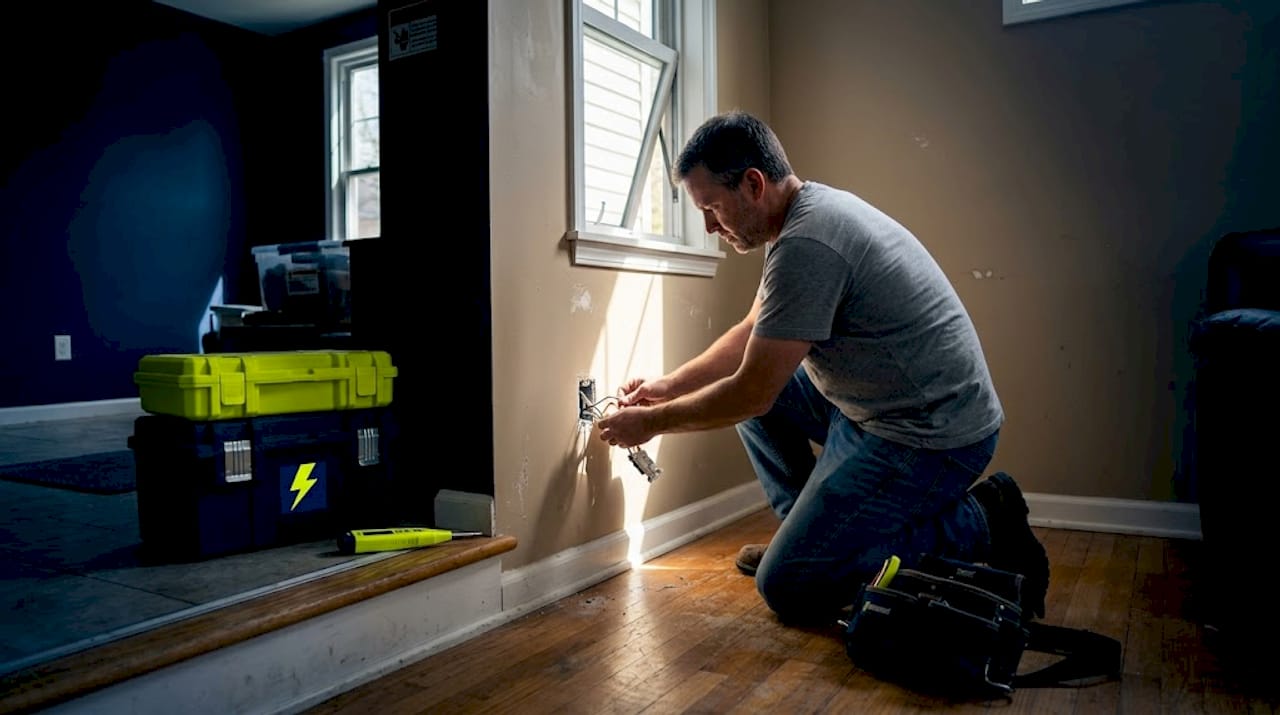
Oklahoma homeowners have more riding on electrical installation than they might realize. The state adopted the 2023 NEC effective September 14, 2024, meaning any new circuit, panel upgrade, or rewiring project must meet stricter standards than ever before. Get it wrong and you face failed inspections, voided home insurance, and real fire risk. Get it right and your home is safer, more efficient, and ready for whatever comes next. This guide walks you through every critical stage, from pulling permits to passing final inspection, so you can move forward with confidence.
Table of Contents
- Understanding electrical codes and permits in Oklahoma
- What you need: Materials, tools, and safety gear
- Step-by-step: Safe and code-compliant electrical installation
- Troubleshooting and common mistakes to avoid
- After the install: Inspections, upgrades, and future-proofing
- What most guides miss: Safety, insurance, and long-term peace of mind
- Get professional help for safe, code-compliant installation
- Frequently asked questions
Key Takeaways
| Point | Details |
|---|---|
| Check updated codes first | Always verify Edmond or OKC’s latest electrical code before starting any work. |
| Permit and inspection matter | Proper permitting and passing inspection protect your home and ensure insurance eligibility. |
| Pro installation is safest | Licensed electricians reduce the risk of fire, shocks, and costly code violations. |
| Upgrade for today’s needs | A 200-amp panel and surge protection prepare your home for EVs, new appliances, and Oklahoma storms. |
| Stay compliant, stay safe | Regular maintenance and upgrades keep your electrical system efficient and up to code. |
Understanding electrical codes and permits in Oklahoma
Before touching a single wire, you need to know which rules govern your project. Oklahoma’s 2023 NEC adoption sets the statewide minimum for all residential electrical work, but that baseline is just the starting point.
State code vs. local requirements
Cities like Edmond and Oklahoma City can layer additional requirements on top of the state minimum. As the OUBCC codes and rules make clear, local jurisdictions may impose more restrictive rules, so always verify with your local building department before starting any project. A call to the City of Edmond or OKC Development Services takes about five minutes and can save you a costly do-over.
When permits are required
Not every electrical task triggers a permit, but the big ones always do. Oklahoma City electrical permits are required for panel upgrades, new circuits, rewiring, and additions, with fees ranging from $50 to $800 depending on scope. You apply online through Development Services, and the process includes both a rough-in inspection and a final inspection.
Here is a quick look at what typically requires a permit versus what does not:
| Task | Permit required? | Inspection required? |
|---|---|---|
| New branch circuit | Yes | Yes (rough-in + final) |
| Panel upgrade | Yes | Yes |
| Full rewire | Yes | Yes |
| Like-for-like outlet swap | No | No |
| Light fixture replacement | No | No |
| Adding a subpanel | Yes | Yes |
Key steps before breaking ground:
- Confirm the applicable code version with your local building department
- Submit permit applications before any work begins
- Schedule rough-in inspection before closing up walls
- Schedule final inspection after all devices are installed
- Keep copies of all permits and inspection sign-offs for your records
Pro Tip: Photograph every stage of your rough-in work before covering it with drywall. Inspectors appreciate the documentation, and you will thank yourself if questions arise later.
Skipping permits is one of the most common and costly mistakes Edmond and OKC homeowners make. Beyond the safety risk, unpermitted work can surface during a home sale and force expensive remediation. Review Oklahoma permit requirements and inspection procedures for Oklahoma homeowners to stay ahead of the process.
What you need: Materials, tools, and safety gear
Once you know which codes and permits apply, the next step is assembling the right equipment. Using the wrong wire gauge or an undersized breaker is not just a code violation, it is a fire hazard.
Core materials for a standard residential install
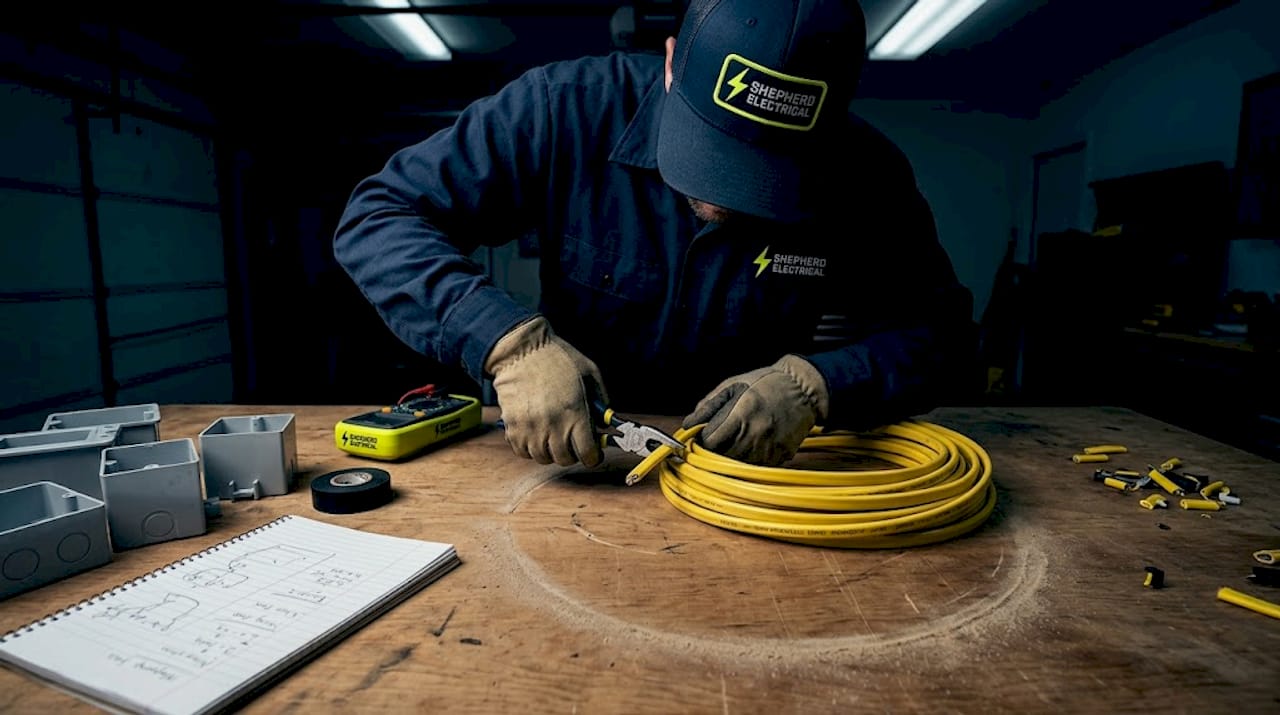
Most branch circuit work involves a consistent set of materials. Non-metallic (NM) cable, commonly called Romex, is the standard for interior residential wiring. Proper wire gauge and breaker matching is essential: 14 AWG wire pairs with a 15-amp breaker, and 12 AWG pairs with a 20-amp breaker. Mixing these is a leading cause of overloaded circuits and inspection failures.
| Material | Common use | Key spec to verify |
|---|---|---|
| 14/2 NM cable | General lighting circuits | 15A max |
| 12/2 NM cable | Kitchen, bathroom circuits | 20A max |
| 12/3 NM cable | Split receptacle circuits | 20A, shared neutral |
| GFCI receptacle | Wet area protection | 15A or 20A rated |
| AFCI breaker | Living area protection | 15A or 20A rated |
| Metal or plastic box | Junction and device boxes | Sized for wire fill |
Tools you will need
- Voltage tester or multimeter (non-negotiable before touching any wire)
- Wire strippers sized for 12 and 14 AWG
- Needle-nose pliers and lineman’s pliers
- Flathead and Phillips screwdrivers
- Cable staples and a hammer
- Drill with spade bits for boring through studs
- Fish tape for running wire through finished walls
Personal protective equipment (PPE)
Never work on a live circuit. Turn off the breaker, then verify the circuit is dead with your voltage tester before proceeding. Wear safety glasses any time you are drilling or cutting. Use insulated gloves rated for electrical work when working near the panel. A non-conductive ladder is essential if you are working near the service entrance.
Pro Tip: A non-contact voltage tester costs under $20 and is the single most important safety tool in your kit. Use it every single time before touching a wire, even if you are certain the breaker is off.
For a full breakdown of what a professional brings to the job, see professional installation details.
Step-by-step: Safe and code-compliant electrical installation
With materials and gear ready, here is how a properly permitted branch circuit installation comes together under the 2023 NEC.
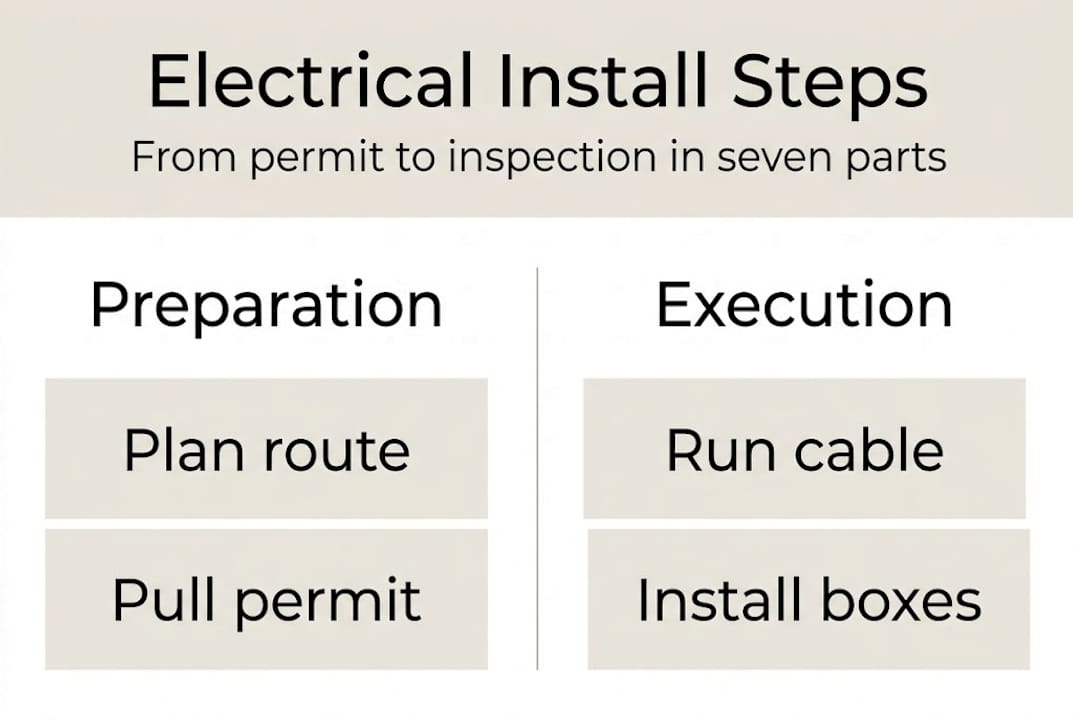
1. Calculate your load before you plan the circuit
Every circuit starts with math. Branch circuits must be sized at 125% of continuous loads per NEC Article 210.19. Kitchens require two dedicated 20-amp, 120-volt small-appliance circuits per Article 210.11©(1). Running the numbers before you buy materials prevents undersized wiring and failed inspections.
2. Pull your permit
Submit your permit application to OKC Development Services or Edmond’s building department before any work begins. Include a basic wiring diagram showing circuit locations, breaker sizes, and wire gauges.
3. Plan your circuit route
Map the path from panel to devices. Minimize the number of bends and keep NM cable secured with staples within 12 inches of every box and every 4.5 feet along the run.
4. Install boxes and rough-in wiring
Mount device boxes at consistent heights (typically 12 inches for outlets, 48 inches for switches). Run cable through bored holes in studs, protecting it with nail plates where it passes within 1.25 inches of the stud face.
5. Install GFCI and AFCI protection per 2023 NEC
This is where the 2023 updates matter most. Expanded GFCI requirements now cover all kitchen receptacles and specific appliances including ranges and dryers. AFCI protection is required for most living areas. Surge protection on feeders to sleeping areas is now mandated under Section 215.18.
Important: GFCI and AFCI requirements are the most frequently misapplied rules in residential installs. When in doubt, add protection rather than assume a location is exempt.
6. Schedule your rough-in inspection
Before closing up walls, call for the rough-in inspection. The inspector will verify wire gauge, box fill, staple spacing, and protection requirements. Passing this stage is required before you can proceed.
7. Complete device installation and final inspection
Install all receptacles, switches, and covers. Connect circuits at the panel. Then schedule your final inspection to close out the permit. For larger projects, review panel upgrade steps and upgrade recommendations to make sure the panel can handle the new load.
Troubleshooting and common mistakes to avoid
Step-by-step guidance only gets you so far. Knowing where things go wrong is just as important as knowing how to do it right.
The most common installation mistakes
- Overloaded circuits: Adding too many devices to a single circuit is the top cause of tripped breakers and overheating. Always calculate load before adding outlets.
- Improper GFCI placement: Missing a required GFCI location, such as a garage or outdoor outlet, is one of the most common inspection failures in OKC and Edmond homes.
- Loose wire connections: A connection that looks secure can arc under load. Always use a screwdriver to tighten terminals to the torque spec printed on the device.
- Missing junction box covers: Every splice must be inside a covered junction box. Open splices in attics or crawlspaces are a fire hazard and an automatic inspection failure.
- Wrong wire gauge: Using 14 AWG wire on a 20-amp circuit is dangerous. The breaker will not trip fast enough to protect the wire from overheating.
Older homes present extra challenges
Homes built before the 1970s may have knob-and-tube or aluminum wiring. Both require special handling. Aluminum wiring in particular needs CO/ALR-rated devices and anti-oxidant compound at every connection. Mixing aluminum and copper without proper connectors causes corrosion and heat buildup over time.
Reality check: Roughly 51,000 home electrical fires occur in the US every year. Most trace back to faulty wiring, improper installation, or overloaded circuits, all preventable with licensed work and proper materials.
When to stop and call a pro
If you discover aluminum wiring, knob-and-tube, or a panel that is already at capacity, stop. These situations require a licensed electrician who can assess the full system and document the work for your insurer. DIY repairs on these systems can void your homeowner’s insurance and create hidden hazards that show up years later.
Pro Tip: Before listing your home for sale, have a licensed electrician perform a full inspection. Undisclosed electrical defects are one of the top reasons real estate deals fall apart in Oklahoma.
After the install: Inspections, upgrades, and future-proofing
Passing inspection is not the finish line. It is the beginning of a well-maintained electrical system that keeps your home safe for decades.
Why both inspections matter
The rough-in inspection catches problems before walls close. The final inspection confirms every device, breaker, and connection is properly installed and labeled. Both are mandatory for the permit to close. Missing either one leaves your work in a legal gray area that can complicate insurance claims and home sales.
Upgrades worth considering now
Modern homes with EVs and major appliances now typically need 200-amp service as a minimum. If your home still runs on a 100-amp panel, an upgrade is not just convenient, it is a safety necessity for modern loads.
| Upgrade | Why it matters | Typical trigger |
|---|---|---|
| 200A panel upgrade | Supports EVs, HVAC, appliances | Adding EV charger or major load |
| Whole-home surge protection | Protects electronics and appliances | Oklahoma storm season |
| GFCI/AFCI expansion | Code compliance, fire and shock prevention | Older home, renovation |
| Dedicated EV circuit | Fast, safe charging at home | New EV purchase |
Keeping records and planning ahead
Store your permit history, inspection reports, and any as-built wiring diagrams in a dedicated folder. Insurers and future buyers will ask for this documentation. Schedule a professional walkthrough every five to ten years, or any time you add a major appliance or complete a renovation. Consistent maintenance tips keep small issues from becoming expensive problems.
What most guides miss: Safety, insurance, and long-term peace of mind
Most electrical guides stop at the procedural level. Here is what years of field work in Oklahoma actually teaches you.
Homeowners consistently underestimate how much the 2023 NEC changes affect real projects. The expanded GFCI requirements alone catch many experienced DIYers off guard because the rules now cover locations that were previously exempt. An outlet that was perfectly legal under the 2017 NEC may now require GFCI protection. Install it wrong and you fail inspection. Skip it and you risk a fire or shock.
The insurance angle is equally serious. Many homeowners do not realize that an unpermitted electrical project can give their insurer grounds to deny a claim after a fire, even if the fire started somewhere else in the home. Insurers look for any connection between the loss and unpermitted work, and they often find one.
Licensed professionals do more than just install wire correctly. They provide the documentation that protects your investment and keeps your coverage intact. When you hire a licensed contractor, you get a permit, a signed inspection record, and a professional who stands behind the work. That paper trail is worth more than the labor savings from a DIY attempt. If you are weighing your options, start with choosing a pro electrician to understand what to look for in a qualified contractor.
Get professional help for safe, code-compliant installation
Electrical installation done right protects your family, your home, and your investment. Whether you are adding a new circuit, upgrading your panel, or preparing your home for an EV charger, working with a licensed professional ensures every step meets the 2023 NEC standards that Oklahoma now requires.

Shepherd Electrical serves homeowners throughout Edmond and the Oklahoma City Metro with permitted, inspected electrical work backed by real expertise. From new circuit installs to full panel upgrades, we handle the details so you do not have to. Explore our full range of electrical services or learn more about choosing the right contractor for your specific project. Book online or call us today.
Frequently asked questions
Do I need a permit to replace an outlet or light fixture myself?
Like-for-like outlet or fixture swaps by homeowners typically do not require a permit, but panel upgrades and new circuits always do in Oklahoma City, with fees ranging from $50 to $800.
How do I know if my Edmond or OKC home’s wiring is up to code?
The 2023 NEC took effect statewide on September 14, 2024, and a licensed electrician or professional home inspection is the most reliable way to verify your home meets current standards.
Can I install my own new electrical circuits?
New circuit installation requires a licensed electrician in Oklahoma; DIY work is limited to direct replacements of outlets or switches without any wiring changes.
What are the most common reasons for failed inspections?
Incomplete permits, improper GFCI or AFCI placement, and loose connections are the top causes, all of which proper wire gauge matching and careful installation practices can prevent.
Why does Oklahoma require GFCI and AFCI protection?
The 2023 NEC expanded GFCI to all kitchen receptacles and added surge protection requirements for sleeping area feeders because both technologies have a proven track record of reducing electrical fires and shock injuries.
Recommended
- Residential Electrical Maintenance: Safety and Efficiency Guide
- Home electrical inspection guide: what homeowners must know
- Commercial wiring: safety and energy efficiency guide
- Residential Electrical Panel Hazards – Shepherd Electrical
Need help with this at your home?
Shepherd Electrical helps Edmond and OKC metro homeowners with residential installs, wiring upgrades, fans, lighting, and electrical improvements. Free estimates are available, and workmanship is backed by a lifetime guarantee.