


Most Oklahoma homeowners and small business owners assume electrical permits are just a bureaucratic hurdle you only face during a full renovation. That assumption is wrong, and it can cost you. Electrical permits ensure code compliance, safety through required inspections, and legal authorization for electrical work. From a simple panel upgrade to adding outlets in a new office space, permits protect your property, your insurance coverage, and the people inside the building. This guide breaks down exactly what Oklahoma’s permit system requires, how the process works, and why compliance is always the smarter financial decision.
Table of Contents
- What are electrical permits and who needs them in Oklahoma?
- How the permitting process works in Oklahoma
- Why permits matter: Inspections, liability, and safety
- Risks of skipping permits in Oklahoma
- A deeper look: The hidden value of electrical permits
- How Shepherd Electrical helps you stay compliant and safe
- Frequently asked questions
Key Takeaways
| Point | Details |
|---|---|
| Permits required by law | All electrical work except minor repairs in Oklahoma needs permits filed by licensed contractors. |
| Inspections ensure safety | Permits trigger necessary inspections that protect you from hidden hazards and insurance problems. |
| Avoid costly penalties | Skipping permits can result in severe fines, legal trouble, and resale issues for your property. |
| Property value protection | Permitted work stays on your property record, helping with future sales, refinancing, and insurance claims. |
What are electrical permits and who needs them in Oklahoma?
An electrical permit is an official government authorization that allows licensed electrical contractors to perform specific electrical work on a property. Think of it as the legal green light for any work that touches your wiring, panels, or service connections. Once issued, the permit triggers a required inspection process to confirm the work meets the National Electrical Code (NEC) and local safety standards.
In Oklahoma, permit requirements cover code compliance through inspections, and only licensed contractors can legally pull them. Homeowners cannot pull their own electrical permits. If you hire an unlicensed handyman or attempt to DIY a significant electrical project, you are not just risking a fine. You are also voiding the legal protection that comes with permitted, inspected work. Understanding electrical upgrades and permits together is key to planning any home improvement project correctly.
Small businesses are treated the same as residential commercial properties. Any electrical work on your storefront, warehouse, or office space requires a permit pulled by a licensed electrical contractor. The electrician duties and permits process is your contractor’s responsibility, but you as the property owner carry the consequences if the work is unpermitted.
Who needs a permit and who can pull it?
| Project type | Permit required? | Who pulls the permit? |
|---|---|---|
| Panel upgrade or replacement | Yes | Licensed electrical contractor |
| New circuit installation | Yes | Licensed electrical contractor |
| Service entrance work | Yes | Licensed electrical contractor |
| Adding outlets or switches | Yes | Licensed electrical contractor |
| Minor lamp or fixture swap | No | Homeowner |
| Like-for-like outlet replacement | No | Homeowner |
Projects that typically require an electrical permit in Oklahoma:
- New electrical service installations
- Electrical panel upgrades or replacements
- Adding new circuits or subpanels
- Wiring for additions or new construction
- EV charging station installation
- Backup generator or battery system connections
- Any alteration to an existing service entry
The takeaway is simple. If the work involves anything beyond a straightforward fixture swap or replacing a like-for-like outlet, a permit is almost certainly required.
How the permitting process works in Oklahoma
Understanding who needs a permit sets the stage for knowing exactly how to get one. Let’s break down Oklahoma’s permitting process.
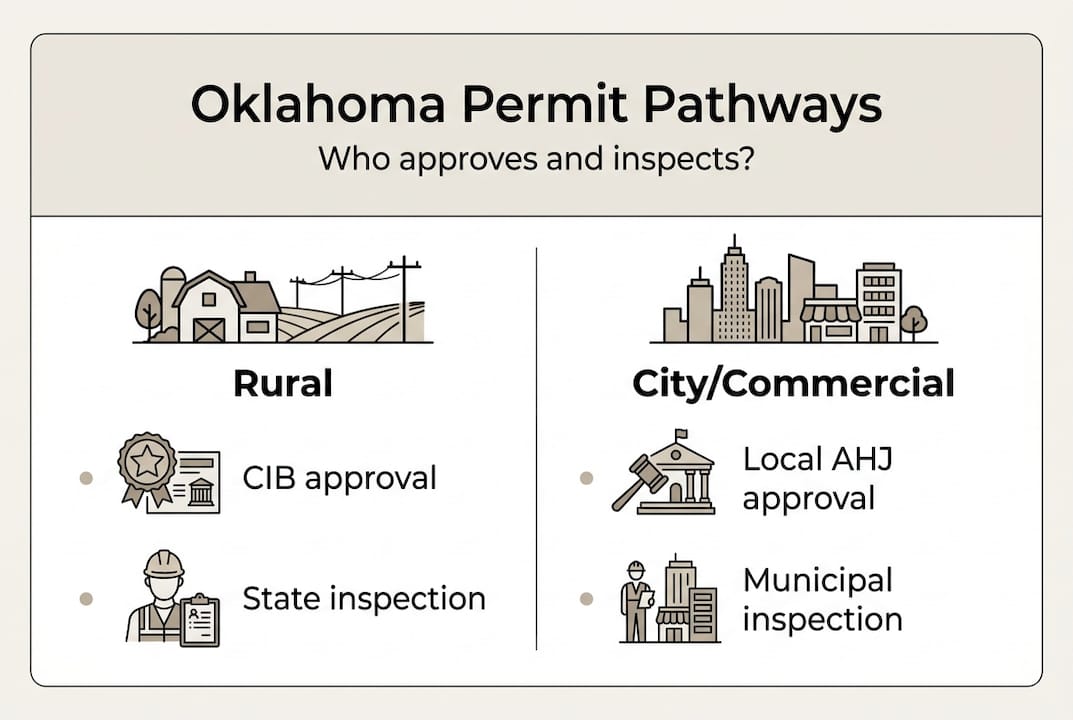
Oklahoma has a layered authority structure. The Construction Industries Board (CIB) is the statewide authority that handles permit issuance and enforcement. However, municipalities with their own inspection programs act as the Authority Having Jurisdiction (AHJ) locally. In cities like Edmond or Oklahoma City, the local AHJ manages permits. In rural or unincorporated areas, the CIB steps in directly. When there is no local program at all, contractors must file a Notification of Work Without Permit with the CIB before starting.
The permit issuance process involves an application, license verification, plan review, and inspections. Here is how it unfolds step by step:
- Application submission. Your licensed contractor submits a permit application to the appropriate authority, either the CIB or the local AHJ.
- License verification. The issuing authority confirms your contractor holds a valid, active electrical license in Oklahoma.
- Plan review. For larger commercial projects, plans may need to be reviewed and approved before work begins.
- Permit issuance. Once approved, the permit is issued and work can start legally.
- Inspections. An inspector visits the job site at required stages to verify code compliance.
- Final approval. After passing all inspections, the permit is closed and the work is documented in public property records.
Comparison: Rural vs. city vs. commercial permit process
| Factor | Rural (no local program) | City (local AHJ) | Commercial |
|---|---|---|---|
| Who approves | Oklahoma CIB | Local municipality | Local AHJ or CIB |
| Typical timeline | 5 to 10 business days | 3 to 7 business days | 7 to 14 business days |
| Inspection steps | CIB inspector | Local inspector | Multi-stage inspections |
| Special requirement | Notification of Work form | Standard application | Plan review often required |
Pro Tip: Always confirm with your contractor whether your specific address falls under a local AHJ or the CIB before scheduling any electrical work. Getting this wrong delays your project and your timeline.
Knowing steps for hiring an electrician in Oklahoma City means verifying your contractor knows which authority to approach. Why use licensed electricians becomes obvious once you realize an unlicensed worker cannot legally pull a permit at all.
Why permits matter: Inspections, liability, and safety
Having outlined the process, it is essential to understand why skipping permits creates risks that far outweigh the effort of compliance.
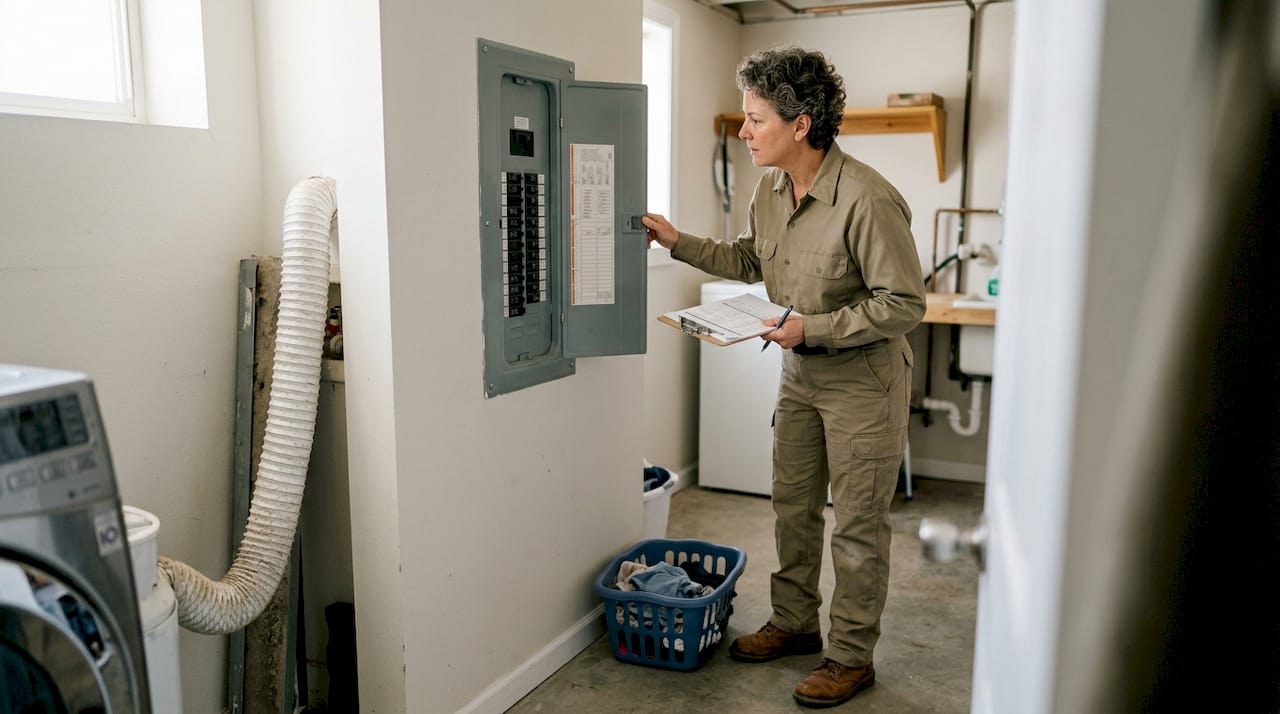
Permits trigger required inspections that verify your electrical work meets the NEC and local safety codes. Inspections are not just a formality. They catch dangerous wiring mistakes that even experienced workers sometimes make, including improper grounding, overloaded circuits, and fire hazards behind walls. Once completed, permits attach to property records, affecting title, insurance, and resale value.
“Electrical fires account for roughly 51,000 home fires each year in the United States, causing nearly 500 deaths and $1.3 billion in property damage. Proper permits and inspections are the front line of prevention.”
This is why electrical safety and duties are so tightly connected to the permit process. When an inspector signs off on your work, you have documented proof that a qualified third party verified it met code. That documentation matters enormously for insurance claims, refinancing, and eventual property sale.
Insurance is a major piece of this puzzle. If a fire or electrical failure occurs in your home or business and investigators discover the related work was unpermitted, your insurer can deny the claim entirely. You could be left covering tens of thousands of dollars in damage with no coverage at all. The value of licensed electricians is tied directly to this protection.
Hidden risks of unpermitted electrical work:
- Increased fire and shock hazard from unchecked wiring
- Insurance claim denial if damage traces to unpermitted work
- Title complications when selling or refinancing the property
- Forced demolition and rework at your own expense
- Personal liability if someone is injured due to faulty wiring
Reviewing your electrical maintenance and safety practices regularly also helps you catch issues early before they become permit-related headaches.
Risks of skipping permits in Oklahoma
Permits protect you and your property, but what exactly happens if you take shortcuts? Here is why the stakes are high if you skip compliance.
Non-compliance penalties in Oklahoma can include stop-work orders, fines up to $500 per day, license suspension or revocation, insurance voidance, and even misdemeanor criminal charges. These are not theoretical outcomes. Oklahoma’s CIB actively enforces these rules, and complaints from neighbors, buyers, or insurance investigators can trigger an inspection at any time.
For small business owners, the stakes are even higher. An unpermitted electrical installation in a commercial space can result in the building being shut down until the work is inspected and approved. That means lost revenue on top of fines and rework costs.
Top 4 risks of not pulling electrical permits:
- Stop-work orders and fines. The CIB or local AHJ can issue a stop-work order immediately and levy fines starting at $500 per day until the issue is resolved.
- Insurance denial. If unpermitted work is connected to a loss event, your homeowner’s or business insurance policy can be voided for that claim.
- Real estate complications. Unpermitted work appears in property records and can block or delay a sale, require costly remediation, or reduce your asking price significantly.
- Criminal liability. In serious cases, performing or knowingly allowing unpermitted electrical work can result in misdemeanor charges in Oklahoma.
Pro Tip: Keep a dedicated folder with copies of every permit, inspection report, and contractor license for every project. Future buyers, lenders, and insurance adjusters may ask for this documentation years later.
Working with licensed electricians and safety professionals from the start eliminates all of these risks because permit management becomes part of the service.
A deeper look: The hidden value of electrical permits
Most guides on electrical permits stop at the penalties. We think that misses the bigger picture.
Permits are not just about avoiding fines. They are a financial instrument that protects your property’s long-term value. Unpermitted work does not disappear quietly. It surfaces during refinancing appraisals, home inspections before sale, or insurance investigations after a loss. At that point, correcting it often costs two to three times what the original permitted job would have.
Oklahoma’s two-layer system, the CIB versus local AHJ, also trips up even well-intentioned property owners. Assuming your city handles permits when the CIB actually has jurisdiction (or vice versa) can result in work being done under the wrong authority. That creates its own remediation process.
The real value of licensed electricians becomes clear here. A contractor who understands Oklahoma’s permit landscape does not just do the electrical work. They protect your investment, maintain your insurance eligibility, and keep your property records clean. Proactive compliance is always cheaper than reactive correction, even when a shortcut looks tempting in the moment.
How Shepherd Electrical helps you stay compliant and safe
If managing permits feels overwhelming, you are not alone. Most homeowners and small business owners we work with have never had to navigate Oklahoma’s CIB and AHJ structure before.

At Shepherd Electrical, we handle the entire permitting and inspection process for you, from application to final sign-off. Every job we complete is fully up to code, properly inspected, and documented for your property records. Whether you need a panel upgrade, new circuits, or an EV charging station installed, our team manages compliance so you do not have to worry. Explore our full electrical services overview or connect with our local electrical contractors serving Edmond and the Oklahoma City Metro area today.
Frequently asked questions
Can a homeowner pull their own electrical permit in Oklahoma?
No. In Oklahoma, only licensed contractors can pull electrical permits. Homeowners are not authorized to do this themselves, regardless of the project size.
What types of electrical work require a permit?
New installations, panel upgrades, service changes, and circuit alterations all require permits. Minor like-for-like replacements such as swapping a light fixture may be exempt.
What happens if I skip the permit for electrical work?
Skipping permits can result in fines up to $500 per day, stop-work orders, insurance claim denial, and even misdemeanor charges under Oklahoma law.
Who enforces electrical permits in Oklahoma?
Permits are issued by the CIB statewide, or by your local municipality’s AHJ if they operate their own inspection program. Enforcement depends on which authority has jurisdiction in your area.
Are agricultural buildings exempt from electrical permits?
No. Agricultural buildings in Oklahoma may be exempt from general building permits, but electrical work still requires a CIB-issued electrical trade permit regardless of building type.