

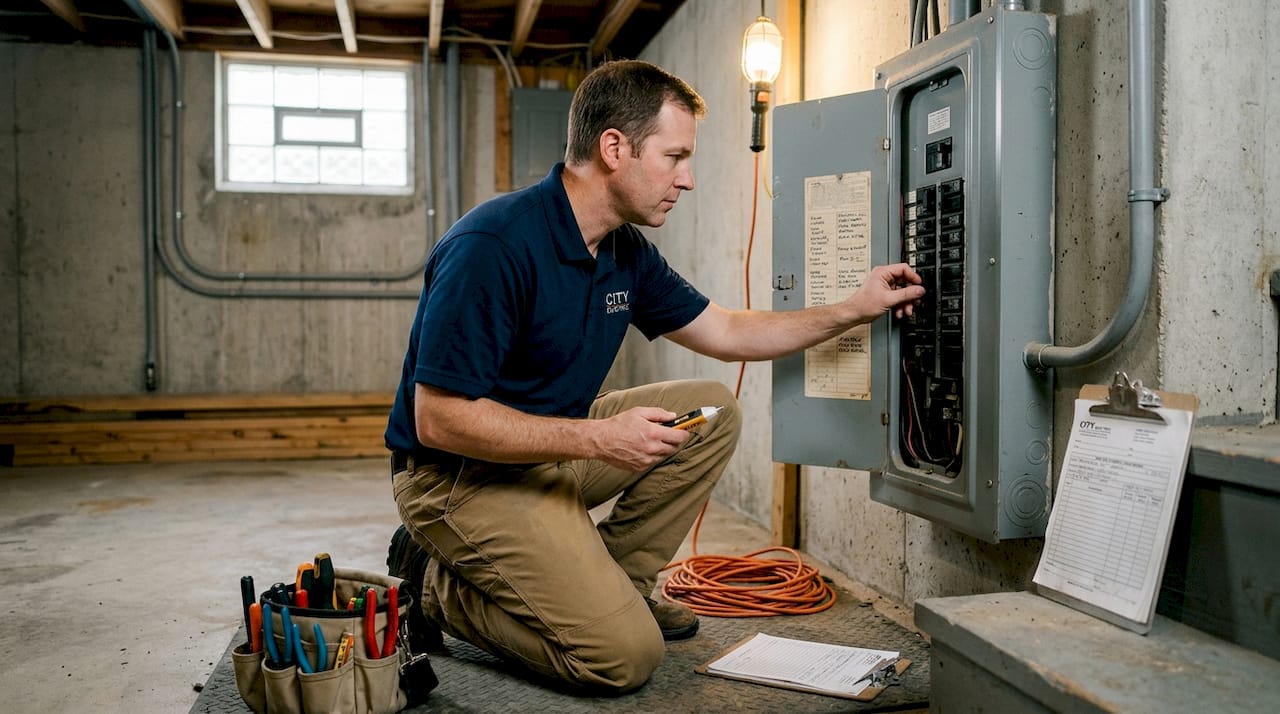
Electrical fires quietly destroy thousands of American homes every year, and the sobering part is that many of them are preventable. Over 18,500 home fires are triggered by electrical distribution equipment annually in the U.S., and a significant share trace back to outdated or failing circuit breakers. For homeowners and small business owners across the Oklahoma City Metro area, that number should feel personal. Your breaker panel is the gatekeeper of your entire electrical system. When it’s aging or undersized, it stops doing its job, quietly. This guide cuts through the confusion and gives you clear, practical information on what upgrading your circuit breakers actually means for your safety, your wallet, and your peace of mind.
Table of Contents
- Common risks of outdated circuit breakers
- Modern safety features: AFCI, GFCI, and more
- Financial and efficiency benefits of upgrading
- How to tell if your breaker needs an upgrade
- Why most people wait too long—and why that’s a mistake
- Ready to upgrade? Get expert help in Oklahoma City
- Frequently asked questions
Key Takeaways
| Point | Details |
|---|---|
| Big safety improvement | Upgrading circuit breakers significantly reduces the risk of electrical fires and shock. |
| Modern breakers offer more | AFCI and GFCI technology proactively stop thousands of electrical hazards every year. |
| Saves money in the long run | A new panel can cut energy bills, prevent costly damage, and may lower insurance costs. |
| Clear warning signs | Frequent breaker trips or panel overheating signal it’s time for an upgrade. |
Common risks of outdated circuit breakers
Most people don’t think about their circuit breaker panel until something goes wrong. That’s exactly the problem. An aging breaker doesn’t always announce its failure loudly. Instead, it fails slowly, and sometimes silently.
The most dangerous failure mode is a breaker that doesn’t trip when it should. Circuit breakers are designed to cut power when a circuit gets overloaded or develops a fault. When they age, internal components wear out and the breaker may allow current to keep flowing even when the wiring is dangerously overheated. That excess heat can ignite insulation, wood framing, or other materials inside your walls before you even smell smoke.
Faulty wiring and overloaded circuits cause the majority of residential electrical fires in the country. In Oklahoma, where summer heat already pushes HVAC systems and appliances to work harder, an aging panel is under even more stress than in cooler climates. Learn more about panel hazards in older homes that are specific to properties in our region.
Outdated breakers also create financial risks that go beyond fire damage. Many insurance companies now charge higher premiums for homes with panels that are more than 25 years old, especially brands that have been flagged for documented defects. Sensitive electronics like computers, smart appliances, and home theater equipment are also vulnerable to the voltage irregularities that aging panels produce.
Here are the most common warning signs that your panel needs attention:
- Lights flickering or dimming when large appliances turn on
- Breakers that trip frequently under normal use
- A burning smell or a warm panel box
- Scorched or discolored outlets anywhere in the building
- A panel that still uses fuses instead of breakers
- Breakers that won’t reset after tripping
Take it seriously: If you notice more than one of these warning signs at the same time, don’t wait for an incident to act. A failing panel is an emergency waiting for a date on the calendar.
Modern safety features: AFCI, GFCI, and more
The gap between a 1980s breaker panel and a modern one isn’t just about age. It’s about technology that literally saves lives. Two of the most important advances are AFCI and GFCI protection, and understanding what they do makes the case for upgrading almost impossible to argue against.
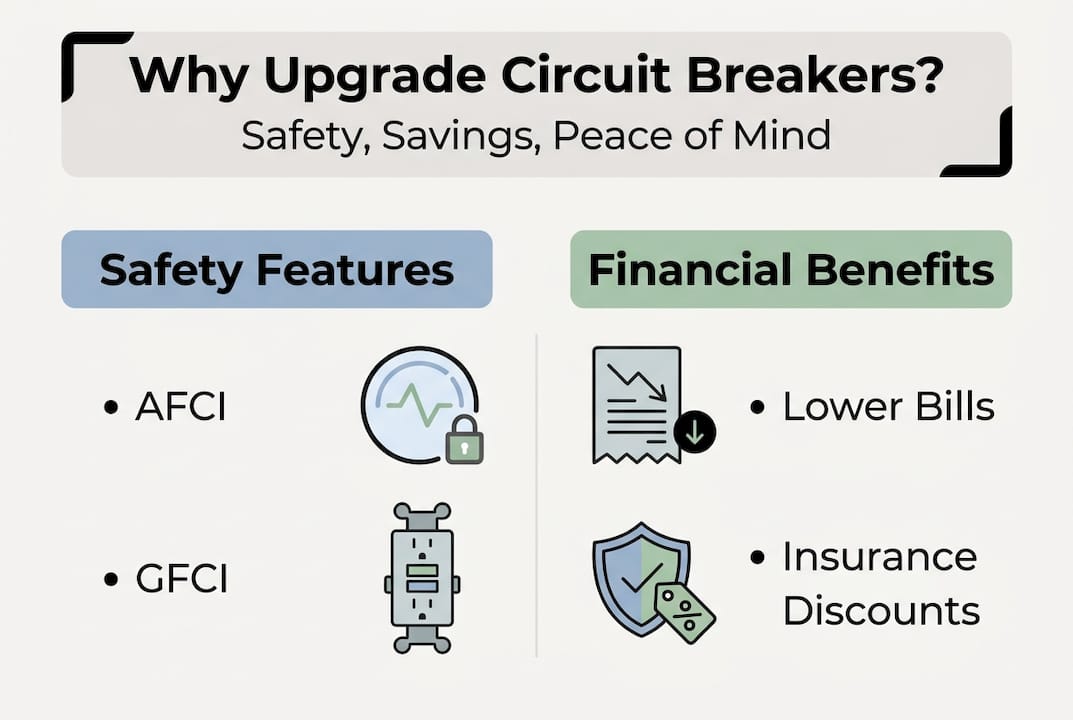
AFCI stands for arc-fault circuit interrupter. An arc fault happens when electricity jumps across a gap in damaged or loose wiring, creating intense heat that can ignite surrounding material. Traditional breakers can’t detect arc faults because the current level may not be high enough to trigger a trip. AFCI breakers are designed specifically to recognize the unique electrical signature of an arc and shut down the circuit before a fire starts.
GFCI stands for ground-fault circuit interrupter. These breakers detect when electricity is taking an unintended path to ground, often through a person. They cut power in as little as one-thirtieth of a second, fast enough to prevent a fatal shock. GFCI protection is especially critical in kitchens, bathrooms, garages, and outdoor areas.
The impact of these technologies is measurable. AFCI and GFCI breakers have prevented more than 50,000 fires since 2002. That’s not a marketing claim. That’s documented fire prevention data.
| Feature | Traditional breaker | AFCI breaker | GFCI breaker |
|---|---|---|---|
| Overload protection | Yes | Yes | Yes |
| Arc fault detection | No | Yes | No |
| Ground fault detection | No | No | Yes |
| Shock prevention | No | No | Yes |
| Typical locations | All circuits | Bedrooms, living areas | Kitchens, baths, outdoors |
| Protection level | Basic | Advanced fire | Advanced shock |
Many Edmond homeowner upgrades now include combination AFCI/GFCI breakers that provide both layers of protection on a single circuit. For business owners, meeting current NEC (National Electrical Code) requirements often means incorporating these technologies into any panel work.
Pro Tip: Scheduling safer home assessments before listing a property or renewing an insurance policy can uncover code gaps that are much cheaper to fix proactively than after a claim or inspection failure.
Financial and efficiency benefits of upgrading
Safety is the most urgent reason to upgrade your circuit breakers, but it’s far from the only one. A modern panel pays for itself in ways that show up on your energy bill, your insurance statement, and your property value.

Older panels often operate less efficiently, causing minor but cumulative energy losses that add up over months. A properly sized and well-functioning modern breaker panel ensures that your circuits deliver power cleanly and consistently to every outlet and appliance. That directly supports lower monthly energy consumption.
More practically, a modern panel is built to handle today’s electrical demands. If you’ve added an EV charger, a solar panel system, a whole-home generator, or high-draw kitchen appliances in the past decade, your old panel may be struggling to keep up. Breaker upgrades reduce fire risk and prevent the expensive equipment damage that outages and surges can cause to modern devices.
Here’s a quick look at the financial upside of upgrading:
- Potential discounts from insurers who reward updated, code-compliant panels
- Fewer nuisance trips that interrupt work-from-home setups or small business operations
- Reduced risk of appliance damage from voltage irregularities
- Easier permit approvals for future renovations or additions
- Measurable increase in resale value for homes with modern electrical systems
Pro Tip: If you’re planning a kitchen remodel, adding a home office, or installing a Level 2 EV charger, bundle the panel upgrade into the same project. You’ll save on labor costs and avoid a second round of permits.
For Oklahoma City area properties specifically, access to nearby electrical services means upgrades can often be scheduled and completed quickly, minimizing disruption to your household or business operations.
How to tell if your breaker needs an upgrade
You don’t need to be an electrician to do a basic assessment of your panel. A few simple checks can tell you a lot about whether an upgrade is overdue. That said, what you find during this check should inform whether you call a pro, not whether you attempt a fix yourself.
Follow this checklist to evaluate your panel:
- Check the age. Look for a manufacture date inside the panel door. If your panel is 25 years old or more, it warrants a professional evaluation regardless of how it appears.
- Look for brand flags. Certain older brands have documented safety issues. If you’re unsure, a licensed electrician can tell you immediately.
- Count your circuits. If you’ve added major appliances, a workshop, or a home office since the panel was installed, you may be running more load than your panel was designed to handle.
- Smell and touch. A properly functioning panel should not smell like burning plastic or feel warm to the touch. Either sensation is a red flag.
- Watch for trips. An occasional trip is normal. Frequent trips on the same circuit, or breakers that won’t stay reset, indicate a problem.
- Check your outlets. Discoloration, a burning smell near specific outlets, or outlets that don’t work consistently can all point back to a panel issue.
- Assess your lighting. Lights that dim when the refrigerator or AC compressor kicks on are a sign your circuits are being overloaded.
Overloads and faulty breakers contribute substantially to fire risk, especially in homes where electrical demand has grown over the years without a corresponding panel upgrade.
If any of these checklist items flag a concern, the next call is to a licensed electrician. The importance of licensed electricians for panel work cannot be overstated. Breaker panels carry live voltage even when individual breakers are switched off. Mistakes inside a panel can be instantly fatal. This is not a DIY project.
Why most people wait too long—and why that’s a mistake
Here’s what we see again and again: homeowners and business owners know something feels off with their panel, but they put the upgrade off for months or even years. The logic is understandable. If it hasn’t caused a fire yet, maybe it’s fine. If it’s tripping, maybe it’s just a quirky breaker that can be reset. If the cost feels significant, maybe it’s better to wait until next year.
That logic is expensive. And sometimes deadly.
The uncomfortable truth is that insurance policies and building codes have tightened significantly over the past decade. A panel that was acceptable ten years ago may now trigger a claim denial or a failed inspection when you go to sell. Waiting doesn’t preserve options. It eliminates them.
We’ve also noticed that homeowners who delay often end up spending more, not less. Emergency repairs after a fire or a panel failure cost far more than a planned upgrade. And the disruption of an emergency situation, including temporary loss of power to a business, far exceeds the inconvenience of a scheduled upgrade.
Understanding the full picture of costs and safety factors involved in panel upgrades tends to shift the math quickly. Peace of mind has real value. So does knowing your system is code-compliant and ready for whatever you add to it next.
Ready to upgrade? Get expert help in Oklahoma City
If your panel is aging, showing warning signs, or simply hasn’t been professionally evaluated in years, now is the right time to act.

Shepherd Electrical serves homeowners and small businesses across the Oklahoma City Metro area with panel inspections, breaker upgrades, and full code-compliance support. Our licensed electricians handle everything from initial assessment to final installation, so you’re never left guessing about your safety. Explore our full range of electrical services or start with a detailed look at common panel safety guide issues we address for local properties. Booking an assessment is straightforward, and our team is ready to answer questions before you commit to anything.
Frequently asked questions
How often should I upgrade my circuit breakers?
Most experts recommend evaluating your breakers every 20 to 30 years, or sooner if you notice frequent tripping or heat near the panel. Outdated breakers are a documented and common source of preventable fire risk.
Do new breakers really prevent fires?
Yes. AFCI and GFCI breakers have prevented thousands of fires by detecting dangerous faults before they escalate, and the data backs that up with more than 50,000 documented fire prevention events since 2002.
Will I save money by upgrading circuit breakers?
Breaker upgrades reduce repair costs, protect expensive appliances from surge damage, and often unlock insurance discounts for code-compliant panels, making the upgrade a sound financial decision alongside the safety benefits.
Can I upgrade circuit breakers myself or should I hire a professional?
Hiring a licensed electrician is strongly recommended for any panel work, since live voltage is present even with individual breakers off and mistakes can be fatal. This is one job where professional expertise is not optional.
What’s the difference between a circuit breaker and a fuse?
A circuit breaker can be reset after it trips, while a blown fuse must be physically replaced. Modern breakers also include advanced features like AFCI and GFCI protection that fuses simply cannot provide.