

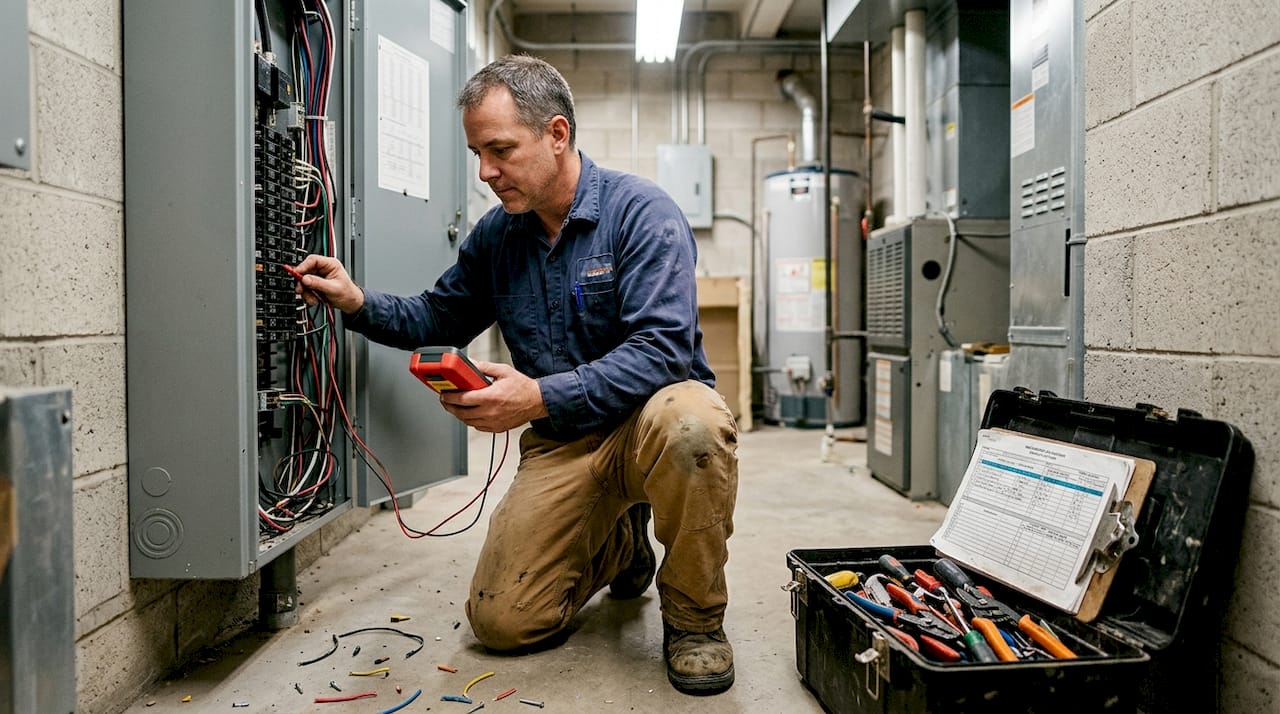
Most business owners assume commercial electrical repair is simply swapping out a breaker or replacing a bad outlet. That assumption can be costly. Commercial electrical repair is a broad discipline covering diagnostics, system upgrades, code compliance, and emergency response, all of which directly affect your safety, operational uptime, and legal standing. For property managers and business owners across the Oklahoma City Metro area, understanding what these services actually involve gives you a real advantage when problems arise. Safety and efficiency are the core outcomes you should expect from any qualified commercial repair provider.
Table of Contents
- What is commercial electrical repair?
- Why regular commercial electrical repair matters
- Core services provided by commercial electrical repair technicians
- How to choose the right commercial electrical repair partner
- A perspective from Oklahoma City experts
- Connect with trusted commercial electrical repair services
- Frequently asked questions
Key Takeaways
| Point | Details |
|---|---|
| Scope of commercial repair | Commercial electrical repair covers diagnostics, upgrades, and compliance for business facilities. |
| Routine maintenance matters | Regular repairs and system checks prevent emergencies and protect business uptime. |
| Choose qualified providers | Licensed, locally experienced technicians ensure safe and efficient repairs for commercial properties. |
| Apply local expertise | Partnering with experts familiar with the Oklahoma City area adds value and reliability to each job. |
What is commercial electrical repair?
Commercial electrical repair covers the identification, correction, and prevention of electrical problems in business and commercial property settings. That includes office buildings, retail spaces, warehouses, restaurants, and multi-tenant properties. It is not simply a scaled-up version of residential work. The systems are fundamentally different in design, capacity, and regulatory requirements.
Residential electrical systems typically run on 120/240-volt single-phase power. Commercial buildings often use three-phase power systems capable of handling much heavier equipment loads. The wiring methods, panel configurations, conduit requirements, and load calculations are all more complex. A technician who repairs home wiring is not automatically qualified to work on commercial systems.
Here is what commercial electrician services typically include:
- Panel diagnostics and load analysis
- Wiring inspections and fault isolation
- Lighting system repairs and retrofits
- Emergency power system checks
- Code compliance testing and corrections
- Equipment-specific circuit repairs
Compare how commercial and residential repair differ across key areas:
| Factor | Commercial repair | Residential repair |
|---|---|---|
| Power system | Three-phase, high voltage | Single-phase, standard voltage |
| Regulatory standards | NEC, OSHA, local codes | NEC, local codes |
| Equipment complexity | Industrial-grade systems | Household appliances |
| Downtime impact | Revenue loss, liability | Inconvenience |
| Inspection frequency | More frequent | Less frequent |
One common misconception is that commercial repair only happens after something breaks. In reality, commercial repair services include diagnostics, upgrades, and compliance checks as standard offerings. Waiting for a failure is one of the most expensive strategies a property manager can adopt. Proactive diagnostics catch problems before they escalate into full shutdowns or safety violations. Understanding this scope changes how you plan and budget for your property’s electrical health.
For context on how residential electrician duties compare, the differences in skill, licensing, and system knowledge are significant, which is why choosing the right category of electrician for your property type matters.
Why regular commercial electrical repair matters
Neglected electrical systems are a leading cause of commercial building fires. Faulty wiring, overloaded circuits, and aging panels create conditions that can ignite within walls or above drop ceilings, often without any visible warning. Beyond fires, the financial consequences of ignoring routine repair are severe.
Consider what a single day of unplanned downtime costs your business. For retail operations, that means zero transactions. For restaurants, it means spoiled inventory and lost reservations. For offices, it can mean missed client deliverables and contract penalties. Preventive maintenance reduces downtime and costly emergencies, which translates directly into protecting your revenue stream.
Here are the most common risks property managers overlook:
- Aging panel boxes that can no longer handle modern equipment loads
- Loose or corroded connections that create resistance and heat
- Outdated wiring that does not meet current NEC standards
- Overloaded circuits from added equipment without load balancing
- Missing or failed GFCI protection in required areas
Regular electrical system assessments are key to identifying these issues early, before they become violations or emergencies. The National Fire Protection Association (NFPA) reports that electrical failures contribute to tens of thousands of commercial fires annually in the United States.
Pro Tip: Schedule a full electrical inspection every 12 months and after any major tenant changeover or equipment installation. Tenants often add loads to circuits without informing property management, which creates cumulative overloads that go undetected for months.
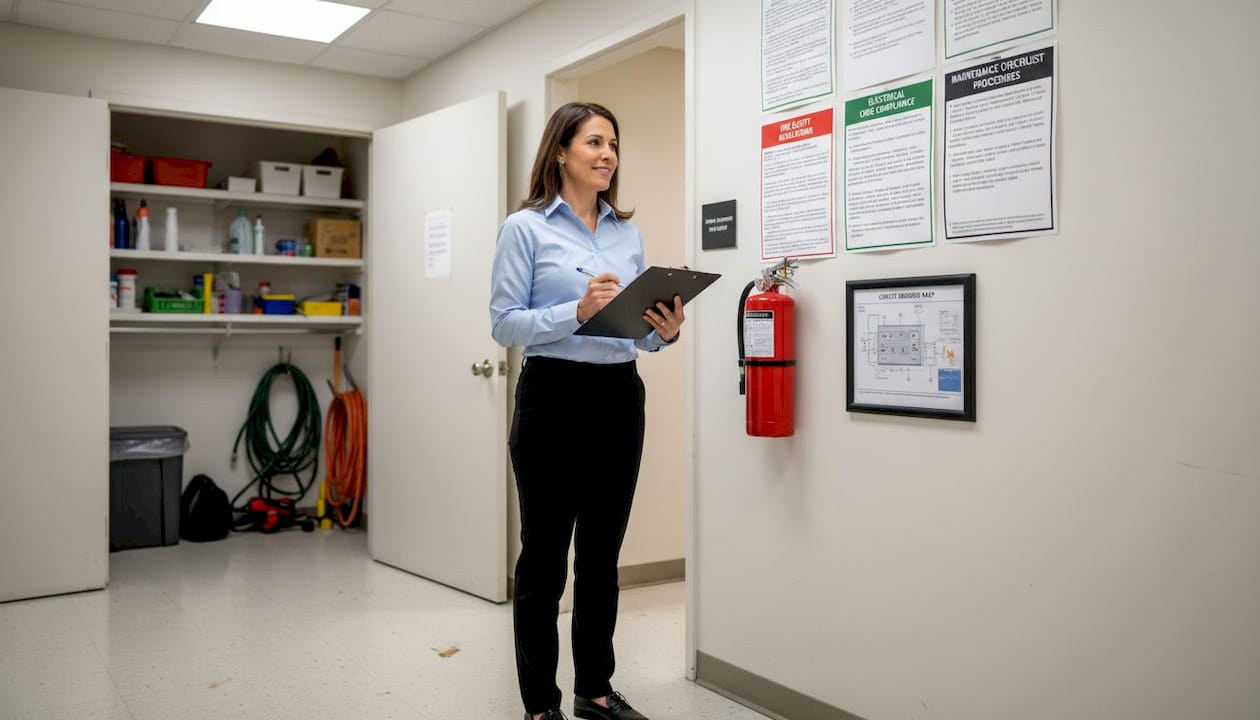
Beyond safety, regular repair maintains your compliance posture. Local Oklahoma City codes, NEC standards, and OSHA requirements all place obligations on commercial property owners. Falling out of compliance can expose you to fines, failed inspections, or even forced closures. Partnering with professional electrical services that understand local regulations keeps your property on solid legal ground.
Core services provided by commercial electrical repair technicians
Knowing what services to expect helps you evaluate contractors and communicate your needs clearly. Commercial electrical repair is not one thing. It is a set of distinct service categories, each requiring specific expertise.
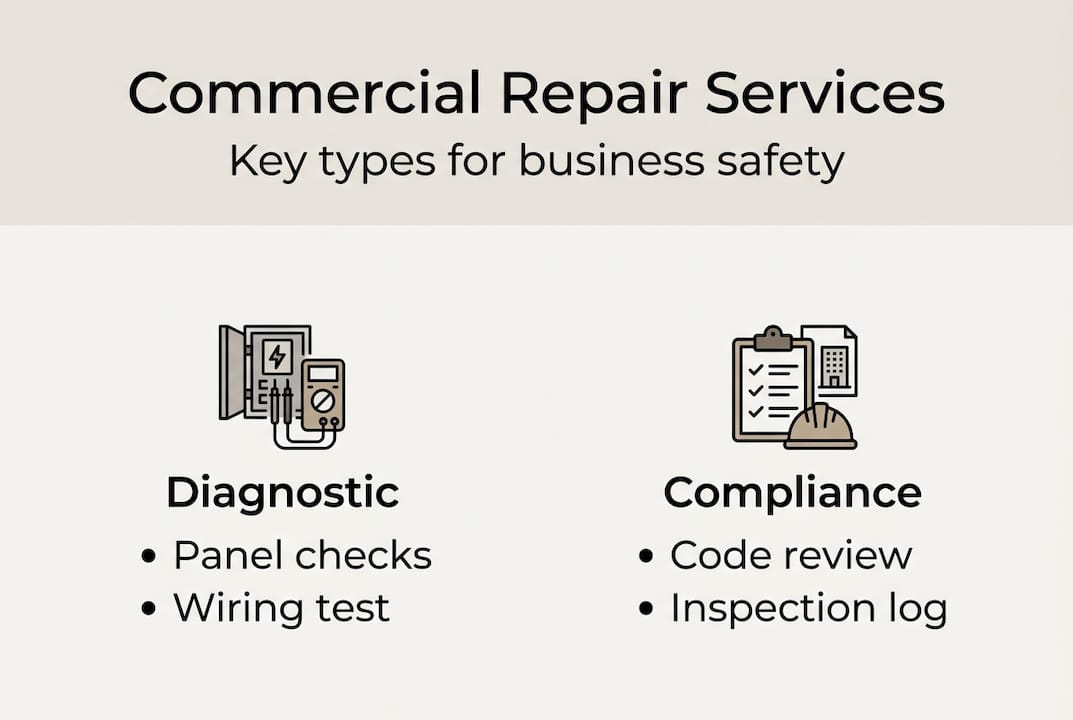
Here is a breakdown of what qualified technicians deliver:
| Service type | What it involves | When you need it |
|---|---|---|
| Fault diagnostics | Isolating the source of electrical failures | After equipment failure or tripping breakers |
| Code compliance work | Bringing systems up to NEC or local standards | Before inspections or after violations |
| Panel upgrades | Replacing or expanding electrical panels | When adding equipment or tenants |
| Lighting system repair | Fixing or replacing commercial lighting | When lighting fails or efficiency drops |
| Emergency repairs | Rapid response to outages or hazards | Anytime power or safety is at risk |
Upgrade and modernization services are a standard part of robust commercial repair offerings, not optional extras. Many businesses run outdated infrastructure that cannot support modern equipment without risk.
Here is how a typical commercial service call unfolds:
- Initial assessment — Technician reviews the problem, system layout, and any recent changes to the building or equipment.
- Diagnostic testing — Using meters and thermal imaging, technicians identify faults, overloads, or compliance gaps.
- Scope documentation — A written scope of work is developed with options and cost estimates before any repair begins.
- Repair execution — Work is completed using commercial-grade materials to code.
- Post-repair testing — System is tested under load to confirm the fix is complete and safe.
- Documentation — A service report is provided for your records, useful for inspections and insurance.
Pro Tip: Before any technician begins work, ask for a written diagnostic summary. Qualified commercial electricians should always be able to explain what they found and why the proposed repair is the right solution. If a contractor skips the diagnostic phase, that is a red flag.
How to choose the right commercial electrical repair partner
Selecting a contractor is where many businesses make avoidable mistakes. The lowest bid is rarely the right choice in commercial electrical work. The cost of a poorly executed repair often far exceeds any initial savings.
Here is what to require from any commercial electrical repair provider:
- State electrical contractor license — Verify it is current and covers commercial work
- Proof of liability insurance and workers’ compensation — Protects you if something goes wrong on your property
- Commercial project experience — Ask for references from similar property types
- Knowledge of local codes — Oklahoma City and Edmond have specific requirements beyond the NEC
- Written estimates and scope documentation — No reputable contractor should resist this
- Availability for emergencies — Commercial operations do not stop at 5 p.m.
Local experience matters more than many property managers realize. A contractor familiar with Oklahoma’s climate considerations, including heat-related wiring stress and storm season surge risks, brings relevant knowledge that out-of-state or unfamiliar contractors simply do not have.
“Qualified professionals with local expertise deliver safer, more efficient electrical repairs” and are better equipped to anticipate region-specific challenges before they become problems.
As local electrical services providers know, Oklahoma’s summer heat places additional stress on commercial electrical systems, particularly HVAC circuits and outdoor equipment. A contractor who understands these patterns will recommend preventive steps that a generalist might miss. Always check reviews, ask about their communication process, and confirm they will provide a service report after every job. Transparency from start to finish is the clearest indicator of a trustworthy partner.
A perspective from Oklahoma City experts
Here is something most articles will not tell you: the biggest electrical problems we see in Oklahoma City commercial properties are rarely caused by one dramatic failure. They build up quietly over years of deferred maintenance, incremental tenant changes, and the assumption that “if it’s working, it’s fine.”
Reactive repair is always more expensive. A panel that gets assessed and maintained costs a fraction of what emergency replacement costs after a failure during business hours. Local codes also reflect real conditions. Oklahoma summers push electrical systems hard, and storm season creates surge exposure that genuinely shortens equipment life.
Our strong recommendation: always demand a full diagnostic before authorizing repairs. Not a visual walkthrough. A real diagnostic with documented findings. Refer to a solid ongoing maintenance guide to understand what a proper maintenance schedule should look like. The businesses that avoid major electrical emergencies are almost always the ones treating their electrical systems as an ongoing operational priority, not a line item to minimize.
Connect with trusted commercial electrical repair services
Your commercial property’s electrical system is not something to leave to chance or the lowest bidder. Shepherd Electrical brings proven expertise, local code knowledge, and a commitment to transparent service to every commercial repair project in the Oklahoma City Metro area.

Whether you need a full diagnostic, an urgent repair, or a compliance review, our team is ready to help. Learn about our electrical services to see the full scope of what we offer, or go directly to our commercial electrician contact page to schedule your consultation. Local businesses trust Shepherd Electrical because we deliver clear answers, quality work, and reliable follow-through every time.
Frequently asked questions
What are the signs your commercial property needs electrical repair?
Common signs include frequent circuit breaker tripping, flickering lights, unexplained equipment failures, and burning smells from panels or outlets, all of which signal urgent repair needs.
How often should commercial electrical systems be inspected?
Most businesses should schedule inspections annually or after major renovations, since annual assessments are recommended for maintaining optimal safety and code compliance.
What qualifications should a commercial electrical repair technician have?
Technicians should hold a current state license covering commercial work, carry liability insurance, and have documented commercial project experience. Qualified professionals with local expertise deliver safer and more efficient repairs.
Is preventive maintenance necessary for commercial properties?
Preventive maintenance helps avoid costly emergencies, reduces operational downtime, and ensures your electrical systems stay compliant and safe throughout the year.
Need help with this at your home?
Shepherd Electrical helps Edmond and OKC metro homeowners with troubleshooting, repairs, GFCIs, outlets, and safety inspections. Free estimates are available, and workmanship is backed by a lifetime guarantee.