

TL;DR:
- Electrical engineers design electrical systems, while electricians build and maintain them on-site. Both careers require distinct training, licensing, and skills, with engineers earning higher median wages. They collaborate closely to ensure safe, code-compliant electrical installations.
Electrical engineering and electrician work are defined by a clear division of labor: engineers design electrical systems, and electricians build and maintain them. Understanding the role of electrical engineer versus electrician matters whether you are choosing a college major, switching careers, or simply trying to hire the right professional. The two paths diverge in education, licensing, daily tasks, and pay. The median annual wage for electrical engineers is $118,780 versus $62,350 for electricians. Both roles are governed by standards including the National Electrical Code (NEC) and credentialing bodies such as the National Council of Examiners for Engineering and Surveying (NCEES).
What educational paths and training distinguish electrical engineers from electricians?
The entry routes into these careers look nothing alike, and that difference shapes everything from your first paycheck to your long-term ceiling.
Electrical engineers follow a formal academic route:
- Complete a four-year bachelor’s degree in electrical engineering or a closely related field.
- Pass the Fundamentals of Engineering (FE) exam administered by NCEES to become an Engineer in Training.
- Accumulate four years of professional experience, then pass the Professional Engineer (PE) exam for full licensure.
- Pursue graduate studies for specialization in power systems, embedded systems, or telecommunications.
- Maintain licensure through continuing education and professional development.
Electricians take a different path that pays from day one. A 4–5 year apprenticeship combines paid on-the-job training with technical classroom instruction. Apprentices log roughly 2,000 paid hours of field work annually alongside 144–200 hours of classroom study per year. That “earn while you learn” model is a genuine financial advantage over a four-year tuition bill. After completing the apprenticeship, electricians test for journeyman licensure, then later for master electrician status. Continuing education keeps both groups current on NEC code updates and new safety requirements.
Pro Tip: If you are drawn to the trades but unsure about committing to a full apprenticeship, contact your local International Brotherhood of Electrical Workers (IBEW) chapter. Many offer pre-apprenticeship programs that let you test the work before signing on.
How do job responsibilities and work environments differ?
The core distinction is straightforward: engineers design systems before construction, and electricians install and maintain those systems on-site per building codes. The day-to-day reality of each role reflects that split.
Electrical engineer job description at a glance:
- Works primarily in offices, labs, or remotely using software tools for circuit design, simulation, and load analysis.
- Conducts system modeling and feasibility studies before a single wire is pulled.
- Visits job sites occasionally to verify that installations match design specifications.
- Faces project deadlines, client presentations, and continuous learning on new technologies.
- Wears standard lab personal protective equipment (PPE) when working near energized test equipment.
Electrician job responsibilities at a glance:
- Works on residential, commercial, and industrial sites performing physical installation, repair, and maintenance.
- Uses hand tools, power tools, conduit benders, multimeters, and cable pullers daily.
- Follows strict lockout/tagout procedures when working near live electrical systems.
- Adapts to dynamic schedules driven by construction timelines and service calls.
- Builds toward entrepreneurial opportunities, since many master electricians eventually start their own contracting businesses.
Engineers mostly work indoors in a sedentary setting, while electricians stay physically active on site. That physical reality is not a drawback for everyone. Many electricians cite the immediate satisfaction of solving a problem with their hands as a core reason they chose the trade.
What licensing distinctions and legal boundaries separate the two roles?

Licensing is where the differences between engineers and electricians become legally binding, not just descriptive.
Only master electricians or licensed contractors can pull permits for electrical installations. Engineers design but hold no permit authority for physical installations. A Professional Engineer license allows an engineer to stamp drawings for projects above certain size or risk thresholds, but that stamp does not replace master electrician credentials required by most jurisdictions. Permit and code sign-off authority rests with licensed electricians, not engineers.
| Authority | Electrical Engineer | Licensed Electrician |
|---|---|---|
| Design and stamp plans | Yes (with PE license) | No |
| Pull installation permits | No | Yes (master level) |
| Sign off on code compliance | No | Yes |
| Conduct site inspections | No (third-party inspectors do) | Responsible party |
Inspections are performed by independent code officials, not by either the engineer or the electrician. Both roles must coordinate to satisfy NEC requirements and local jurisdictional rules, which vary by state and municipality.
Pro Tip: Homeowners in Oklahoma should verify that any electrician they hire holds a current Oklahoma Construction Industries Board (CIB) license. You can search the CIB database online before booking any work.
How do salary expectations and career outlooks compare?
Pay is one of the clearest ways to compare electrician versus electrical engineer career paths, and the gap is significant.
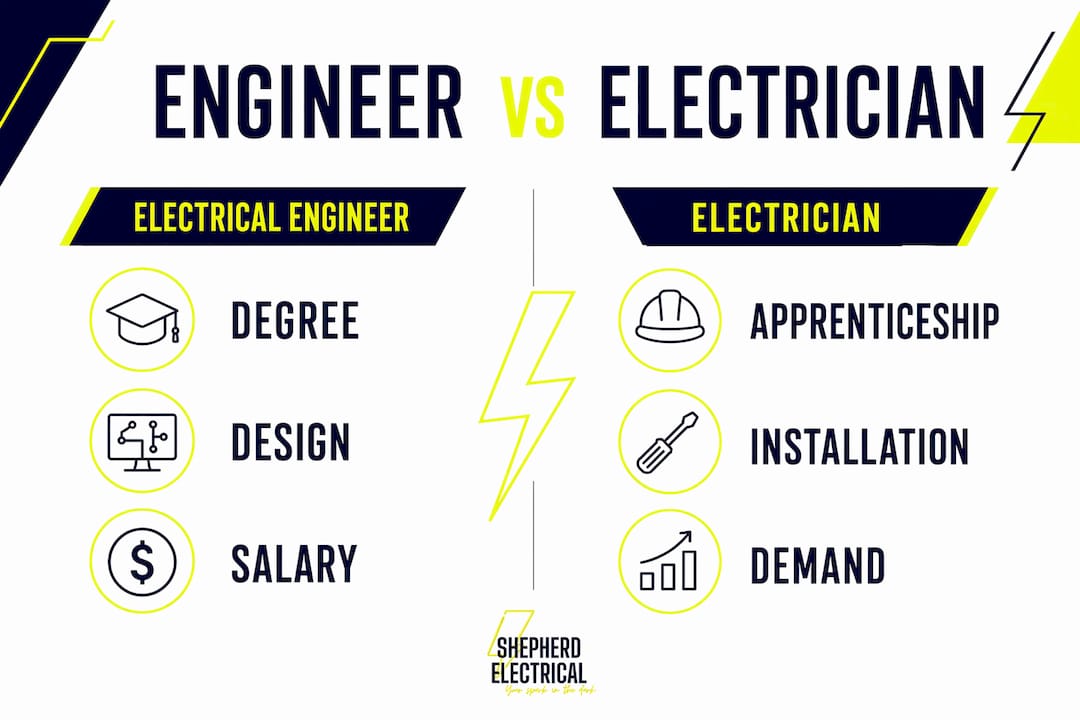
The median annual wage for electrical engineers stands at $118,780, while electricians earn a median of $62,350. Education level, years of experience, specialization, and geography all push those numbers up or down. Senior engineers in power systems or aerospace can reach well above $150,000. Master electricians who own contracting businesses often exceed their journeyman peers by a wide margin.
Both roles carry strong employment demand. Engineers tend toward corporate R&D environments, utility companies, and government contractors. Electricians serve local and regional demand, which insulates them somewhat from economic downturns because homes and businesses always need electrical work. Career satisfaction differs too. Engineers face academic and project pressures with demanding deadlines, while electricians handle physical risks alongside the reward of immediate, hands-on problem resolution. Neither path is objectively better. The right choice depends on what kind of work energizes you.
In what ways do electrical engineers and electricians collaborate?
The two roles are complementary by design. Engineers create blueprints and system specifications. Electricians implement those plans in the field. That relationship runs in both directions.
- Electricians provide real-time feedback on installation feasibility, which directly influences engineering revisions.
- Both roles communicate at project meetings to align design intent with on-site realities.
- Emerging trends in smart home technology, energy efficiency, and automation require tighter coordination than ever before.
- Understanding each other’s constraints produces safer, more buildable electrical systems.
Electricians’ practical feedback can modify engineering designs in ways that save time and money on every project. A good engineer listens to the electrician on site. A good electrician reads the drawings carefully. When both happen, projects finish on time and pass inspection.
Key Takeaways
Electrical engineers design systems and electricians install them, and both roles require distinct licensing, training, and skills that cannot substitute for each other.
| Point | Details |
|---|---|
| Education paths diverge early | Engineers need a four-year degree; electricians complete a paid 4–5 year apprenticeship. |
| Licensing boundaries are legal | Only master electricians can pull permits; engineers stamp plans but cannot authorize installations. |
| Pay gap is real but not the whole story | Engineers earn a median of $118,780 versus $62,350 for electricians, but both paths offer strong growth. |
| Collaboration is built into the process | Engineers design, electricians build, and feedback between them improves every project. |
| Career fit depends on work style | Prefer abstract design? Engineering. Prefer hands-on problem solving? The trades. |
What I have learned from watching both sides of the work
After years of seeing electrical projects from the contracting side, I am convinced that the biggest mistake students and career changers make is treating one path as superior to the other. The engineer who has never held a conduit bender often designs systems that are technically correct but a nightmare to install. The electrician who dismisses engineering drawings misses the reasoning behind specifications that protect the whole system.
Career choice often hinges on preference between theoretical problem-solving and tangible, hands-on work. That is not a flaw in either path. It is a feature. My honest advice: shadow both before you commit. Spend a day in an engineering office and a day on a job site. The one that feels right after eight hours is probably the right answer. Also factor in physical demands over a 30-year career, the cost of a four-year degree versus an apprenticeship, and whether you want to work locally or in a corporate environment. Both paths offer strong market demand and rewarding work. The question is which kind of reward matters most to you.
— Brad
Shepherdelectricalconstruction: licensed electricians serving Edmond and OKC
When you understand the difference between an engineer and an electrician, you also understand what to look for when hiring. Shepherdelectricalconstruction employs licensed electricians who handle residential installations, repairs, and upgrades across Edmond, North OKC, Deer Creek, Nichols Hills, and surrounding areas. Every job follows NEC standards and Oklahoma CIB licensing requirements.

From dedicated circuit installations to panel upgrades and surge protection, Shepherdelectricalconstruction brings the hands-on expertise that turns engineering plans into safe, code-compliant reality. Browse the completed projects to see the range of residential work the team handles. Ready to book? Call or text (405) 406-1026 or schedule online.
FAQ
What is the main difference between an electrical engineer and an electrician?
Electrical engineers design and analyze electrical systems using engineering principles, while electricians install, maintain, and repair those systems on-site following NEC codes and local licensing requirements.
Can an electrical engineer do an electrician’s job?
No. An electrical engineer cannot pull permits or legally perform electrical installations without holding a master electrician license, which requires a separate apprenticeship and licensing process.
How long does it take to become an electrician versus an electrical engineer?
Both paths take roughly four to five years. Engineers complete a four-year degree, while electricians finish a 4–5 year apprenticeship that pays them throughout the training period.
Which career pays more, electrical engineering or electrician?
Electrical engineers earn a median of $118,780 annually versus $62,350 for electricians, though master electricians who own contracting businesses can significantly exceed the median figure.
Do electrical engineers and electricians work together on the same projects?
Yes. Engineers provide design blueprints and specifications, and electricians implement them on site. Electricians regularly provide installation feasibility feedback that leads engineers to revise designs before construction is complete.
Recommended
- Electrical Design in Construction: A Professional’s Guide
- Role of electricians in emergencies: Oklahoma City safety guide
- Professional electrical services: boost home safety and value
Need help with this at your home?
Shepherd Electrical helps Edmond and OKC metro homeowners with residential electrical service, repairs, upgrades, panels, EV chargers, solar, and backup power. Free estimates are available, and workmanship is backed by a lifetime guarantee.