

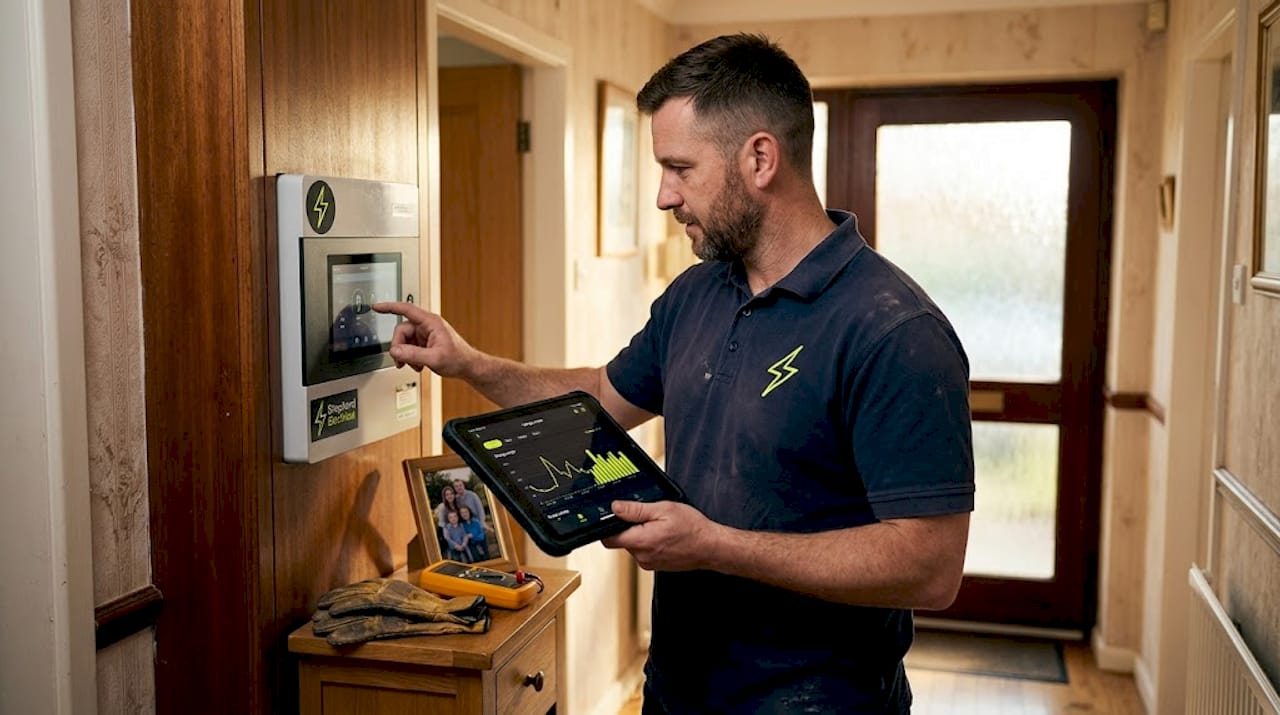
Many homeowners and small business owners in the Oklahoma City Metro area assume “smart electrical solutions” means swapping out a few light bulbs or plugging a Wi-Fi outlet timer into the wall. That assumption costs money. Real smart electrical upgrades reach far deeper, transforming how your entire electrical system monitors loads, responds to dangerous conditions, and manages energy costs in real time. This article breaks down exactly what these solutions include, how they save you money and protect your property, and what to look for before you commit to an upgrade.
Table of Contents
- What is a smart electrical solution?
- Energy efficiency unlocked: How smart solutions manage your power
- Making homes and businesses safer with smart protection
- Choosing your upgrade: Smart panel vs add-on solution
- What most guides miss: Customizing smart electrical solutions for your life
- Get expert help with smart electrical upgrades in OKC
- Frequently asked questions
Key Takeaways
| Point | Details |
|---|---|
| Smart electrical defined | It means whole-system monitoring and control for safety and energy savings—not just Wi-Fi gadgets. |
| Major energy savings | Upgrading can cut your electricity costs by 50 percent or more with smart load management. |
| Enhanced safety features | Smart solutions often exceed code for fire and shock protection thanks to AFCI and GFCI integration. |
| Multiple upgrade paths | You can choose full panel replacements or add-ons—each with different costs, scope, and convenience. |
| Personalization matters | The most effective smart electrical systems are customized for your property’s unique needs. |
What is a smart electrical solution?
The phrase gets thrown around loosely, so let’s pin it down. A smart electrical solution for homeowners and small businesses generally means adding smart monitoring and control to the electrical system through smart panels, smart breakers, or panel-adjacent load-control modules so you can see per-circuit energy usage and manage loads remotely. That last part matters: per-circuit visibility. Instead of one blurry number on a monthly utility bill, you see exactly how much electricity your HVAC, water heater, or commercial refrigeration unit is pulling at any given moment.
The core components of a smart electrical system include:
- Smart electrical panels: Replace the traditional breaker box and give you cloud-connected control over every circuit.
- Smart breakers: Individual circuit breakers with built-in sensors that report usage, trip remotely, and send alerts.
- Add-on modules: Panel-adjacent devices that connect to existing breakers and layer smart features onto your current setup without a full replacement.
- Smart meters and submeters: Track consumption at the panel level or at specific equipment.
Here’s a quick look at what these features mean for your daily life:
| Feature | Traditional panel | Smart panel/solution |
|---|---|---|
| Per-circuit energy data | None | Real-time, per-circuit |
| Remote breaker control | Not possible | Yes, via app |
| Overload/arc fault alerts | Manual detection only | Instant phone notification |
| Integration with solar/EV | Manual scheduling | Automatic load optimization |
| Energy cost reporting | Monthly utility bill only | Daily or hourly breakdowns |
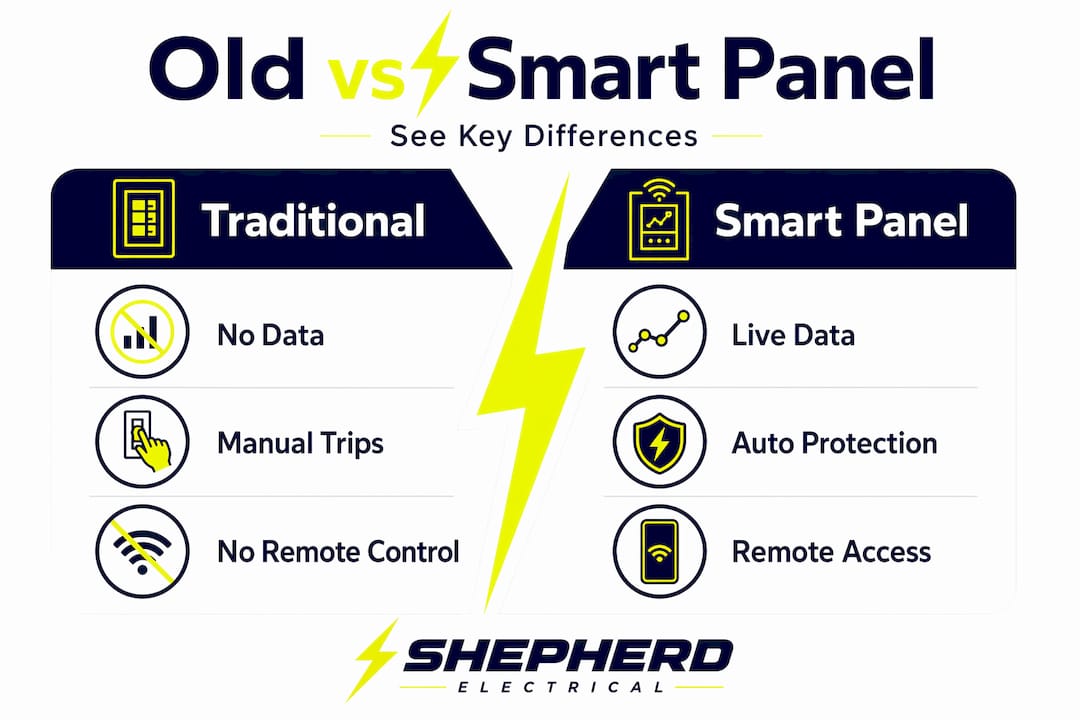
These capabilities make a direct difference when you are managing a home with a growing EV charging demand, a small business with after-hours equipment running unnecessarily, or a property connected to solar panels that could be optimized better.
Exploring electrical panel upgrades is often the starting point. But before committing to hardware, understand the full scope of electrical services that connect these upgrades to your specific goals.
Energy efficiency unlocked: How smart solutions manage your power
Oklahoma City summers push HVAC systems hard. Utility bills spike. Smart electrical solutions offer a way to fight back, and the numbers are compelling.

Intelligent home energy management that uses real-time analysis to optimize appliance, EV charger, solar panel, and battery usage is one of the most practical applications available today. A system called iHEMS (Intelligent Home Energy Management System) demonstrates this clearly: it shifts loads automatically based on time-of-use electricity rates and real-time generation data, which can reduce annual electricity costs by 50% to 60% while boosting solar self-consumption from around 60% up to over 90%.
For a typical OKC household running central air conditioning eight months of the year plus an EV charger, those percentages translate to hundreds of dollars back in your pocket annually.
Here is how a smart system works through a typical Oklahoma summer day:
- Early morning: System detects off-peak utility rates and pre-cools the home before peak hours.
- Mid-morning: Solar panels come online; smart system diverts excess solar to EV charging automatically.
- Peak afternoon hours: System reduces non-essential loads (water heater, secondary HVAC zones) to keep demand charges low.
- Evening: Battery storage, if present, is discharged to offset peak demand costs.
- Night: EV charger resumes on off-peak rates; battery begins recharging for tomorrow.
That automated cycle happens without you touching a single switch. It is the difference between hoping your bill stays manageable and knowing your system is actively working to lower it.
Statistic to know: Smart energy management systems can boost solar self-consumption from 60% to over 90%, meaning far less of your generated energy goes back to the grid at low buyback rates.
Pro Tip: If you have or plan to install an EV charger, pairing it with a smart panel is one of the fastest ways to see return on your investment. The system can prioritize solar charging during daylight and shift to grid power only during off-peak windows, cutting your EV charging cost significantly.
For OKC homeowners and business owners looking to take this further, the strategies for boosting home efficiency go hand in hand with smart panel installation and are worth reviewing before your upgrade.
Making homes and businesses safer with smart protection
Energy savings get attention, but safety is where smart electrical solutions earn their keep every single day.
Safety upgrades in smart electrical solutions frequently overlap with code-required protection such as AFCI (Arc Fault Circuit Interrupter) and GFCI (Ground Fault Circuit Interrupter) breakers, and increasingly with dual-function breakers that cover both arc-fault and shock hazards simultaneously. Understanding what each does helps you see the real value:
- AFCI breakers detect the kind of electrical arcing that happens inside walls, behind outlets, or in damaged cords. Standard breakers never catch this. Electrical fires caused by arc faults are one of the leading causes of residential fires in the U.S., and AFCI protection is now required in most living areas under the National Electrical Code.
- GFCI protection shuts off power within milliseconds when current leaks to an unintended path, like through a person. Kitchens, bathrooms, garages, and outdoor circuits require GFCI protection under current code.
- Dual-function AFCI/GFCI breakers handle both risks on a single breaker, making them especially practical for retrofits and older properties with limited panel space.
Smart monitoring adds another layer on top of these hardware protections. When a circuit draws abnormal current or a breaker trips, a smart system can send you an instant alert. You do not have to be home to know your garage circuit tripped or that something unusual is happening in your commercial kitchen at midnight.
“Smart protection is not about replacing safety code—it is about making that code work harder for you by adding real-time visibility and remote response.”
Upgrading to safer circuit breakers is a natural companion to smart electrical solutions. And if you are unsure where your current system stands, assessing your electrical system before any upgrade is always the right first move.
Pro Tip: If your property was built before 1999, there is a good chance it has neither AFCI nor GFCI protection on circuits that require it under today’s code. A smart panel upgrade or even a targeted breaker replacement can bring you into compliance and lower your fire risk at the same time.
Choosing your upgrade: Smart panel vs add-on solution
Once you decide to move forward, the next decision is the type of upgrade. There are two main mechanisms: full smart panel replacements and retrofit/add-on systems that control and monitor only selected circuits while leaving your existing panel in place.
This distinction matters because the right choice depends on your property’s age, your budget, and how much disruption you can tolerate. Add-on solutions and full smart panels each have clear strengths, but add-on systems only manage the circuits they are physically connected to, while full replacements manage all circuits with greater integration.
Here is a direct comparison:
| Factor | Full smart panel | Add-on/retrofit module |
|---|---|---|
| Scope | All circuits | Selected circuits only |
| Upfront cost | Higher | Lower |
| Installation disruption | More invasive, longer | Minimal, often a few hours |
| Best for | Major remodels, older panels, full integration | Targeted control, limited budgets, newer panels |
| Code compliance opportunity | Full reset to current NEC | Partial; depends on circuits added |
| Integration with solar/EV | Seamless, system-wide | Only on connected circuits |
To help you decide which path fits your situation, consider these steps:
- Check your panel’s age: Panels over 25 years old often warrant a full replacement anyway. Combining that with a smart upgrade makes financial sense.
- List your priority circuits: If you only want to monitor and control your HVAC, EV charger, and water heater, an add-on system may be sufficient.
- Calculate disruption tolerance: A full panel swap typically requires a utility shutoff and permits. An add-on module can often be installed in a morning.
- Think about future additions: If solar or a home battery is in your near-term plan, a full smart panel is the more future-ready choice.
Reviewing the panel upgrade guide gives you a step-by-step picture of what a full upgrade involves. And if you are not sure whether your current panel even needs replacing, the signs your panel needs upgrading article is a useful starting point before you call anyone.
What most guides miss: Customizing smart electrical solutions for your life
Here is something we see regularly at Shepherd Electrical that most online guides gloss over entirely: the biggest mistake people make with smart electrical upgrades is buying a solution designed for someone else’s life.
You can read every product comparison article available and still land on the wrong system if you have not honestly mapped out your own property’s energy patterns and priorities. A young family in Edmond with three kids, a work-from-home setup, and a leased solar system has completely different needs than a small restaurant owner in Midtown OKC managing commercial refrigeration, kitchen equipment, and variable business hours. Generic advice tells both of them to “go smart.” That is not advice. That is a product pitch wearing the costume of advice.
What actually matters: Which circuits are costing you the most money? Where does your biggest safety risk live? Do you need remote access because you travel, or do you need granular energy data because you are trying to optimize solar production? The answers to those questions should drive the hardware decision, not the other way around.
We have seen homeowners spend significant money on a full smart panel replacement when two targeted add-on modules would have addressed 90% of their concerns at a fraction of the cost. We have also seen business owners go the retrofit route to save money, only to find that their add-on system could not integrate with the solar array they added six months later, requiring a full panel replacement after all. Both situations were avoidable with a proper assessment upfront.
The value of working with an experienced local electrician who is not tied to selling one specific product line cannot be overstated. A good electrician asks about your daily routine, your equipment, your plans for the next five years, and your budget before recommending anything. Reviewing your options for residential wiring upgrades with a professional who knows OKC’s climate demands, utility rate structures, and local code requirements is genuinely different from consulting a national brand’s sales representative.
One-size-fits-all may work for baseball caps. For electrical systems protecting your family or your business, customized and code-compliant is the only standard worth accepting.
Get expert help with smart electrical upgrades in OKC
Smart electrical solutions deliver real results: lower bills, stronger safety protection, and better control over your property’s energy use. But the technology only works as well as the installation and planning behind it.

At Shepherd Electrical, we work with homeowners and business owners across the Oklahoma City Metro and Edmond area to assess their current electrical systems and recommend upgrades that actually match their goals and budget. Whether you need a licensed residential electrician to handle a full smart panel installation, or you want a thorough walkthrough of your options before committing to anything, we are here to help. Explore our full service overview or learn more about what local electrical contractors do and why local expertise matters for OKC-area properties. Book your assessment online and get started with a plan built around your property, not a generic template.
Frequently asked questions
What is the difference between a smart electrical panel and an add-on smart module?
A smart panel replaces your entire breaker box and gives you control and monitoring over every circuit, while an add-on module connects to your existing panel and only manages the specific circuits it is wired to. The right choice depends on your panel’s age, your budget, and how many circuits you need to control.
Will smart electrical solutions really lower my utility bills?
Yes, particularly when paired with solar panels, batteries, or EV chargers. Smart energy management optimizes when and how your appliances and chargers draw power, which can cut electricity costs by 50% or more compared to unmanaged usage.
Are smart breakers required by electrical code?
Smart breakers themselves are not mandated by code, but AFCI and GFCI protection is required in most areas of a home or business under the National Electrical Code. Smart solutions typically meet or exceed these requirements, so an upgrade can bring older properties into compliance.
How do I know if my home or business is ready for a smart upgrade?
If your panel is more than 20 to 25 years old, if you are planning to add EV charging or solar, or if you want real-time energy data and remote control over your circuits, you are a strong candidate for a smart electrical upgrade. A professional assessment is the most reliable way to confirm which option fits your property.
Need help with this at your home?
Shepherd Electrical helps Edmond and OKC metro homeowners with residential installs, wiring upgrades, fans, lighting, and electrical improvements. Free estimates are available, and workmanship is backed by a lifetime guarantee.