

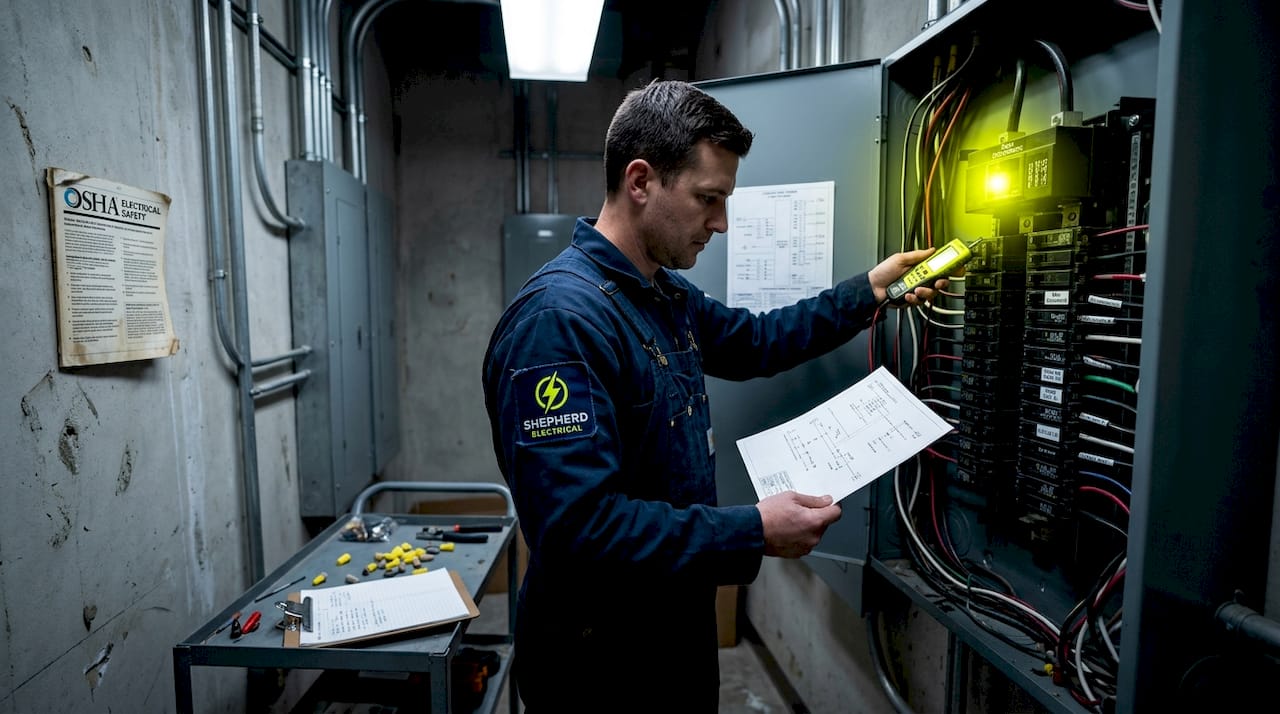
Plenty of homeowners assume that electrical work is either a weekend DIY project or something any handyman can knock out in an afternoon. That assumption costs people money, causes failed home sales, and in the worst cases, starts fires. The truth is that electrical work in Edmond and the Oklahoma City Metro involves layers of licensing, code compliance, permitting, and technical skill that go far beyond flipping a breaker or swapping a light fixture. This guide breaks down what electrical contractors actually do, what credentials they need in Oklahoma, and why choosing the right one protects your home, your business, and your wallet.
Table of Contents
- What does an electrical contractor actually do?
- Licensing, credentials, and legal requirements in Edmond and OKC
- Permits and local inspection: Why they protect you
- Beyond basics: Modern energy systems and specialized roles
- The reality most people miss about hiring electrical contractors
- Partnering with reliable electrical contractors in Edmond & OKC
- Frequently asked questions
Key Takeaways
| Point | Details |
|---|---|
| Code compliance is critical | Electrical contractors ensure every project meets or exceeds safety codes, saving you from future hazards. |
| Check credentials always | Verifying local licensing is your best protection against unsafe, illegal work. |
| Permits protect investments | Permitted and inspected electrical work guards your property and simplifies home sales or insurance claims. |
| Modern contractors offer more | Today’s electrical contractors also handle solar, batteries, and smart systems—not just wiring and repairs. |
| Expertise prevents costly mistakes | Hiring the right pro from the start avoids expensive fixes and compliance failures later on. |
What does an electrical contractor actually do?
A lot of people use “electrician” and “electrical contractor” interchangeably, but they mean different things. An electrician is an individual trade professional who performs hands-on electrical work. An electrical contractor is a licensed business entity or professional who manages electrical projects from start to finish, which includes design, planning, installation, repairs, and coordination with inspectors and local authorities.
Think of it this way: the electrician is the surgeon, and the contractor is the surgical team lead who makes sure the whole operation follows protocol, uses the right tools, and meets the standard of care.
Electrical contractors are responsible for far more than running wire. They interpret blueprints, size electrical panels, calculate load requirements, coordinate with general contractors on large remodels, pull the necessary permits, and schedule inspections. On commercial jobs, they may also supervise multiple licensed electricians working under their oversight.

The technical benchmark every contractor works from is the National Electrical Code (NEC), formally known as NFPA 70. This is the standard adopted by states and local jurisdictions to govern how electrical systems are designed and installed. When your city’s building department approves a permit and an inspector signs off on work, they are verifying that everything meets the NEC. Contractors who skip that process are not just cutting corners, they are leaving you legally exposed.
Here is a summary of what a qualified electrical contractor handles:
- Designing electrical systems for new construction and major remodels
- Installing service panels, subpanels, and branch circuits
- Upgrading electrical capacity for additions or high-demand equipment
- Troubleshooting and repairing faulty wiring, outlets, and breakers
- Installing GFCI and AFCI protection per current code requirements
- Pulling permits and managing inspections from start to finish
- Coordinating with utility companies for service upgrades
- Installing specialty systems like EV chargers, surge protection, and backup power
- Maintaining documentation for warranty, insurance, and resale purposes
“The best contractors do not just make your lights work. They make sure your entire electrical system is safe, legal, and built to last.”
The value of using licensed electricians comes down to accountability. Licensed contractors stake their credentials, their business, and their insurance on every job they sign off on. That accountability is what protects you.
Licensing, credentials, and legal requirements in Edmond and OKC
Understanding credentials is not just bureaucratic formality. It is how you protect yourself from unqualified work that may look fine today but fail a home inspection two years from now.
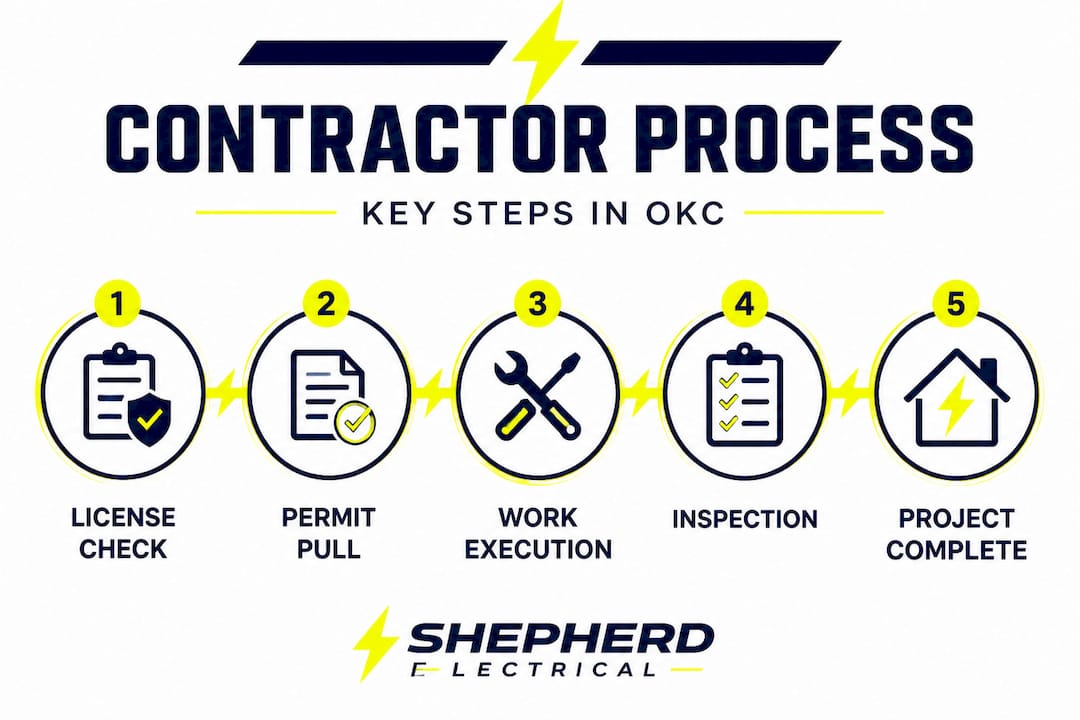
In Oklahoma, electrical contractors are regulated through the Oklahoma Construction Industries Board (CIB). The CIB administers licensing for electrical contractors and electricians throughout the state. For most electrical work in residential and commercial settings, you need a contractor who holds a valid CIB license. You can and should verify a contractor is licensed on the CIB’s public-facing consumer lookup tool before any work begins.
Oklahoma City adds another layer. To legally pull permits in OKC, electrical contractors typically need both the state CIB license and a separate city registration. This dual credentialing system means that even a contractor licensed in a neighboring town may not be authorized to pull permits inside OKC city limits. When hiring an electrician in OKC, confirming both the state license and local city registration is a non-negotiable step.
Here is a quick reference for the credentials typically required by project type:
| Project type | CIB license required | OKC city registration | Permit typically required |
|---|---|---|---|
| Panel upgrade or replacement | Yes | Yes | Yes |
| New circuit installation | Yes | Yes | Yes |
| EV charger installation | Yes | Yes | Yes |
| GFCI/outlet replacement (like-for-like) | Varies | Not always | Not always |
| Whole-home rewire | Yes | Yes | Yes |
| Lighting fixture swap (existing circuit) | Varies | Not always | No |
This table is a general guide. Always confirm requirements directly with the OKC Development Services Department for your specific project.
Pro Tip: When you call a contractor for a quote, ask two direct questions before scheduling anything. First: “Are you licensed with the Oklahoma CIB?” Second: “Are you registered to pull permits in Oklahoma City?” A qualified contractor will answer both without hesitation. Vague responses or excuses are a major red flag. Also check how recently their license was renewed. Outdated credentials are just as problematic as no credentials at all. Knowing how to go about choosing the right electrical contractor in the Edmond and OKC area starts with these two questions.
Permits and local inspection: Why they protect you
A lot of homeowners see permits as red tape, an extra cost and delay that slows down a project. That framing misses the actual purpose. A permit is a formal record that work was reviewed by a licensed professional and inspected by your local authority. That record protects you at resale, protects your insurance policy, and protects your family while you live in the home.
In Oklahoma City, virtually all electrical work beyond basic like-for-like device replacement requires a permit. That includes panel upgrades, new circuits, service changes, and EV charger installations. If a contractor tells you the job is too small to need a permit, get a second opinion. Work that skips the permit process may be fine, or it may hide code violations that put your home at risk.
Here is how the permit and inspection process typically works for a residential electrical project in OKC:
- Contractor submits permit application to the OKC Development Services Department, including scope of work and load calculations if required.
- Permit is reviewed and approved, often within a few business days for standard residential work.
- Work begins after permit approval. Work cannot legally begin before the permit is issued.
- Rough-in inspection occurs mid-project, before walls are closed. The inspector checks wiring methods, box fill, grounding, and other concealed work.
- Final inspection takes place once the project is complete. The inspector verifies all devices, connections, labeling, and code requirements.
- Certificate of completion is issued, creating a permanent record in the city’s database.
This process matters for permit rules on residential jobs because it creates documented proof that your system was built correctly. If you ever file an insurance claim after an electrical fire, your insurer will look at whether the work was permitted. Unpermitted work can void your coverage.
Consider this: A panel upgrade done without a permit may look identical to one done properly, right up until a short circuit causes a fire and your insurance company denies the claim. The permit is not just paperwork. It is your legal protection. Your complete guide to residential electrical installation always begins with verifying permit requirements first.
Inspections also catch real problems. Inspectors regularly find improper grounding, overloaded circuits, and unsafe wire splices even on work performed by contractors who thought they did everything right. That outside review is a safety net, not a formality.
Beyond basics: Modern energy systems and specialized roles
The role of an electrical contractor has grown significantly in the last decade. If you picture an electrician running conduit and wiring outlets, that image is accurate but incomplete. Today, qualified contractors are central to modern energy systems including solar panel arrays, battery storage, EV charging infrastructure, smart home automation, and whole-home backup power.
These are not simple add-ons. They require detailed planning, load analysis, coordination with utility providers, and documentation that goes well beyond standard residential wiring. Battery storage systems, for instance, must integrate with both the solar array and the existing panel in ways that satisfy utility interconnection agreements. Miss a step, and the system either will not work or will not qualify for net metering credits.
Here is a comparison of traditional electrical work versus advanced energy system installations:
| Factor | Standard electrical work | Advanced energy systems |
|---|---|---|
| Design complexity | Moderate | High, requires engineering review |
| Utility coordination | Minimal | Required for interconnection |
| Documentation | Permit and inspection records | Utility forms, system specs, warranties |
| Code requirements | NEC basics | NEC plus manufacturer and utility specs |
| Timeline | Days to weeks | Weeks to months |
| Ongoing monitoring | Rarely needed | Often required for warranty and optimization |
Modern electrical contractors who work on these systems handle things that older generalist providers simply are not set up to do, including:
- Sizing battery systems for critical load requirements
- Coordinating utility interconnection applications for solar
- Programming and commissioning smart panels and energy monitors
- Planning EV charging infrastructure for multi-unit properties
- Fulfilling manufacturer requirements to protect system warranties
Pro Tip: If you are considering an energy upgrade like solar, a battery backup system, or a Level 2 EV charger, do not hire based on price alone. Ask the contractor to walk you through how they handle utility coordination and what documentation you will receive at project completion. Contractors who cannot answer those questions clearly are not equipped for that type of work. Reviewing the top electrical upgrades available to OKC homeowners can help you prioritize what makes sense for your property. And before any major upgrade, it is worth reviewing code compliance requirements so you know what questions to ask. If your panel is older, check for signs your panel needs upgrading before adding significant load with new systems.
The reality most people miss about hiring electrical contractors
Here is the uncomfortable truth we have seen play out more times than we care to count: most homeowners only think seriously about contractor quality after something goes wrong. A panel job done by a cousin who “knows about electrical stuff” looks fine for eight months. Then a breaker starts tripping, a wall gets warm, and suddenly that favor is a fire hazard.
The common misconception is that electrical projects are essentially either simple or complicated, and simple ones do not need much expertise. What people miss is that the consequences of getting a “simple” job wrong are not simple at all. A bad connection on a 15-amp circuit can arc at temperatures exceeding 5,000 degrees. Bad wiring hidden behind drywall is invisible until it is not.
We have seen homes go through the resale process only to have inspectors flag unpermitted panel work. The seller ends up either paying to have everything properly redone or negotiating a significant price reduction. That is a real cost that showed up years after the original job. The real code compliance challenges are rarely obvious on the surface.
There is also a legal dimension that gets overlooked. If unpermitted electrical work contributes to a fire or injury, homeowner liability exposure increases substantially. Insurance policies increasingly have exclusions for losses tied to unpermitted work. Saving a few hundred dollars on permit fees can translate into a six-figure problem.
Our take: stop treating the credential and permit check as optional steps to skip when you trust someone or want to save time. They exist because the consequences of failure are severe. A credentialed contractor who pulls permits is not charging you extra for paperwork. They are protecting you from a set of risks that most homeowners do not fully appreciate until they are dealing with the fallout.
Partnering with reliable electrical contractors in Edmond & OKC
Knowing what to look for makes choosing a contractor much less stressful, and you now have the framework to make a confident decision.

Shepherd Electrical serves residential and commercial clients across Edmond and the Oklahoma City Metro as a full-service electrical contractor with the credentials, permits, and hands-on expertise to back it up. From panel upgrades and EV charger installations to emergency repairs and whole-home energy assessments, the team handles modern electrical needs with full code compliance and transparent documentation. If you are ready to move forward, or just want to understand your options, learning how to choose the right contractor is a great starting point. And when safety is the priority, the professional services built around home safety give you a clear picture of what working with a qualified team looks like from estimate to final inspection.
Frequently asked questions
What’s the difference between an electrician and an electrical contractor?
Electricians are individual technicians who perform hands-on work, while electrical contractors are licensed businesses or professionals who manage projects, pull permits, and ensure full code compliance from start to finish.
How can I check if my electrical contractor is licensed in Oklahoma?
You can verify licensing directly through the Oklahoma CIB consumer lookup tool before signing any contract or allowing work to begin.
When do I need a permit for electrical work in Oklahoma City?
Permits in OKC are required for most work beyond simple like-for-like device swaps, including new circuits, panel upgrades, service changes, and EV charger installations.
Can electrical contractors handle solar or battery installations?
Yes, many qualified contractors now manage solar and battery storage projects end to end, including utility coordination, documentation, and compliance with both NEC and manufacturer requirements.
What risks are there in hiring unlicensed contractors?
Using unlicensed contractors can lead to failed inspections, voided insurance coverage, and unsafe work. In Oklahoma City, contractors must be CIB-licensed and city-registered to legally pull permits, and skipping that verification puts you at financial and legal risk.