

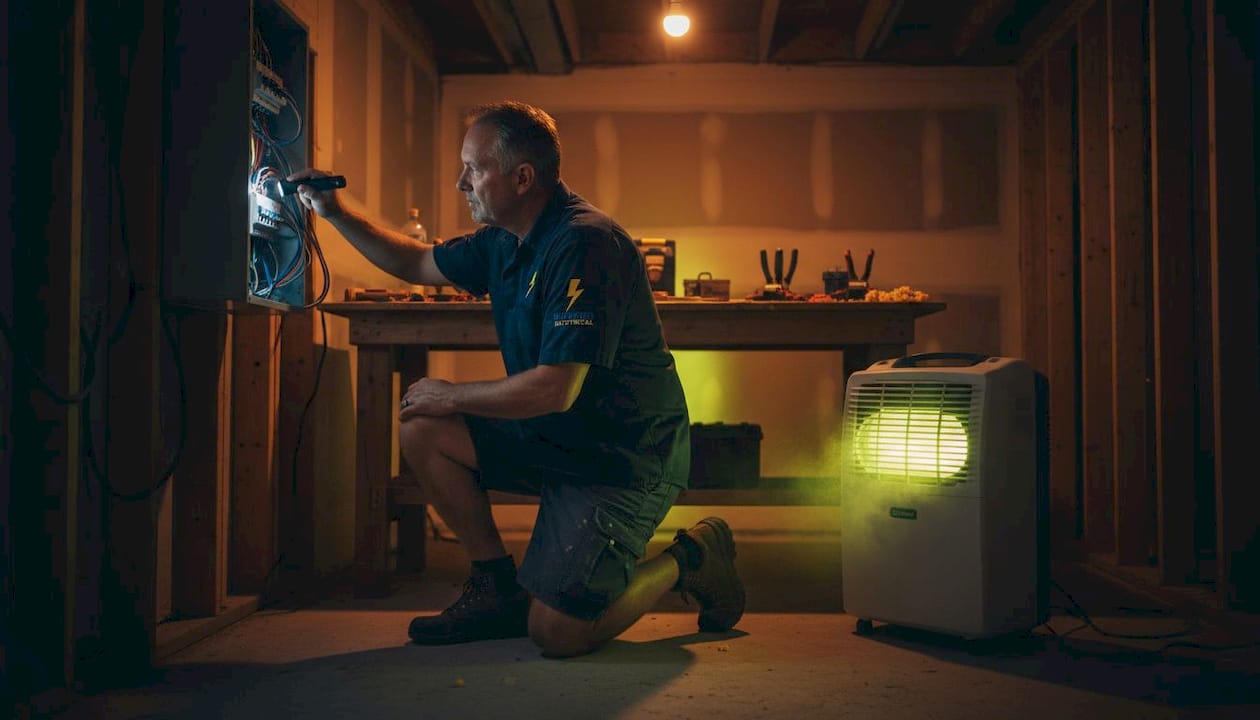
Most homeowners and business owners assume that any significant electrical improvement means gutting walls, replacing all the wiring, and spending weeks in construction chaos. That assumption is wrong, and it costs people time, money, and unnecessary stress. Electrical retrofitting means modifying an existing electrical installation rather than fully rebuilding it to change its design, capacity, or configuration. For property owners in Edmond and the Oklahoma City Metro area, understanding this distinction can mean the difference between a practical, targeted upgrade and an expensive project that goes far beyond what you actually need.
Table of Contents
- What electrical retrofitting really means
- When and why electrical retrofitting is needed
- What happens during an electrical retrofit
- Code, permitting, and safety in electrical retrofits
- What most property owners miss about retrofitting: Lessons from the field
- Get safe, code-compliant retrofits with local experts
- Frequently asked questions
Key Takeaways
| Point | Details |
|---|---|
| Retrofitting isn’t a full rebuild | It means updating only what’s needed to boost safety, capacity, and code compliance without gutting your whole electrical system. |
| Start with an assessment | A load calculation and expert check reveal if you need upgrades and where to target retrofitting work. |
| Local codes and permits matter | All work must meet NEC standards, and local inspectors can require hazard fixes during any permitted retrofit. |
| Professional help pays off | Using a qualified electrician avoids costly mistakes and ensures safety, long-term property value, and smooth permit approval. |
What electrical retrofitting really means
Now that we’ve set the context, here’s what electrical retrofitting actually means and how it compares to other electrical solutions you might have heard about.
The term “retrofitting” gets thrown around loosely, but the core idea is straightforward. Retrofitting keeps existing infrastructure and selectively modifies it, while rebuilding typically means replacing the system more extensively. Think of it like renovating a kitchen versus tearing the whole thing down. You keep the structure, update what matters, and walk away with a better result at a fraction of the cost.
Electrical retrofitting in the electrical sense means modifying an existing electrical installation to change its design, capacity, or configuration without replacing everything from scratch. This might mean upgrading your main panel, adding new circuits, or replacing outdated protective devices while leaving functioning wiring and infrastructure in place.
Here’s a quick side-by-side comparison to make the difference crystal clear:
| Factor | Electrical Retrofit | Full Rebuild |
|---|---|---|
| Scope | Targeted modifications | Full system replacement |
| Cost | Lower overall | Significantly higher |
| Disruption | Minimal to moderate | Extensive |
| Timeline | Days to weeks | Weeks to months |
| Best for | Specific capacity or safety needs | Severely outdated or damaged systems |
| Permit complexity | Moderate | High |
Common misconceptions about retrofitting:
- “Retrofitting means replacing all my wiring.” Not true. It typically targets specific circuits, panels, or protective devices.
- “It’s just a band-aid fix.” Wrong. A proper retrofit brings your system up to current code and can last decades.
- “I don’t need a permit for small changes.” Almost always incorrect. Permitted work protects you legally and financially.
- “Any electrician can do it without an assessment.” This is risky. Proper retrofitting starts with a load calculation and system audit.
Retrofitting is often the smarter call for panel safety and upgrades when your infrastructure is mostly sound but specific components need modernizing. Similarly, targeted home wiring upgrades fall squarely under the retrofitting umbrella. The result is a safer, more capable system without the disruption of a ground-up rebuild.
“A retrofit is not a compromise. Done correctly with a qualified electrician, it’s often the most efficient path to a code-compliant, high-performing electrical system.” — Electrical Trade Network
When and why electrical retrofitting is needed
Having clarified what retrofitting is, let’s look at when you actually need it and the most common drivers for Edmond and OKC property owners.
The biggest misconception is that retrofitting is only for old homes with knob-and-tube wiring. That’s not the whole picture. Plenty of properties built in the 1990s and 2000s need retrofitting today simply because technology and demand have changed so dramatically. A 200-amp panel that felt generous in 2002 might be completely overwhelmed by a home with two EV chargers, a heat pump, and a home office loaded with electronics.
Bringing older wiring, panels, and protective devices into safer, more efficient operation when adding loads is one of the most common goals of electrical retrofitting. The triggers vary, but the pattern is consistent: a new demand reveals that the existing system can’t keep up safely.
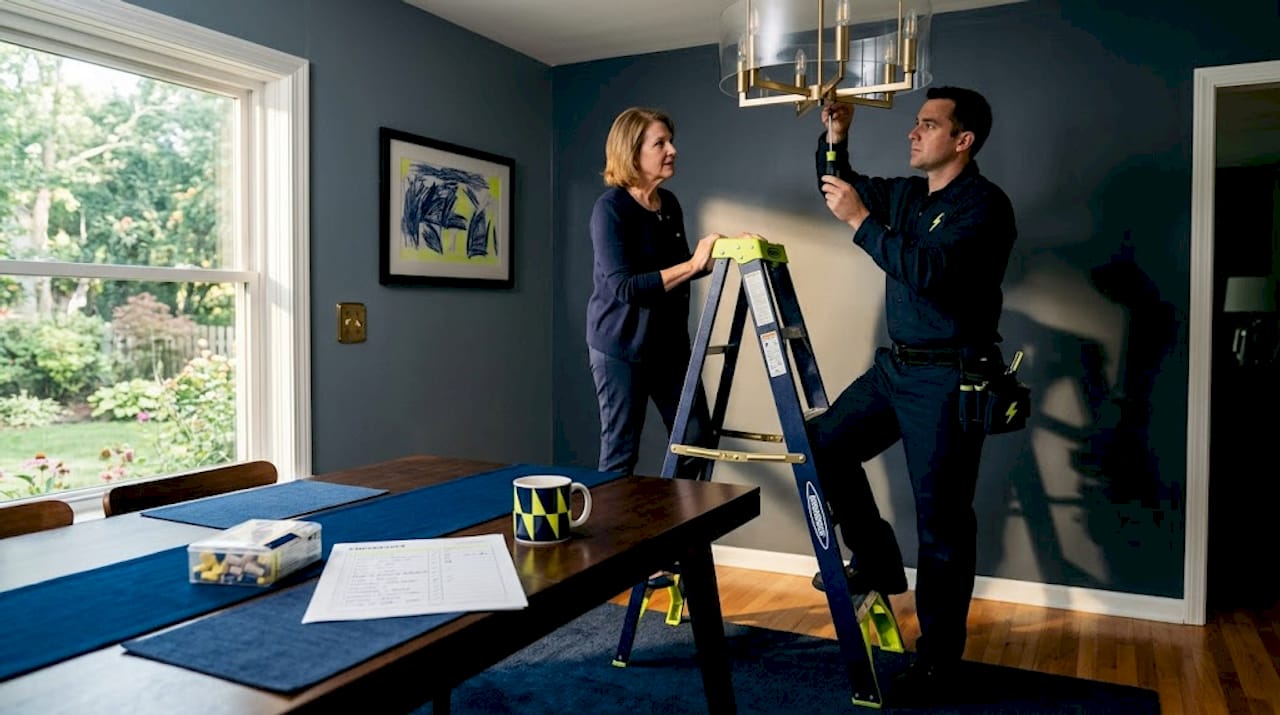
Here are the most common scenarios that drive retrofitting needs for local property owners:
| Trigger | Symptom | Recommended Retrofit |
|---|---|---|
| EV charger installation | Insufficient amperage or dedicated circuit | Service upgrade or new dedicated circuit |
| HVAC system upgrade | Tripping breakers or voltage fluctuations | Panel upgrade or load balancing |
| Business equipment expansion | Overloaded circuits, flickering lights | Additional sub-panels or circuit additions |
| Code update compliance | Failed inspection or insurance flag | GFCI/AFCI device upgrades, grounding fixes |
| Home addition or renovation | Insufficient capacity in new space | Circuit extension and panel evaluation |
| Old fuse box still in place | Repeated fuse failures, no room to expand | Panel replacement and service upgrade |
How a retrofitting need gets recognized, step by step:
- Identify the trigger. A new appliance, equipment, or safety concern prompts you to evaluate your system.
- Observe the symptoms. Breakers tripping frequently, outlets that don’t work, or lights that dim when large appliances run are common red flags. Check out the signs you need a retrofit for a detailed breakdown.
- Schedule a professional assessment. A licensed electrician audits your current load, capacity, and code compliance status.
- Define the scope. Based on the audit, specific components are identified for modification rather than wholesale replacement.
- Secure permits. Work with your contractor to pull the appropriate permits from your local Authority Having Jurisdiction (AHJ).
- Complete and inspect. Work gets done, inspected, and approved for use.
It’s also worth knowing that the NEC does not require upgrading the entire electrical system for limited-scope permitted work, but local AHJs can require correction of immediately hazardous conditions discovered during the process. That’s an important nuance. Your retrofit scope might stay narrow, or it might expand slightly if an inspector finds something that needs immediate attention.
Pro Tip: Before you buy a new HVAC unit, EV charger, or commercial equipment, have a licensed electrician assess your current electrical capacity. It’s far cheaper to plan a retrofit before the equipment arrives than to scramble for a solution on installation day. Explore best upgrade options to understand what kind of work might be needed for your property.
What happens during an electrical retrofit
Knowing why retrofitting is needed, here’s a look at what actually happens from start to finish in a modern electrical retrofit project.
The process is more structured than most people expect. It’s not a contractor showing up and making changes on the fly. Good retrofitting is methodical, documented, and tied directly to your specific building’s needs and local code requirements.
“Most solid retrofit planning starts with an electrical audit and load calculation to determine available capacity, then defines specific circuit, panel, or service changes needed for safety and code compliance.”
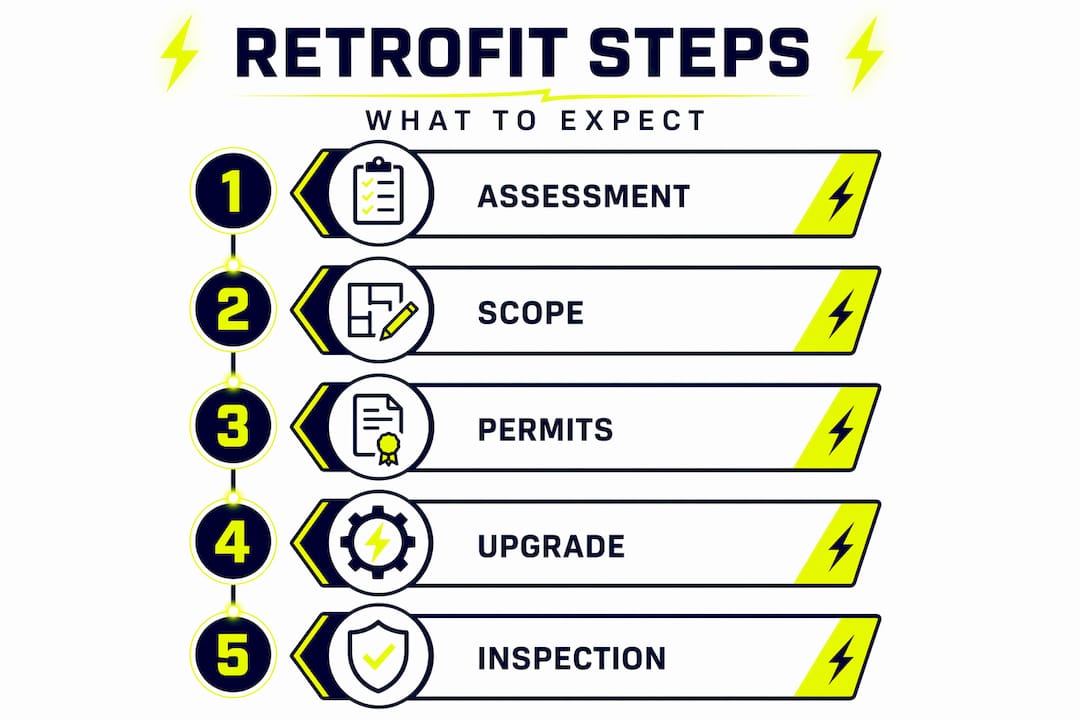
Here’s how a professional electrical retrofit typically unfolds:
- Electrical audit and load calculation. The electrician inspects your current system and calculates how much capacity you have, how much you’re using, and how much more you need. This is the most critical step and cannot be skipped.
- Scope definition. Based on the audit, a clear scope of work is defined. This might be adding two circuits, upgrading a panel, replacing protective devices, or a combination of changes. Nothing more, nothing less.
- Permit application. Your contractor submits permit applications to the local AHJ. In Edmond and OKC, this is a non-negotiable step for most retrofit work. The NFPA 70, the National Electrical Code, is the foundational safety standard governing what work requires permits and how it must be done.
- Code-compliant installation. The actual retrofit work is performed. Electricians follow the approved scope, use listed equipment, and document every change. This is where experience matters most because field conditions often present surprises like undersized conductors, improper grounding, or undetected damage.
- Inspection and final testing. The AHJ inspector reviews the completed work. Any deficiencies are corrected before the final approval is issued.
- Documentation and handoff. A complete record of all changes, permits, and approvals is handed to the property owner.
A good electrical assessment guide can help you understand what to expect before the first appointment. If you’re specifically looking at panel work, the panel upgrade process laid out by our team walks through the steps in detail.
Pro Tip: Keep every permit, inspection report, and scope of work document in a dedicated folder for your property. This documentation increases resale value, simplifies future service calls, and provides proof of code-compliant work if you ever file an insurance claim.
Code, permitting, and safety in electrical retrofits
To wrap up the process, it’s critical to understand the role of safety rules, permits, and codes that govern all electrical retrofitting work in Edmond and the Oklahoma City area.
The NEC, formally known as NFPA 70, is the national baseline for electrical safety in the United States. Oklahoma adopts the NEC at the state level, meaning your retrofit must comply with the current edition unless a local amendment applies. The AHJ, which is typically the city or county building department, interprets and enforces those standards locally.
Here’s the key rule to understand: work performed and equipment disturbed must meet currently adopted NEC requirements, and the AHJ may require correction of immediately hazardous conditions discovered during permitted work. This means once you open a permit, you may be obligated to fix more than you initially planned if the inspector finds something dangerous.
Safety requirements Edmond and OKC property owners cannot skip:
- GFCI protection is required in kitchens, bathrooms, garages, outdoor areas, and unfinished basements. If your retrofit work touches these spaces, GFCI outlets or breakers must be installed or verified.
- AFCI protection is now required on most bedroom and living area circuits under current NEC editions. Retrofits adding circuits in these areas must include AFCI breakers.
- Proper grounding and bonding must be verified during any panel or service upgrade. Improperly grounded systems are a shock and fire hazard.
- Panel labeling must be accurate and complete. Every circuit should be clearly identified before the inspector signs off.
- Service entrance clearances must meet NEC and utility requirements, especially if your retrofit involves upgrading your main service.
Poor choices in this area carry real consequences. Unpermitted work can void your homeowner’s insurance, create liability issues if a fire or injury occurs, and create complications when you try to sell the property. A quick review of panel hazards common to local homes illustrates just how serious these issues can become when left unaddressed.
Industry data consistently shows that a significant percentage of electrical inspections during retrofits turn up at least one pre-existing safety issue that wasn’t part of the original project scope. That’s not a reason to avoid retrofitting. It’s actually one of the strongest arguments for doing it with a licensed professional who knows how to identify and report those conditions properly.
What most property owners miss about retrofitting: Lessons from the field
Here’s something we see time and again: property owners assume that because they’re only doing “a little work,” the process will be simple, fast, and free of surprises. That assumption trips people up more than almost anything else in this industry.
The reality of AHJ discretion is something no article fully prepares you for. Two inspectors in the same county can interpret the same NEC section differently. One might wave through a grounding issue as an existing condition, while another flags it as an immediately hazardous condition that must be corrected before approval. That’s not a flaw in the system. It’s a reflection of the fact that electrical safety is high stakes and inspectors take their role seriously. What it means for you is that partial retrofit projects don’t always stay partial.
The smarter move is to think proactively rather than reactively. When you hire a contractor who identifies a panel with a known defect or a circuit with improper wiring during a small retrofit, listen to the recommendation even if it’s not what you budgeted for. Ignoring it doesn’t make the problem go away. It just delays the expense and increases the risk.
Documentation is another area where we’ve seen property owners leave real value on the table. A well-documented electrical system with permits on file and inspection approvals in hand is genuinely worth more to buyers and insurers than one where “the previous owner did some electrical work.” Specifics matter. Records matter. One of the best retrofit strategies for Edmond and OKC property owners is to treat every upgrade as an investment in your property’s documented history, not just its immediate function.
Finally, the contractors who serve you best are the ones who tell you the truth about what they find, even when it’s inconvenient. A trustworthy electrician isn’t creating work when they flag a concern discovered during a retrofit. They’re protecting you from a liability you didn’t know existed.
Get safe, code-compliant retrofits with local experts
Electrical retrofitting done right protects your property, keeps your family or employees safe, and ensures your system is ready for today’s technology demands. Starting with a professional assessment, understanding your local code requirements, and working with certified electricians who know Edmond and OKC’s specific AHJ landscape makes the whole process smoother and more predictable.

At Shepherd Electrical, we specialize in exactly this kind of work. Whether you’re adding an EV charger, upgrading an aging panel, or bringing an older commercial space up to current code, our team handles assessment through final inspection. Learn more about what local contractors offer and explore our full range of complete electrical services to find the right solution for your property. Booking a consultation online takes just a few minutes, and knowing your system is safe and code-compliant is worth every bit of it.
Frequently asked questions
Will I need to upgrade my whole electrical system during a retrofit?
No. The NEC does not require upgrading the entire electrical system for limited-scope permitted work, so most retrofits focus only on the components that need attention. However, inspectors can require correction of hazardous conditions they discover along the way.
What types of projects usually require electrical retrofitting?
Adding EV chargers, new HVAC systems, or commercial equipment and updating old wiring and panels are among the most common triggers. Bringing older panels and protective devices into safer, more efficient operation when adding loads is a primary goal of most retrofit projects.
Does electrical retrofitting require a permit in Oklahoma?
Yes, virtually all electrical retrofitting work requires a permit and inspection in Oklahoma. Work performed must meet currently adopted NEC requirements, and your local AHJ will require inspection before the work is approved for use.
What happens during an electrical system assessment for retrofitting?
A licensed electrician reviews your system’s capacity, checks for safety issues, and develops a scope of work based on your needs and local code requirements. Retrofit planning starts with an electrical audit and load calculation to determine available capacity and what changes are required.
Why is following the NEC important in electrical retrofits?
The NEC is the national baseline for electrical safety, and compliance ensures your upgrades are both safe and legally recognized. NFPA develops the National Electrical Code as the foundational standard applied across U.S. jurisdictions, including Oklahoma, making it the framework every licensed electrician works within.
Recommended
- Best Electrical Upgrades for Edmond and OKC Homes
- Electrical panels: Safety, upgrades, and compliance
- Electrical system assessment for safer homes: 2026 guide
- Upgrade Your Home Wiring for Safety and Efficiency
Need help with this at your home?
Shepherd Electrical helps Edmond and OKC metro homeowners with residential installs, wiring upgrades, fans, lighting, and electrical improvements. Free estimates are available, and workmanship is backed by a lifetime guarantee.