


Most homeowners hear “whole house rewiring” and picture walls torn apart, weeks without power, and a bill that rivals a new car. That reaction is understandable, but it’s also based on misconceptions that lead people to delay a project that genuinely protects their family. What is whole house rewiring, exactly? It’s a complete replacement of your home’s electrical wiring, outlets, switches, and often the main panel. This guide breaks down the house rewiring process, the real cost of house rewiring, the benefits of rewiring, and what to expect day to day so you can make a confident, informed decision.
Table of Contents
- Key takeaways
- What whole house rewiring actually involves
- Signs you need rewiring and why it matters
- Understanding the cost of house rewiring
- What to expect during the project
- My honest take on rewiring after years in the field
- Ready to rewire? Shepherd Electrical can help
- FAQ
Key takeaways
| Point | Details |
|---|---|
| Full system replacement | Whole house rewiring replaces all wiring, outlets, switches, and often the main panel, not just problem spots. |
| Clear warning signs | Knob-and-tube wiring, aluminum wiring, and frequent breaker trips are the most reliable signs you need rewiring. |
| Realistic cost range | Most homes cost between $6,000 and $18,000 depending on size, age, and local code requirements. |
| Permits are non-negotiable | Legal permits and inspections protect you from liability and resale complications down the road. |
| Investment, not just expense | A proper whole house electrical upgrade raises safety, supports modern appliances, and increases home value. |
What whole house rewiring actually involves
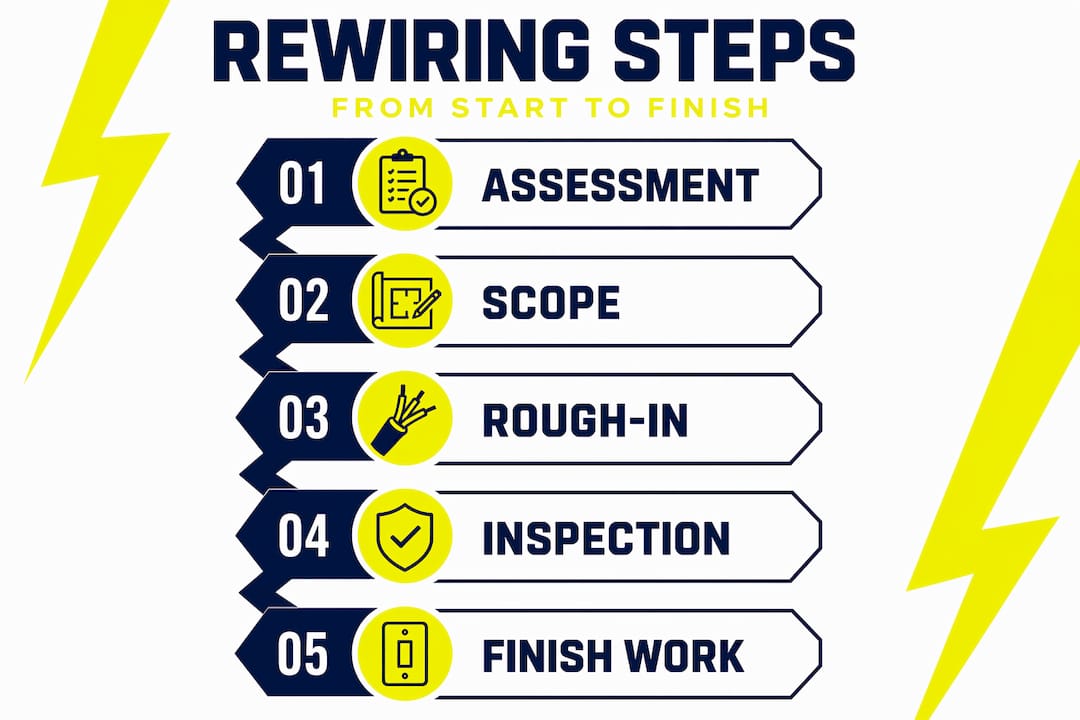
Whole house rewiring means replacing every circuit in your home from the panel to the outlets, switches, and fixtures. This is not a patch job. A licensed electrician removes the old wiring throughout the structure and installs new copper conductors that meet today’s code requirements under the National Electrical Code (NEC). The entire rewiring workflow typically follows a clear sequence that most homeowners don’t know about until they’re already in the middle of one.
Here’s how the house rewiring process unfolds from start to finish:
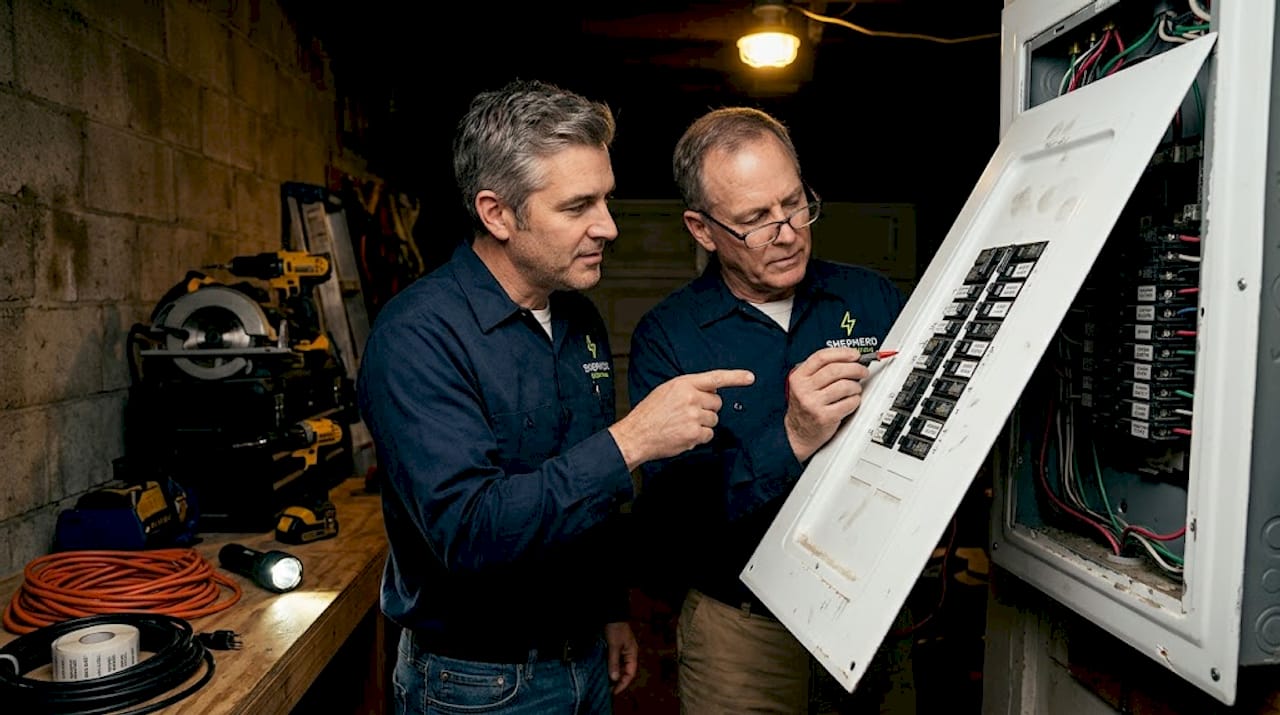
- Assessment and quote. Your electrician inspects existing wiring, identifies hazards, documents the scope, and pulls the required permits. This takes one to two days.
- Rough-in wiring. Electricians open walls, ceilings, and floors to run new wire through every room. This is the most disruptive phase. According to typical project timelines, rough-in wiring takes 3 to 7 days depending on home size and layout.
- Panel installation. The old electrical panel is replaced with a new one sized for your home’s current and future load. This step usually takes a single day.
- Inspection. A city or county inspector reviews the rough-in work before walls are closed. Permits and inspections are legally required and protect you from serious liability if something goes wrong later.
- Finish work. Electricians install outlets, switches, cover plates, and fixtures. The walls are then ready for patching and paint.
The full project runs two to four weeks for most single-family homes. Code compliance adds specific requirements you need to know about. Arc Fault Circuit Interrupter (AFCI) breakers are now required in bedrooms and living areas. Ground Fault Circuit Interrupter (GFCI) outlets are mandatory in kitchens, bathrooms, and garages. The 2020 NEC also requires surge protective devices when a service panel is upgraded, which comes as a surprise to many homeowners budgeting for a rewire.
Pro Tip: Ask your electrician for a written scope document before work begins that lists every circuit, outlet location, and code requirement included in the bid. This prevents scope creep and confusion mid-project.
Signs you need rewiring and why it matters
Old wiring is not just inconvenient. It is a genuine fire hazard. Knob-and-tube wiring lacks grounding, overheats when covered with attic insulation, and many insurance companies now refuse to cover homes that still have it. Aluminum wiring, common in homes built in the 1960s and 1970s, expands and contracts with heat in a way that loosens connections over time, creating arcing that starts fires inside walls.
These are the most reliable signs you need rewiring in your home:
- Frequent breaker trips that don’t have an obvious cause
- Outlets or switches that feel warm to the touch
- Flickering lights throughout the house, not just one fixture
- Two-prong ungrounded outlets in most rooms
- A home built before 1970 that has never had a full electrical update
- Visible cloth-insulated or aluminum wiring in the attic or basement
- Your insurance company has flagged the wiring or raised your premium
It’s worth separating two commonly confused projects: a panel upgrade versus a full rewire. A panel-only upgrade replaces your breaker box but leaves the old wiring in place. That’s appropriate when the wiring itself is in good shape but the panel is undersized for your current load. Full rewiring is what you need when the wiring throughout the structure is degraded, outdated, or unsafe. Doing only the panel when wiring is bad is like replacing the engine on a car with failing brakes.
“Rewiring is not a cost. It is a value-driven investment that reduces breaker nuisance trips, supports renovations, and makes your home more marketable.” — Electrical industry professionals consistently make this point, and the data backs it up.
Understanding the cost of house rewiring
The cost of house rewiring varies widely, but you can work with realistic numbers if you understand what drives the price. The national average runs $6,000 to $18,000, with most projects landing between $2 and $10 per square foot depending on home age, accessibility, and local labor rates.
| Cost factor | Typical range |
|---|---|
| Base rewiring (per sq. ft.) | $2 to $10 |
| Panel upgrade (if needed) | $1,500 to $4,500 |
| Drywall restoration | $1,000 to $4,000 |
| Surge protection device | $200 to $600 |
| Permit and inspection fees | $200 to $500 |
The line item homeowners miss most often is drywall restoration. Many electrical quotes do not include it. Electricians patch the access holes they create, but finish-quality plastering, sanding, and painting is usually a separate trade. Budget for it separately from the start, or you’ll feel surprised when the wall looks like it was repaired by an amateur even though the wiring is flawless.
Code changes also create unexpected costs. The NEC requirement for surge protective devices during panel upgrades adds to the final bill in ways homeowners don’t anticipate. These devices are worth every dollar for the protection they provide, but they need to be in the budget from day one.
Pro Tip: Get at least three written quotes and ask each contractor to break out labor, materials, panel work, and finish work as separate line items. It makes comparisons accurate and exposes any contractor who is lowballing to win the bid.
What to expect during the project
Living through a rewire is manageable if you go in with realistic expectations. The roughest stretch is the rough-in wiring phase. Walls are open, tools are everywhere, and power is interrupted in sections throughout the day. Most professionals advise spending 3 to 7 days away from the home during this phase, especially if you work from home or have young children. Trying to work or school from home while a crew is running wire through your walls is a recipe for tension on both sides.
Here’s how to prepare your household effectively:
- Pack and move valuables, breakables, and furniture away from walls in every room that will be opened
- Set up a temporary work-from-home location outside the house during rough-in
- Coordinate meal planning around days when kitchen circuits will be offline
- Communicate directly with your electrician each morning about what areas will be active that day
- Schedule the drywall contractor in advance so there is no lag time after electrical inspection
Project management matters enormously on a rewire. Gaps between trades add weeks to a project unnecessarily. If your electrician finishes and the drywall contractor isn’t booked, you’re living with open walls longer than you need to. Book your drywall contractor before the electrical work starts, contingent on the inspection date your electrician gives you.
One more point that homeowners consistently underestimate: never work with a contractor who suggests skipping permits. Beyond the safety issues, unpermitted electrical work creates serious problems when you sell the home. Buyers’ inspectors find it, lenders flag it, and you end up paying to have the work done again correctly. A reputable electrician handles the permit process for you automatically.
My honest take on rewiring after years in the field
I’ve worked with a lot of homeowners who come to a rewiring conversation with the same mindset: “Can we just fix the problem areas?” I understand it. A full rewire sounds expensive and disruptive, and the temptation to spot-repair is real.
In my experience, partial fixes on genuinely outdated wiring are a false economy. You spend $2,000 here, $1,500 there, and five years later you’re facing the full rewire anyway, except now you’ve wasted money and the wiring has had five more years to cause problems. The homeowners I’ve seen handle this best are the ones who treat wiring as a long-term asset, not a maintenance line item.
The other thing I’ve learned is that how you choose your electrician matters as much as the work itself. Get someone who pulls permits without being asked, communicates the daily schedule, and gives you a written scope before touching a single wire. Anyone who resists any of those three things is not the right contractor for a project of this scope.
What I’ve found actually works is treating the rewire as a mini construction project with a project manager mindset. That means pre-scheduling trades, confirming inspection timelines, and staying in daily contact with your crew. Homeowners who approach it that way come out the other side with a home that is genuinely safer, more capable, and worth more. The ones who leave it to chance end up with delays, budget surprises, and lingering frustration.
— Brad
Ready to rewire? Shepherd Electrical can help
If you’re weighing a whole house electrical upgrade in Edmond or the Oklahoma City Metro, Shepherdelectricalconstruction has the experience to handle it the right way from assessment to final inspection. The team manages every phase of the home wiring and dedicated circuits process, including panel upgrades, AFCI and GFCI installation, surge protection, and coordination with finish trades.

Shepherdelectricalconstruction operates in full compliance with NEC, NFPA, and OSHA standards, and every project is permitted and inspected. You can also explore the completed rewiring projects on the website to see the quality of work firsthand. Whether you’re starting with a safety assessment or ready to schedule a full rewire, reaching out for a detailed written quote is the fastest way to get accurate numbers for your specific home.
FAQ
What is whole house rewiring, exactly?
Whole house rewiring is the complete replacement of all electrical wiring, outlets, switches, and typically the main breaker panel throughout a home. It is a full electrical overhaul, not a repair of individual problem areas.
How long does whole house rewiring take?
Most projects take two to four weeks from start to finish, with the rough-in wiring phase lasting three to seven days depending on the size and layout of the home.
What are the main signs you need rewiring?
Key signs include frequent breaker trips, warm outlets or switches, flickering lights, ungrounded two-prong outlets throughout the home, and knob-and-tube or aluminum wiring identified during an inspection.
How much does whole house rewiring cost?
The national average cost of house rewiring runs between $6,000 and $18,000, or roughly $2 to $10 per square foot. Panel upgrades, drywall restoration, and surge protection devices add to the total.
Do I need permits for a whole house rewiring project?
Yes. Permits and inspections are legally required for whole house rewiring in virtually every jurisdiction. Any contractor who suggests skipping permits should not be trusted with the project.
Recommended
- Residential wiring workflow: safer, more efficient homes
- What Is Structured Wiring? a Homeowner’s Guide
- Smart home wiring: upgrade your Edmond or OKC property
Need help with this at your home?
Shepherd Electrical helps Edmond and OKC metro homeowners with residential installs, wiring upgrades, fans, lighting, and electrical improvements. Free estimates are available, and workmanship is backed by a lifetime guarantee.