

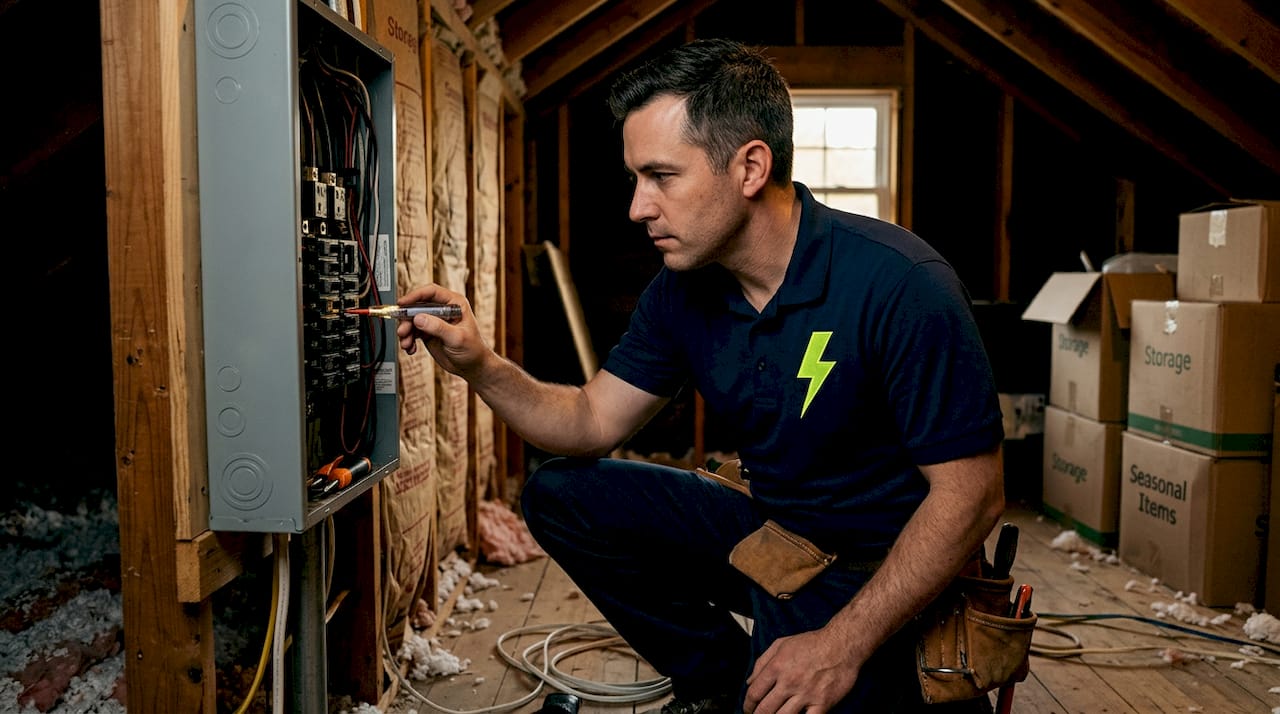
Your home’s electrical system might be the last thing you think about until something goes wrong. But if your house was built before 1980 or still runs on its original wiring, the risks hiding behind your walls are real. Understanding why upgrade wiring in 2026 matters goes well beyond keeping the lights on. Updated codes, rising energy demands, and new smart home technology have raised the bar for what a safe, functional electrical system actually looks like. This article gives you the specifics you need to make confident decisions.
Table of Contents
- Key Takeaways
- Why upgrade wiring in 2026: the real safety risks
- What 2026 electrical codes require
- Energy efficiency and smart home readiness
- Planning and budgeting your wiring upgrade
- Signs your home needs an upgrade now
- My take on why this is more urgent than people think
- How Shepherdelectricalconstruction can protect your home in 2026
- FAQ
Key Takeaways
| Point | Details |
|---|---|
| Outdated wiring is a fire risk | Legacy wiring and panels like Federal Pacific can fail silently, increasing fire and injury risk. |
| 2026 codes require GFCI and AFCI upgrades | NEC 2023/2026 expanded protection requirements that older wiring often cannot accommodate. |
| Upgrades cut energy costs | Modern panels and copper wiring can reduce home energy consumption by 15 to 30 percent. |
| Costs are recoverable | Panel and wiring upgrades typically cost $2,000 to $4,000 and can return 50 to 97 percent at resale. |
| Warning signs demand fast action | Flickering lights, warm panels, and frequent breaker trips are signals to schedule an inspection now. |
Why upgrade wiring in 2026: the real safety risks
Most homeowners assume that if their breakers haven’t tripped and the lights stay on, the wiring is fine. That assumption is genuinely dangerous. Electrical failure causes approximately 390 deaths and 1,330 injuries annually in U.S. homes, with home fires involving electrical distribution adding another 430 deaths per year. A large share of those incidents trace back to wiring and panels that were never upgraded.
Legacy panels are the most urgent concern. Brands like Federal Pacific Stab-Lok and Zinsco earned the informal name “widow makers” because their breakers are documented to fail during overloads, sometimes welding themselves to the bus bar instead of tripping. When that happens, there is no protection. The circuit stays live, heat builds, and a fire can start inside your walls before any alarm sounds.
Aluminum wiring, common in homes built between 1965 and 1973, presents a different but equally serious problem. The physics of cold creep in aluminum wiring cause connections to loosen over decades as the metal expands and contracts. Those loose connections create micro-arcing, which generates heat. You may see warm panel covers or discolored breakers before failure occurs, but often you see nothing until the damage is severe.
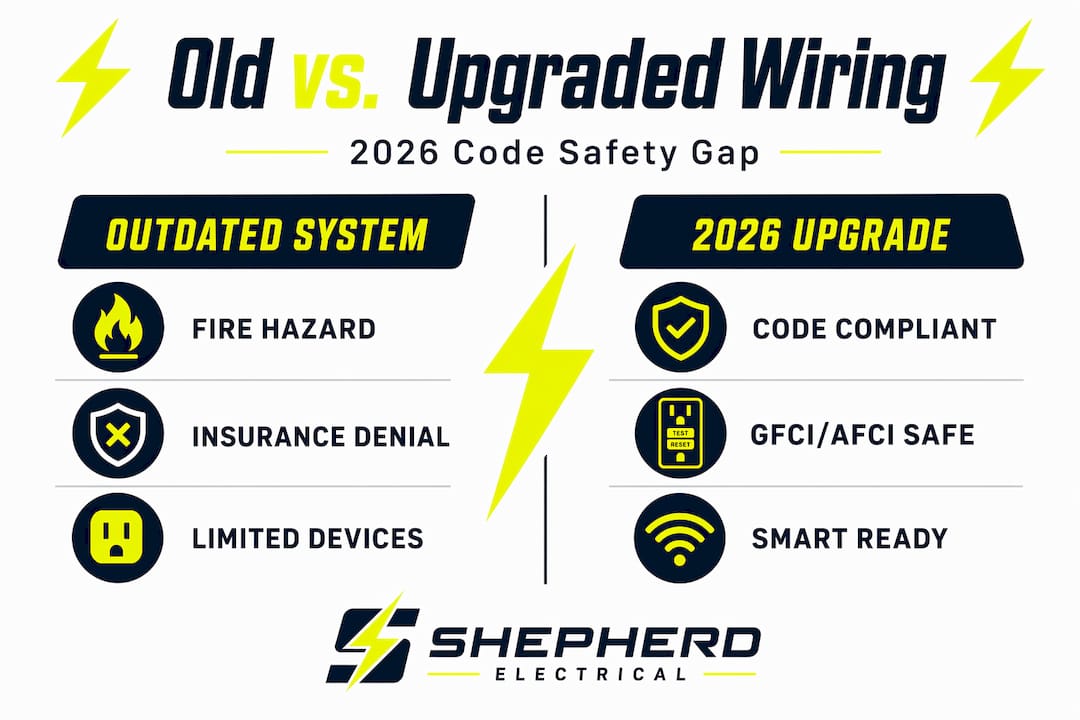
Homeowners with Federal Pacific or Zinsco panels should treat replacement as urgent, not optional. Many insurance companies now deny coverage for homes with these panels entirely.
Insurance denial is not a hypothetical. Coverage exclusions for homes with Federal Pacific or Zinsco panels have become standard practice at several major carriers. That means a house fire could leave you with no financial protection at all.
The absence of modern safety devices compounds every one of these risks. Homes without ground fault circuit interrupters (GFCIs) or arc fault circuit interrupters (AFCIs) lack two of the most effective technologies available for preventing electrocutions and electrical fires. Older panels often physically cannot support these devices, which leads directly into the code compliance issue.
Pro Tip: If you’re not sure what kind of panel you have, look for the brand name inside the breaker box door. “Federal Pacific,” “Stab-Lok,” or “Zinsco” on any panel means you should call an electrician this week.
What 2026 electrical codes require
The National Electrical Code updates every three years, and the 2023 cycle introduced requirements that are now being adopted and enforced across most states heading into 2026. These updates are not incremental adjustments. They expand protection requirements in ways that directly affect existing homes undergoing renovations or going on the market.
NEC 2023 Section 210.8(A)(6) now mandates GFCI protection for all 125V through 250V kitchen receptacles, including outlets for refrigerators, dishwashers, and garbage disposals. Previous code versions included exemptions for these appliances, but those exemptions are gone. If your kitchen was wired under older code and you are doing any permitted renovation work, this becomes a compliance requirement.
AFCI protection has also expanded significantly. Dining rooms and living areas now fall under the mandate alongside bedrooms, which have required AFCI breakers since 2002. Whole-home surge protection is required for new construction. Here is a quick comparison of what older wiring typically provides versus what 2026 standards expect:
| Feature | Older wiring (pre-1990) | 2026 NEC standard |
|---|---|---|
| GFCI coverage | Bathrooms and some kitchens | All kitchen and wet area receptacles |
| AFCI protection | None | Bedrooms, living areas, dining rooms |
| Whole-home surge protection | Rare | Required in new construction |
| Panel compatibility | Often lacks support | Must accommodate AFCI/GFCI breakers |
The practical problem is that older panels cannot accommodate the newer AFCI and GFCI breakers that these mandates require. You cannot simply swap in a new breaker on a 1970s panel the same way you would swap a light fixture. The infrastructure itself has to be upgraded first.
Non-compliance carries real consequences. A permitted kitchen remodel that fails inspection can stall a home sale, trigger fines, or require tearing out finished work. For property managers overseeing multiple units, one missed inspection can cascade quickly.
Pro Tip: Always pull permits for electrical work. Unpermitted upgrades can void homeowner’s insurance claims and create serious liability issues when you sell the property.
Energy efficiency and smart home readiness
Here is an angle many homeowners overlook when thinking about upgrading home wiring advantages: the monthly savings. Poor connections, corroded terminals, and outdated wiring don’t just sit there. They actively waste electricity through resistance. Modern panels and copper wiring reduce energy consumption by 15 to 30 percent over older systems, according to expert analysis of pre- and post-upgrade monitoring.
For a home spending $200 per month on electricity, a 20 percent reduction means $480 per year back in your pocket. That alone starts to recover upgrade costs over a reasonable timeline, before you factor in the value added to the home itself.
Smart home technology adds another layer of urgency. If you are planning to add automated lighting, whole-home audio, a security system, or a connected HVAC setup, wireless DIY solutions only go so far. Structured cabling using Cat6 or Cat6A provides the reliability, speed, and interference suppression that wireless simply cannot match for critical home systems. DIY installs frequently violate code and create interference problems that degrade performance over time.
Here is what a proper electrical foundation for a modern home actually needs in 2026:
- A 200-amp service panel with room for expansion and support for AFCI and GFCI breakers
- Dedicated circuits for high-draw appliances including HVAC, refrigerators, and laundry
- Structured low-voltage cabling runs for smart home devices, routed away from power lines to prevent interference
- A whole-home surge protector to guard connected devices
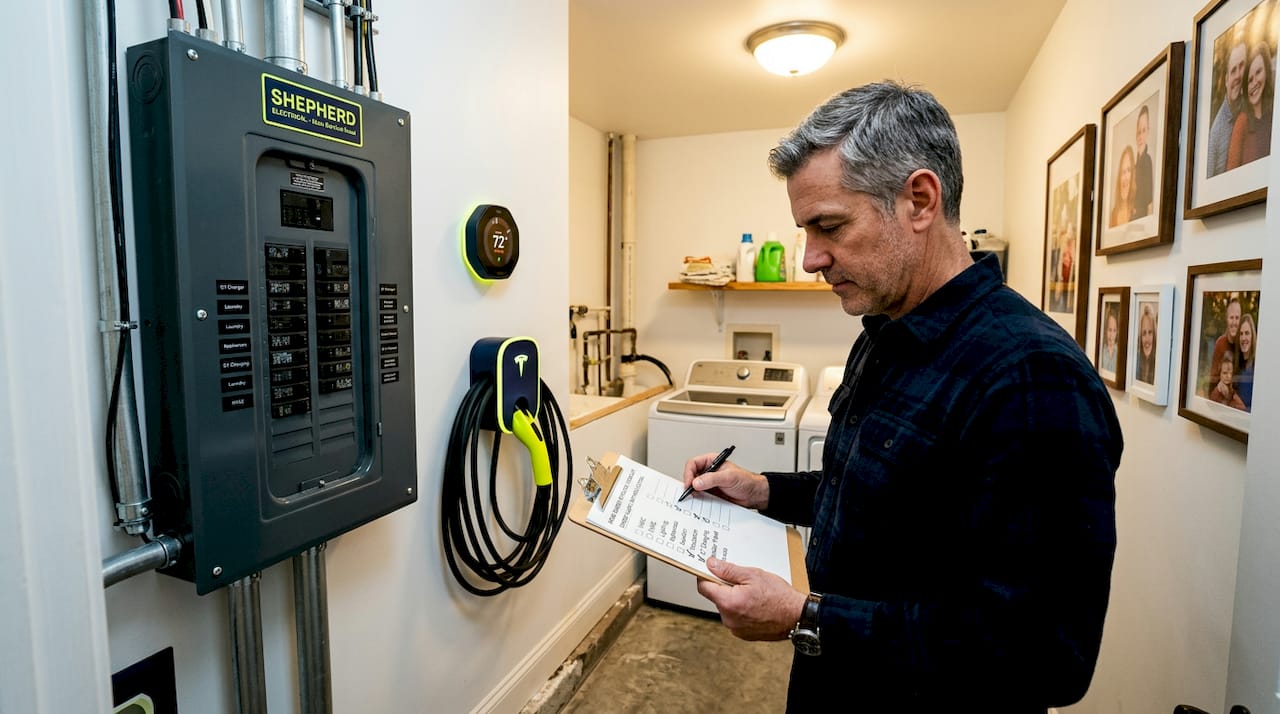
- Pre-wired capacity for EV charging and heat pump systems, even if you do not own those devices yet
That last point matters more than most people realize. EV chargers require a dedicated 240V circuit, and heat pumps draw significantly more power than the gas systems they replace. Wiring for smart home systems installed now, with future loads in mind, is far cheaper than opening walls again in three years.
Pro Tip: When planning a panel upgrade, ask your electrician to install a 200-amp or 400-amp service even if your current load does not require it. Future high-draw devices will thank you.
Planning and budgeting your wiring upgrade
Understanding the cost of wiring upgrades in 2026 requires separating two distinct projects: a panel upgrade and a full rewire. They are not the same job, and you may only need one.
A panel upgrade generally costs between $2,000 and $4,000, and can return 50 to 97 percent of that investment through added home value. A full rewire for a larger home runs higher, though the scope varies widely by house size and local labor rates. The key is getting a professional assessment before assuming the worst.
Here is what a realistic planning process looks like:
- Get a written assessment first. A licensed electrician inspecting your panel, outlets, and visible wiring can tell you exactly what is failing versus what can be left in place.
- Pull permits for every phase. This protects you legally and makes the work insurable and transferable at resale.
- Ask about rebate programs. Some Oklahoma utility providers offer rebates for energy efficiency upgrades, including panel replacements connected to efficiency improvements.
- Verify credentials. Your contractor should hold a current state electrical license and carry liability insurance. Ask to see both before work starts.
- Plan the scope around your timeline. If you are selling in two years, prioritize the panel and safety devices. If you are staying long-term, budget for a fuller upgrade on a phased schedule.
The residential wiring workflow at a reputable contractor involves assessment, a detailed written scope of work, permit acquisition, inspection, and sign-off. Any contractor who skips those steps is cutting corners that will cost you later.
Pro Tip: Compare at least three written quotes before committing to a contractor. If one quote is dramatically lower than the others, ask specifically what is being excluded.
Signs your home needs an upgrade now
How do you know if you specifically need to act? Some warning signs are obvious. Others are easy to dismiss. Knowing the difference is how to assess wiring needs before a small problem becomes an emergency.
Watch for these concrete indicators:
- Lights that flicker or dim when an appliance kicks on, which signals voltage dropping below safe levels under load
- Circuit breakers that trip more than once a month without an obvious cause
- A panel cover that feels warm to the touch, or breakers that look discolored or corroded
- Outlets that spark when you plug something in, or that have scorch marks around the face
- No three-prong grounded outlets in a home built before 1980
Homes built before 1980 with original wiring frequently experience all of these symptoms as voltage drops below 110V under load and circuits exceed their designed capacity. These are not quirks. They are distress signals from a system that has exceeded its design life.
Adding high-load devices also tips the scale. If you are considering an EV charger, a hot tub, or a central air system upgrade, have your panel evaluated first. Running those loads on an already strained 100-amp service is one of the most common causes of electrical emergencies. Upgrading wiring proactively is far less disruptive than emergency repairs after a failure.
My take on why this is more urgent than people think
I’ve walked through hundreds of homes in the Oklahoma City Metro area, and the one thing that never stops surprising me is how many people are living with electrical systems that would fail a basic safety inspection. Not because they don’t care, but because the system still “works.” Lights come on. The microwave runs. Nothing has caught fire yet.
That reasoning is the most dangerous one in residential electrical work. The problems that cause house fires are almost never the ones making noise. Cold creep in aluminum wiring, a failing breaker that hasn’t been asked to trip yet, a panel that insulates overheating instead of shutting it down. These are silent issues that give no warning until they don’t.
What I’ve learned from years in this industry is that the homeowners who call us after a close call always say the same thing: they knew something was off but figured it could wait. Waiting is the one thing an outdated electrical system cannot afford.
The benefits of wiring upgrade 2026 aren’t just about compliance or resale value. They are about not being caught in a situation where your house becomes a statistic. Modern electrical systems give you protection, efficiency, and capacity. That combination is worth acting on now, not after the next inspection.
— Brad
How Shepherdelectricalconstruction can protect your home in 2026
If any of this article has you thinking about your own panel or wiring, that instinct is worth following. Shepherdelectricalconstruction serves homeowners and property managers throughout Edmond and the Oklahoma City Metro with exactly this kind of work: safety assessments, panel upgrades, full rewires, GFCI and AFCI installations, and smart home wiring that is built to code from the start.

Our team understands the 2026 NEC requirements and how to apply them to existing homes without unnecessary disruption. We pull permits, coordinate inspections, and give you a clear written scope before any work begins. Whether you need a single panel swap or a full electrical upgrade, you can learn more about what we offer at our electrical services overview page. For a deeper look at what working with a licensed contractor actually means for your home, visit our page on what electrical contractors do in OKC. Book your inspection online today.
FAQ
What are the biggest reasons to upgrade electrical systems in 2026?
The most pressing reasons are fire safety, code compliance, and energy efficiency. Outdated panels and aluminum wiring create silent fire hazards, while new NEC requirements mandate GFCI and AFCI protection that older systems cannot support.
How much does a wiring upgrade cost in 2026?
Panel and wiring upgrades typically range from $2,000 to $4,000 for most residential projects, with potential returns of 50 to 97 percent at resale through improved safety and home value.
How do I know if my home needs rewiring?
Look for flickering lights, warm or discolored breakers, frequently tripping circuits, or a panel brand name of Federal Pacific or Zinsco. Homes built before 1980 with original wiring should have a professional inspection regardless of visible symptoms.
Does outdated wiring affect home insurance?
Yes. Insurance companies increasingly deny coverage for homes with legacy panels like Federal Pacific Stab-Lok and Zinsco, leaving homeowners financially exposed in the event of a fire or electrical damage claim.
Can older wiring support smart home devices?
Not reliably. Smart home systems require structured cabling and a modern panel with surge protection. DIY wireless setups often create interference and code violations that degrade performance and safety over time.
Recommended
- Upgrade Your Home Wiring for Safety and Efficiency
- Smart home wiring: upgrade your Edmond or OKC property
- Residential wiring workflow: safer, more efficient homes
Need help with this at your home?
Shepherd Electrical helps Edmond and OKC metro homeowners with residential installs, wiring upgrades, fans, lighting, and electrical improvements. Free estimates are available, and workmanship is backed by a lifetime guarantee.