

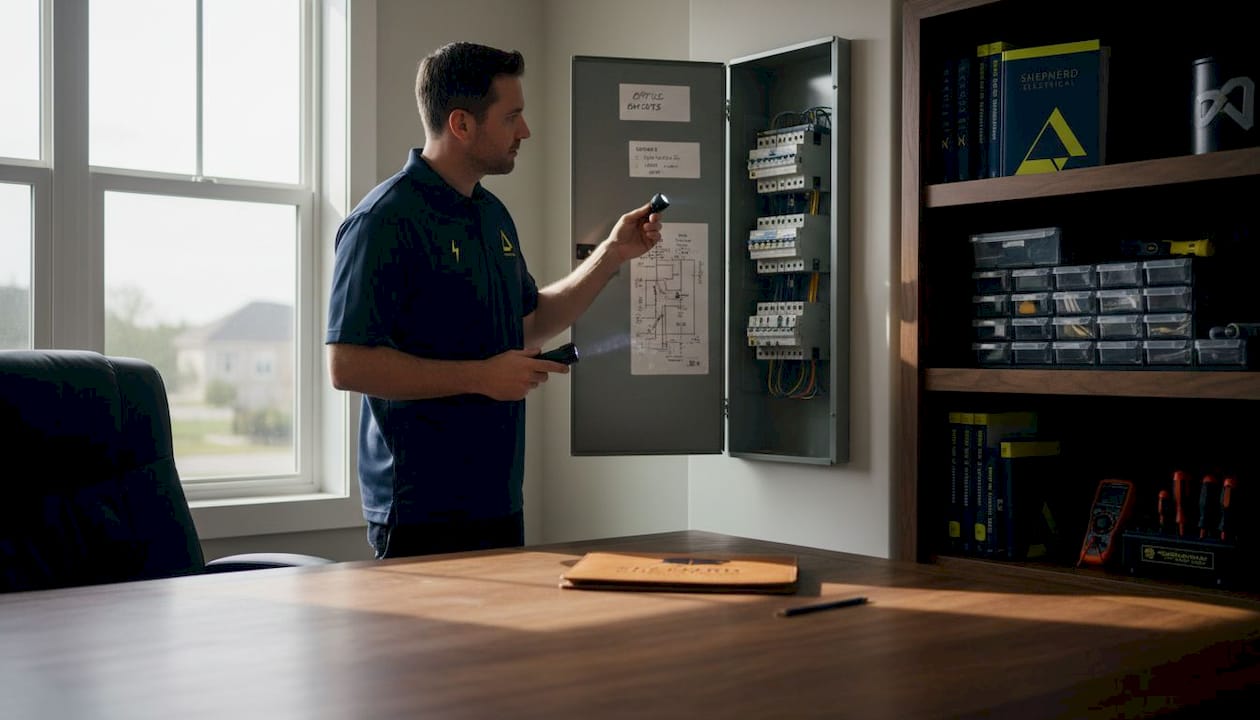
Most homeowners and business owners don’t think about their electrical systems until something goes wrong. That’s exactly when protecting electrical systems stops being optional and starts being expensive. Electrical malfunctions in nonresidential buildings alone caused approximately 7,400 fires and $350 million in property loss in 2023. Residential numbers push that figure even higher. The hidden truth is that most of those incidents were preventable with the right protective devices, routine maintenance, and a basic understanding of what your electrical system actually needs.
Table of Contents
- Key takeaways
- Why protect electrical systems: risks of leaving them exposed
- Protective devices every property needs
- Why electrical system maintenance matters more than you think
- How to safeguard your electrical system right now
- The financial case for electrical protection
- My honest take on electrical protection after years in the field
- Ready to protect your electrical system?
- FAQ
Key takeaways
| Point | Details |
|---|---|
| Arc faults are silent fire starters | Standard breakers cannot detect arc faults; AFCI devices are required to catch them before they ignite. |
| Layered surge protection matters | Type 1 and Type 2 surge protectors work together to block both external and internal voltage spikes. |
| Proactive maintenance pays off | Documented maintenance programs reduce costs by 12 to 18% and cut unplanned downtime significantly. |
| Warning signs demand fast action | Flickering lights, tripped breakers, and burning smells are not minor annoyances. They are early failure signals. |
| Protection is now mandatory | NFPA 70B shifted from a recommendation to a mandatory standard requiring documented electrical maintenance programs. |
Why protect electrical systems: risks of leaving them exposed
Most people picture an electrical fire as something dramatic. Sparks flying, a breaker loudly tripping, an obvious sign of trouble. The reality is far more dangerous and far quieter.
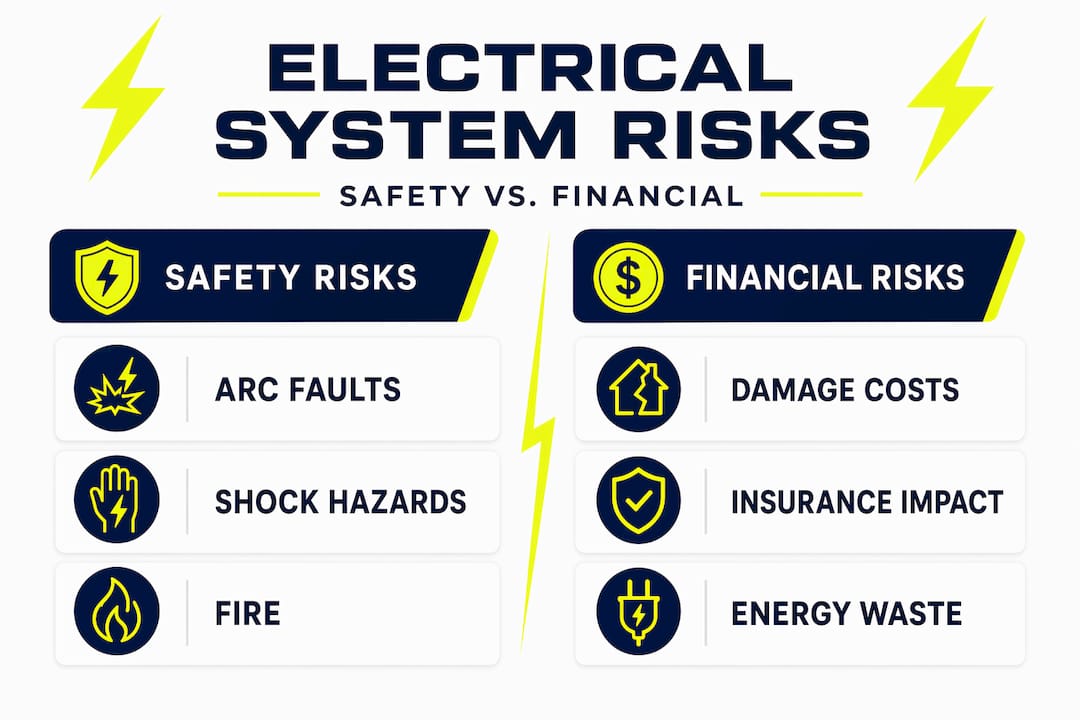
The biggest risks in unprotected electrical systems include:
- Arc faults. These occur when electricity jumps between conductors, often inside walls or in aging wiring. Arc faults can exceed 10,000°F at the point of the arc, which is more than enough to ignite wood framing, insulation, and drywall without ever tripping a standard circuit breaker.
- Power surges. Even small, repeated voltage spikes degrade sensitive electronics over time. A single large transient, from a lightning strike or utility switching, can destroy HVAC equipment, appliances, and computers in an instant.
- Electric shock hazards. Ground faults in areas near water, such as bathrooms, kitchens, and outdoor outlets, create life-threatening shock risks for occupants.
- Operational and financial losses. For a small business, unplanned electrical downtime extends beyond repair costs to include lost revenue, disrupted customers, and potential lease violations.
“The most dangerous electrical hazards are the ones you never see coming. Arc faults and ground faults build gradually inside walls and panels, completely invisible until they reach a critical threshold.”
Understanding the risks of unprotected electrical systems is not about creating fear. It’s about recognizing that the cost of prevention is always lower than the cost of recovery.
Protective devices every property needs
The good news is that the electrical industry has developed highly effective tools specifically designed to catch what standard breakers miss. Knowing which devices do what will help you have an informed conversation with your electrician.
AFCI breakers: stopping fires before they start
Arc Fault Circuit Interrupters use waveform monitoring to distinguish dangerous arcs from the harmless ones that occur naturally when you flip a switch. Inside the breaker, a microprocessor analyzes the high-frequency noise signatures that a dangerous arc produces and trips the circuit before ignition can occur. This technology is now required in bedrooms, living rooms, and most habitable spaces under the National Electrical Code.
GFCI outlets: your shock defense layer
Ground Fault Circuit Interrupters monitor the current flowing out of an outlet against the current returning. If those numbers differ by even 5 milliamps, the GFCI trips in about 1/40th of a second, fast enough to prevent a fatal shock. These are non-negotiable in any space where water and electricity share proximity.
Surge protection: the layered approach
| Device Type | Where It’s Installed | What It Handles |
|---|---|---|
| Type 1 Surge Protector | Service entrance (before the meter) | High-energy external surges from lightning or utility events |
| Type 2 Surge Protector | Main panel or subpanel | Internal residual surges from appliances and equipment cycling |
| Point-of-use protector | Individual outlets | Final layer of defense for sensitive electronics |
Type 1 and Type 2 surge protectors serve different functions and work best when installed together. NEC 230.67 now requires surge protection at the service entrance for new dwelling units, which makes compliance and protection go hand in hand. Devices must meet UL 1449 and NEC standards to deliver reliable, code-compliant performance.
Pro Tip: If your current panel has no surge protection device installed at the service entrance, that’s the first upgrade worth scheduling. It protects everything downstream in your building.
Why electrical system maintenance matters more than you think
There’s a critical difference between fixing things when they break and preventing them from breaking in the first place. Most owners operate in reactive mode, calling an electrician only when a breaker won’t reset or the lights go out. That approach is both more expensive and more dangerous than a proactive maintenance schedule.
Here’s what a solid electrical maintenance program actually includes:
- Documented inspection schedule. A written plan that defines what gets inspected, how often, and by whom. NFPA 70B now requires exactly this kind of documented electrical maintenance program, making it a legal obligation for commercial properties, not just a best practice.
- Thermal imaging scans. Infrared cameras detect hot spots in panels, connections, and wiring before they become failures. A loose connection running hot inside a panel is invisible to the naked eye but glows clearly on a thermal scan.
- Insulation resistance testing. This checks whether wire insulation has degraded to the point where it poses a shock or fire risk. Older buildings especially benefit from this test on a regular basis.
- Relay and breaker calibration. Protective devices only work correctly if they’re calibrated and tested. An untested breaker may fail to trip when it’s supposed to, or trip unnecessarily, disrupting operations. Effective maintenance includes thermal imaging, insulation resistance testing, and relay calibration as core diagnostic tools.
- Qualified personnel performing the work. NFPA 70B requires maintenance to be performed by qualified persons with documented training. This isn’t a job for a general handyman or a DIY weekend project.
The payoff for this level of discipline is significant. Preventive maintenance programs reduce maintenance costs by 12 to 18% while dramatically cutting unplanned downtime.
Pro Tip: Ask your electrician for a written report after every inspection. That documentation is valuable evidence of due diligence if an insurance claim or code inspection ever arises.

How to safeguard your electrical system right now
You don’t have to wait for a failure to start protecting your property. There are concrete steps you can take today, whether you own a single-family home, manage a rental property, or run a small business.
Watch for early warning signs. Your electrical system communicates when something is wrong. Flickering or dimming lights under load, circuit breakers that trip repeatedly, outlets that feel warm to the touch, a burning or plastic smell near panels or outlets, and buzzing sounds from switches are all signals that something needs professional attention. If an AFCI breaker keeps tripping after you reset it, that’s a warning of a real hazard in the wiring, not a nuisance trip.
Upgrade to modern protective devices. If your home or building still uses older wiring or lacks AFCI protection in living spaces, that’s a priority upgrade. The same applies to GFCI outlets in any wet area. These devices are not expensive relative to the damage they prevent, and a licensed electrician can install them in a single service call.
Schedule professional inspections. The residential electrical maintenance guide from Shepherdelectricalconstruction recommends annual inspections for most homes and more frequent checks for older properties or those with high electrical loads. Don’t wait for a problem to schedule one.
Know your panel’s condition. Panels older than 25 to 30 years may carry known electrical panel hazards that are no longer considered safe by current standards. A professional assessment will tell you whether yours needs an upgrade before it fails on its own terms.
Pro Tip: Keep a simple log of any electrical events in your property: tripped breakers, flickering lights, or repaired outlets. Over time, patterns in that log will reveal problems your electrician can address before they become emergencies.
The financial case for electrical protection
Protection is an investment with a measurable return, not just a safety expense. The numbers tell a clear story.
| Protection Measure | Primary Benefit | Financial Impact |
|---|---|---|
| AFCI installation | Prevents arc fault fires | Avoids property loss averaging tens of thousands per incident |
| Surge protection (Type 1 and 2) | Protects electronics and equipment | Prevents equipment replacement costs and operational disruption |
| Documented maintenance program | Extends equipment life and reduces failures | Reduces maintenance costs by 12 to 18% annually |
| GFCI outlets | Prevents electric shock injuries | Reduces liability exposure for property owners |
Beyond direct savings, protecting electrical infrastructure affects your insurance coverage. Many insurers offer better rates for properties with documented safety programs and modern protective devices. In some cases, failing to maintain systems to current codes can affect a claim payout after an incident. The financial impact of electrical malfunctions spans property loss, increased premiums, liability claims, and lost business continuity.
Efficient, well-maintained electrical systems also consume less energy. Loose connections, overloaded circuits, and aging equipment all create resistance that wastes electricity and adds to your monthly bill. Fixing those issues improves efficiency directly.
My honest take on electrical protection after years in the field
I’ve walked through hundreds of homes and commercial properties over the years, and the pattern I keep seeing surprises people when I mention it. The properties with the most dangerous electrical conditions are rarely the old, neglected ones people expect. They’re often well-maintained properties where the owners genuinely believed everything was fine because nothing had visibly gone wrong.
That’s the trap. Standard breakers do not detect arc faults. You can have deteriorating wiring inside your walls, a connection running dangerously hot inside your panel, and no visible sign of any problem until the day a fire starts. The owners of those properties didn’t ignore their electrical systems out of carelessness. They just didn’t know what they didn’t know.
I’ve also seen the reactive maintenance mindset cost property managers far more than they expected. A transformer failure that could have been caught by thermal imaging months earlier turns into a $40,000 replacement and two weeks of disrupted tenants. A loose connection that a calibrated inspection would have flagged becomes a total loss of a commercial kitchen’s equipment in a single surge event.
The other misconception I run into constantly is that NFPA 70B compliance is only a concern for large facilities. Small business owners and property managers with just a few tenants are now subject to mandatory documented maintenance requirements too. Confusing a reactive fix with a real compliance program is a mistake I see far too often, and it’s one that regulators and insurers are increasingly scrutinizing.
My advice is straightforward: schedule an inspection before you need one, install protective devices before they’re required by a code update, and get a written report every time a qualified electrician touches your system. Peace of mind from knowing your system has been professionally evaluated is worth every dollar.
— Brad
Ready to protect your electrical system?
If this article raised questions about your own property, that’s a good sign you’re ready to act on them.

Shepherdelectricalconstruction serves homeowners, property managers, and small business owners across Edmond and the Oklahoma City Metro with exactly the services described in this article: protective device installations, panel assessments, AFCI and GFCI upgrades, surge protection systems, and documented maintenance programs. The team is licensed, trained to current NFPA and NEC standards, and focused on giving you a clear picture of your system’s condition before problems develop. Learn more about what electrical contractors do and how professional service protects your property, or explore the full range of residential and commercial services available for your specific needs. Online booking is available for your convenience.
FAQ
What makes unprotected electrical systems dangerous?
Unprotected electrical systems are vulnerable to arc faults, power surges, and ground faults, all of which can cause fires, equipment damage, or fatal shocks. Standard breakers alone cannot detect these hazards.
How often should an electrical system be inspected?
Most homes benefit from a professional inspection every one to three years, with older properties or high-load buildings requiring more frequent checks. Commercial properties subject to NFPA 70B standards need a documented maintenance schedule with regular qualified inspections.
What is the difference between AFCI and GFCI protection?
AFCI breakers detect dangerous electrical arcs in wiring that can start fires, while GFCI outlets detect ground faults that cause electric shock. Both serve different safety functions and are required in different locations throughout a building.
Do I need both Type 1 and Type 2 surge protectors?
Yes. Type 1 surge protectors at the service entrance handle large external surges from lightning or utility events, while Type 2 protectors at the panel manage internal residual surges from equipment cycling. Using both provides layered protection that neither device offers alone.
When does an electrical system need a professional evaluation?
You should schedule a professional evaluation if you notice flickering lights, repeatedly tripped breakers, warm outlets, burning smells, or buzzing sounds. Any of these is a signal of a condition that may be invisible inside your walls but detectable by a qualified electrician.
Recommended
- Home electrical systems: your guide to safety and efficiency
- Professional electrical services: boost home safety and value
- Electrical code compliance: Safety and efficiency guide
- Shepherd Electrical Blog – Shepherd Electrical
Need help with this at your home?
Shepherd Electrical helps Edmond and OKC metro homeowners with residential electrical service, repairs, upgrades, panels, EV chargers, solar, and backup power. Free estimates are available, and workmanship is backed by a lifetime guarantee.