

TL;DR:
- Equipment failure causes most power outages in the United States, primarily affecting local distribution lines. Homeowner-aware maintenance can prevent long disruptions, as internal electrical failures mimic utility outages but are often fixable with professional help.
Equipment failure is the leading cause of power outages in the United States, responsible for approximately 89% of outage events with an identified cause. That figure surprises most homeowners, who assume severe weather tops the list. Weather, vegetation contact, and human error all contribute, but the distribution system feeding your home is the most likely point of failure. Understanding the real reasons for power outages helps you prepare smarter and respond faster when the lights go out.
1. Common causes of power outages: equipment failure leads the list
Equipment failure accounts for the largest share of power interruptions by a wide margin. Distribution system failures cause more than 90% of total outage duration time, meaning the problem almost always originates on the low-voltage lines connecting your neighborhood, not at a power plant miles away. Aging transformers, worn breakers, and deteriorating utility poles are the most frequent culprits.
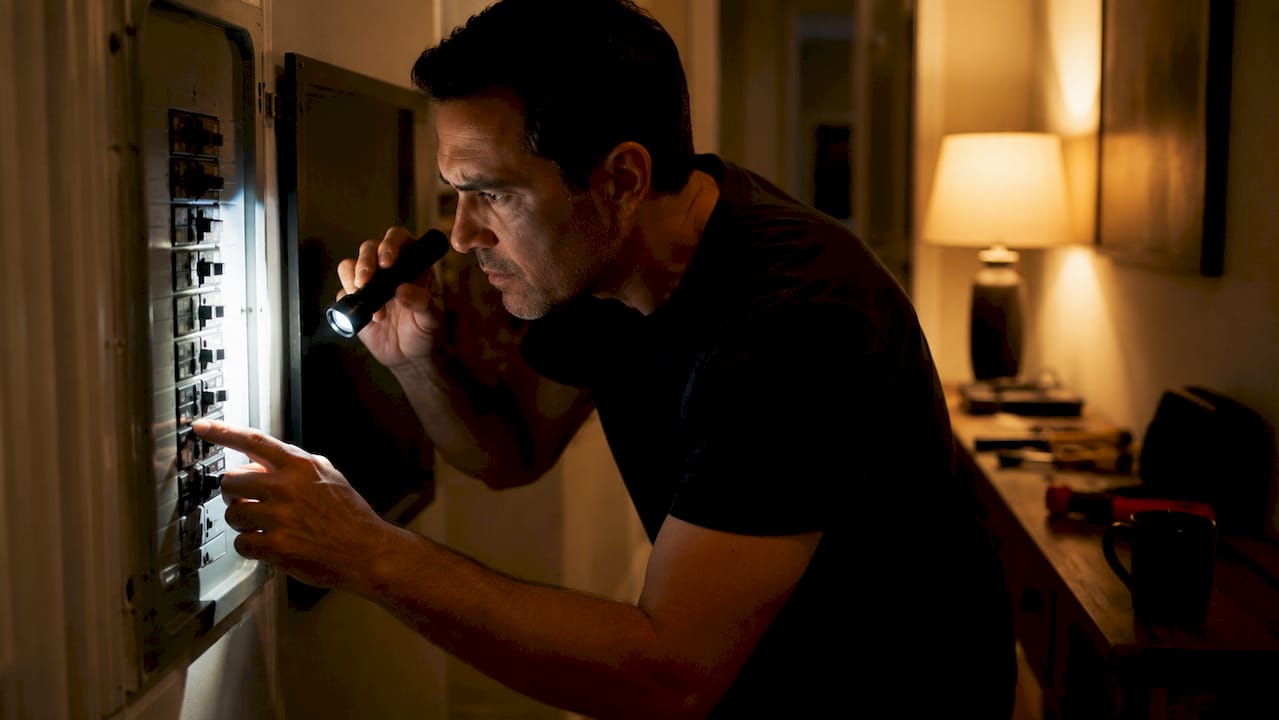
The practical implication for homeowners is direct. Your home’s internal wiring and panel can contribute to localized failures that look and feel identical to a utility outage. A tripped main breaker or a failing panel connection can cut power to your entire house without any grid involvement.
Key symptoms that point to equipment failure rather than a grid-wide event:
- Only your home or one side of your home loses power while neighbors have electricity
- Your breaker panel shows a tripped breaker or a breaker that will not reset
- Lights flicker repeatedly before going out
- You notice a burning smell near your electrical panel
Pro Tip: If your neighbors have power but you do not, check your main breaker first. A partial power loss affecting only part of your home often signals a panel or wiring issue, not a utility problem.
2. Severe weather as a major power outage trigger
Severe weather is the second most common reason for power outages, and it produces the longest restoration times. Thunderstorms, ice storms, high winds, and tornadoes physically damage power lines, substations, and transformers across wide service areas. A single ice storm can coat lines with enough weight to snap poles across an entire county.
Oklahoma homeowners face a specific risk profile. The OKC metro and Edmond area sit in a region prone to severe thunderstorms, straight-line winds, and occasional ice events in winter. These weather events can knock out power for hours or days, depending on how many utility crews are available and how widespread the damage is.
Weather-related outages differ from equipment failures in one important way: restoration depends entirely on the utility, not on anything inside your home. Your preparation before the storm determines how well you manage during it.
Steps to take before severe weather arrives:
- Charge all devices and portable power stations fully.
- Fill your refrigerator and freezer to capacity to retain cold longer.
- Locate your flashlights, batteries, and battery-powered radio.
- Know your utility’s outage reporting number or app.
- Confirm your backup power solution is functional and fueled.
3. Vegetation contact and tree-related outages
Tree limbs striking power lines are a leading physical cause of outages, particularly after storms. Vegetation contact caused nearly 50% of outages reported by certain utilities in 2024, and tree-related incidents consistently produce longer restoration times than most other causes. A single large limb can take down a span of line and leave dozens of homes without power.
The problem is not limited to storm events. Trees grow into lines gradually, and contact during calm weather can cause intermittent outages or arcing that creates a fire risk. Dead or diseased trees are especially dangerous because they can fall without warning.
Wildlife interference adds another layer. Squirrels and birds are frequent causes of short circuits at transformers and on distribution lines. A squirrel bridging two conductors at a transformer can knock out power to an entire block in seconds.
What you can do around your property:
- Trim branches that overhang or grow within 10 feet of any power line on your side of the meter
- Remove dead trees near utility easements before storm season
- Report overgrown vegetation near utility lines to your provider
Pro Tip: Tree work near power lines requires professional judgment. A homeowner’s guide to emergency tree situations can help you identify when a tree poses an immediate risk versus a long-term one.
4. Vehicle accidents and accidental dig-ins
Vehicle collisions with utility poles are a frequent but underappreciated cause of sudden power loss. Public damage events, including vehicle strikes, unsafe digging, and vandalism, cause localized but immediate outages that can affect multiple customers at once. A single car hitting a pole at the right location can cut power to an entire street.
Accidental dig-ins happen when contractors or homeowners break underground utility lines without checking for buried infrastructure first. The national 811 “call before you dig” system exists specifically to prevent these events, but violations still occur regularly.
Grid overload during peak demand is another cause worth knowing. On the hottest days of summer in the OKC area, high air conditioning loads can stress distribution equipment to the point of failure. Utilities sometimes implement planned outages for maintenance to replace aging equipment proactively, with restoration averaging around 9.7 hours. These differ from unplanned failures because the utility notifies customers in advance.
Other notable power outage triggers include:
- Underground cable faults from soil movement or moisture intrusion
- Substation equipment failures affecting large service areas
- Demand spikes from industrial or commercial loads on shared circuits
5. Home electrical system failures that mimic grid outages
Not every whole-house outage originates outside your meter. Internal electrical failures are a common cause of sudden power loss that homeowners often misattribute to the utility. A failing main breaker, a loose service connection, or a damaged meter base can cut all power to your home while the grid remains fully operational.
Residential electrical maintenance addresses these risks directly. Panels older than 25 years, aluminum branch wiring, and undersized service entrances all increase the likelihood of internal failures. These issues do not announce themselves until something fails.
The distinction matters because calling your utility when the problem is inside your home wastes time. If the utility confirms power is present at your meter but your home has no power, the fault is on your side of the service point and requires a licensed electrician.
Key takeaways
Equipment failure, not weather, is the primary driver of U.S. power outages, with distribution system issues accounting for the vast majority of both outage events and total downtime.
| Point | Details |
|---|---|
| Equipment failure leads outages | Approximately 89% of identified U.S. outage events trace back to equipment, not weather. |
| Distribution lines are the weak point | More than 90% of outage duration originates on local low-voltage lines, not power plants. |
| Vegetation is a top physical cause | Tree limbs and wildlife contact cause nearly half of outages at some utilities and extend restoration times. |
| Internal failures mimic grid outages | A failing panel or main breaker can cut all home power while neighbors remain unaffected. |
| Preparation reduces impact | Portable power stations, emergency kits, and tailored preparedness plans limit the damage from any outage cause. |
What I’ve learned after years of responding to outages in Edmond and OKC
Most homeowners I talk to assume the utility is always responsible when the power goes out. That assumption costs them time and sometimes money. A significant number of calls I respond to involve a failed main breaker, a loose neutral at the panel, or a meter base connection that has corroded over years of Oklahoma heat and humidity. The utility truck shows up, confirms power at the meter, and leaves. Then the homeowner calls me.
The other misconception I see constantly is that renters cannot prepare effectively. That is simply not true. Portable battery backups require no installation and no landlord permission. Running a refrigerator for 10–15 minutes every hour during an outage preserves food temperature without a whole-home generator. A battery-powered radio, a two-week medication supply, and one gallon of water per person per day covers the basics for almost any outage scenario.
What I recommend to every homeowner in Edmond and North OKC: get your panel inspected if it is more than 20 years old. Aging equipment does not fail on a schedule. It fails when you least expect it, usually during a heat wave when every electrician in the metro is already booked. Preventive electrical maintenance is not a luxury. It is the most reliable way to keep your home from becoming its own outage statistic.
— Brad
How Shepherdelectricalconstruction helps you stay powered
Power outages caused by internal electrical failures are preventable with the right preparation. Shepherdelectricalconstruction serves homeowners across Edmond, North OKC, Deer Creek, Nichols Hills, and surrounding areas with panel inspections, wiring upgrades, and backup power installations designed to reduce your outage risk.

Whether you need dedicated circuit wiring to handle modern electrical loads or a home backup generator to keep critical systems running during grid failures, Shepherdelectricalconstruction has the experience to get it done right. For urgent electrical issues, call or text (405) 406-1026 or book online to schedule service at your convenience.
FAQ
What is the most common cause of power outages in the U.S.?
Equipment failure is the most common cause, accounting for approximately 89% of U.S. outage events with an identified cause. Distribution line failures on local low-voltage systems are the most frequent point of breakdown.
Why does only half my house lose power?
A partial power loss usually points to a tripped double-pole breaker, a failed leg of the utility’s service entrance, or a loose neutral connection at your panel. A licensed electrician can diagnose which side of the problem is yours to fix.
Can renters prepare for power outages without major electrical work?
Renters can prepare effectively using portable power stations, emergency kits, and battery-powered devices that require no installation. Running a refrigerator for short intervals during an outage preserves food without a permanent generator.
How long do weather-related outages typically last compared to equipment failures?
Weather-related outages generally last longer because damage is widespread and requires utility crews to physically repair lines across large areas. Equipment failures on local distribution lines are often faster to restore when they affect a smaller area.
When should I call an electrician instead of my utility during an outage?
Call an electrician when your utility confirms power is present at your meter but your home still has no electricity. That scenario points to an internal failure at your panel, service entrance, or main breaker that the utility will not repair.
Recommended
- What Is Electrical Preventive Maintenance for Homeowners
- Backup Power Generator for Home – Solutions – Shepherd Electrical
- Best Practices for Electrical Load Management at Home
- Why electrical troubleshooting matters for your home and business
Need help with this at your home?
Shepherd Electrical helps Edmond and OKC metro homeowners with residential electrical service, repairs, upgrades, panels, EV chargers, solar, and backup power. Free estimates are available, and workmanship is backed by a lifetime guarantee.